
2C Hair: Complete Guide to Care, Styling & Maintenance (2025)


There’s a particular kind of frustration that comes with having 2C hair. Your waves are too defined to be called wavy but not tight enough to qualify as curly. Products designed for straight hair weigh you down. Products designed for tight curls leave you crunchy and stiff. You exist in a beautiful, complicated middle ground and most hair advice completely ignores you. Sound familiar?
What is type 2C hair is one of the most searched questions in the curl care world right now and it’s easy to see why. Type 2C hair sits at the highest end of the wavy hair spectrum, right where waves begin to behave like curls. It’s thick, it’s defined, it’s gloriously voluminous and it’s also the most frizz-prone, humidity-reactive, and product-sensitive of all the wavy hair types. Getting it wrong feels like a constant battle. Getting it right feels like magic.
This guide covers everything. From identifying your 2C curl type to building a daily care routine, choosing the right products, mastering styling techniques, and finding haircuts that actually work it’s all here. Whether you’re starting from scratch or troubleshooting a routine that isn’t delivering, this is the complete 2C hair resource you’ve been looking for.
What Is 2C Hair?
What is type 2C hair in simple terms? It’s the third and most defined subcategory within the Type 2 wavy hair category on the curl pattern chart developed by stylist Andre Walker. The hair curl types 1–4 system runs from perfectly straight (Type 1) all the way to tightly coiled (Type 4). Type 2 covers all wavy hair and breaks into three subtypes: 2A, 2B, and 2C. Each step up the scale means more definition, more texture, and more intensity and 2C sits right at the top of the wavy category, pressing right up against Type 3 curly hair.
Is 2C hair curly or wavy? Technically, it’s wavy but it behaves like a hybrid. The S-shaped wave pattern in type 2C hair starts right at the root, not midway down the shaft like 2A or 2B. The waves are strong, dense, and clearly defined even before any product touches them. Think of the wavy hair type 2C experience this way: if 2A hair is a gentle ocean ripple and 2B is a rolling wave, 2C is right where that wave crests and breaks powerful, dramatic, and impossible to ignore. The key distinction from 2C vs 3A hair is that 2C waves maintain an S-pattern rather than forming spiral or corkscrew coils. That difference matters enormously when choosing products and techniques.
Signs and Characteristics of Type 2C Curls
How to identify 2C hair starts with understanding its specific physical traits. 2C hair characteristics are distinct enough to separate it clearly from its wavy siblings once you know what to look for. The waves begin at the scalp and maintain their S-shape all the way to the ends. The individual strands are thick and coarse compared to 2A or 2B. The overall density is high, which gives 2C hair its naturally voluminous, full-bodied appearance. When wet, the waves clump together beautifully. When dry without proper technique, they separate into a frizzy halo.
Why is my 2C hair frizzy even when you’ve done everything right? The answer lies in the structure of the hair itself. Frizz-prone wavy hair like type 2C has a naturally raised cuticle the outer layer of each strand sits slightly open, which means moisture from the air gets in and swells the hair unevenly. This is especially intense in humidity frizz control situations, which is why 2C hair can go from defined and beautiful to puffy and undefined in minutes when the weather changes. Understanding these characteristics isn’t just interesting it directly shapes every product and routine decision you make.
| Characteristic | 2C Hair Description |
| Wave Pattern | Strong S-waves from root to tip |
| Texture | Thick, coarse, dense strands |
| Frizz Level | Very high especially in humidity |
| Porosity | Medium to high |
| Volume | Naturally high, prone to pyramid shape |
| Moisture Retention | Low needs frequent deep hydration |
| Drying Time | Long significantly longer than 2A or 2B |
| Best Styling Window | On soaking wet hair only |
How to Identify 2C Hair vs 2A and 2B Hair
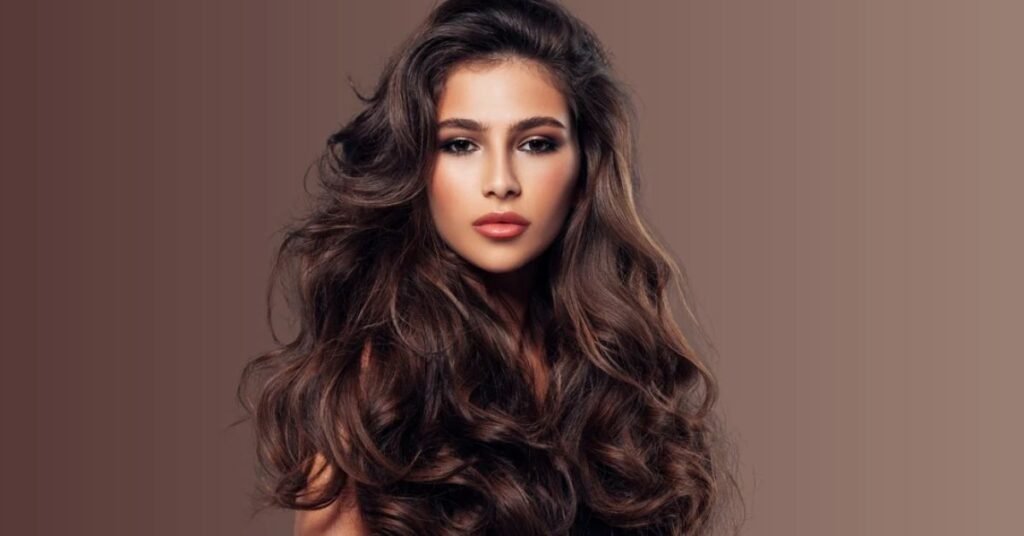
How to identify 2C hair versus its wavy cousins trips up a lot of people and it makes sense. All three types share the same basic S-wave pattern but differ so significantly in texture, behavior, and needs that treating them the same way produces very different results. The most reliable way to identify your type is to wash your hair with no products and let it air dry completely. What you see in its natural state before any product, heat, or manipulation is your true wave pattern. 2C hair will show clearly defined, thick waves that start at the root and hold their shape even without any product at all.
The 2b vs 2c hair difference and the gap between 2C and 2A are not just cosmetic. They represent genuinely different hair needs that require different routines, different product weights, and different styling approaches. Misidentifying your type means using products that either weigh your waves down or don’t provide nearly enough moisture and hold. Getting this right is the single most important foundation of a successful 2C hair routine.
2C Hair vs 2A Hair Differences
The 2C vs 2A hair comparison reveals two hair types that sit at complete opposite ends of the wavy spectrum. 2A hair is fine, thin, and has loose waves that begin mid-shaft and barely hold their shape without product. 2C hair is thick, dense, and has waves that begin at the root and hold their definition even without styling. If you’ve ever used a product and your waves held beautifully all day, you’re probably not a 2A. If you’ve ever used a product and your hair went completely flat and greasy by noon, you’re likely not a 2C either.
The wavy curls definition between these two types is so different that nearly every product recommendation changes. 2A hair needs ultra-lightweight mousses and sprays that won’t weigh the fine strands down. 2C hair needs rich curl creams, strong-hold gels, and deep conditioning masks. 2A struggles with volume. 2C has too much volume and needs to learn how to manage it. In humidity, 2A goes limp and flat. 2C goes frizzy and enormous. These aren’t minor differences they’re complete opposites that require completely opposite solutions.
| Feature | 2A Hair | 2C Hair |
| Wave Origin | Mid-shaft | At the root |
| Texture | Fine, thin | Thick, coarse |
| Frizz in Humidity | Goes flat | Goes frizzy and voluminous |
| Product Weight | Ultra-lightweight | Rich, strong-hold |
| Volume | Needs more | Needs management |
| Drying Time | Fast | Slow |
| Moisture Needs | Moderate | High |
2C Hair vs 2B Hair Differences
The 2b vs 2c hair difference is subtler but still genuinely significant. 2B hair has moderate S-waves that start around the mid-shaft and are more defined than 2A but still relatively manageable in terms of frizz and product absorption. 2C hair takes everything up a notch more definition, more density, more frizz reactivity, and more moisture demand. The difference between 2b and 2c hair is most visible in humidity: 2B hair might get a little frizzy on a humid day but generally holds its shape. 2C hair in humidity is a whole different situation the frizz is dramatic, the volume is intense, and without the right humidity frizz control products, the wave pattern can disappear entirely into a cloud of frizz.
2C hair is also far more commonly confused with Type 3A curly hair than 2B ever is. The difference between 2C and 3A hair comes down to coil formation: 3A hair forms spiral curls with a clearly cylindrical shape, while 2C maintains a flat S-wave even at its most defined. When wet, they can look almost identical which is why so many 2C hair owners mistakenly use heavy curl products designed for 3A hair and end up with waves that are weighed down, undefined, and crunchy. Knowing which side of that line you’re on matters enormously for your routine.
| Feature | 2B Hair | 2C Hair |
| Wave Definition | Moderate S-waves | Strong, thick S-waves |
| Frizz Level | Moderate | High to very high |
| Density | Medium | Medium to high |
| Product Needs | Medium-hold | Strong-hold + rich moisture |
| Confusion With | 2A or 2C | 3A curly hair |
| Humidity Reaction | Moderate frizz | Intense frizz and volume |
| Styling Difficulty | Moderate | Requires precise technique |
How to Take Care of 2C Hair (Daily Routine)
How to care for type 2C hair requires understanding one fundamental truth: this hair type is high-maintenance in the best possible way. It’s not difficult it just needs a consistent, intentional routine built around three non-negotiable pillars: hydration, definition, and frizz control. Skip any one of these and your waves will remind you immediately. How to maintain wavy curls at the 2C level means showing up consistently for your hair not with complicated ten-step routines, but with the right steps done correctly every time.
The foundation of every great 2C hair routine is the Curly Girl Method (CGM) with some smart adaptations. Pure CGM works beautifully for many curl types but can leave 2C hair with buildup issues if clarifying isn’t incorporated. The adapted version uses a sulfate-free shampoo for regular washing, a monthly clarifying shampoo to remove buildup, rich deep conditioning treatments weekly, and a layered styling approach on wet hair. How to style type 2C hair follows a logical sequence: cleanse, condition, hydrate, define, and protect. Master that sequence and your waves will look consistently better than they ever have.
Best Wash Routine for 2C Hair
How to air dry wavy hair and achieve beautiful results starts long before you step out of the shower it starts with how you wash. The wash routine is the most critical step in how to care for type 2C hair because everything that comes after depends on how clean, hydrated, and prepared your hair is when you begin styling. A rushed or careless wash day undermines even the best products and techniques. Done well, it sets your waves up for a full week of great hair days.
Best shampoo for 2C hair is always sulfate-free no exceptions. Sulfates are the harsh detergents in conventional shampoos that strip your hair of its natural oils. For 2C hair which already struggles to distribute those oils down its thick, dense strands sulfate cleansing is genuinely damaging. It leaves the hair brittle, frizzy, and stripped of the very moisture it needs to form defined waves. Use your fingertips to massage the sulfate-free shampoo into your scalp in circular motions, stimulating blood flow and loosening buildup without roughing up your lengths. Let it rinse through your ends rather than scrubbing. Follow immediately with a rich, deeply hydrating conditioner and use the “squish to condish” technique cup sections of your hair and squeeze the conditioner in while cool water runs through it. This forces the conditioner deep into the cuticle for maximum hydration for wavy hair.
Complete Wash Day Routine for 2C Hair
| Step | Action | Key Detail |
| 1 | Wet hair fully | Use lukewarm water not hot |
| 2 | Apply sulfate-free shampoo | Scalp only circular massage |
| 3 | Rinse thoroughly | Let it run through lengths naturally |
| 4 | Apply rich conditioner | Mid-lengths to ends only |
| 5 | Finger detangle | Work in sections, never use a brush |
| 6 | Squish to condish | Scrunch conditioner in with water running |
| 7 | Cool water rinse | Seals the cuticle, adds shine |
| 8 | Apply styling products | On soaking wet hair immediately |
| 9 | Scrunch upward | From ends to roots never rake or rub |
| 10 | Plop | Microfiber towel or cotton T-shirt, 15–20 min |
| 11 | Air dry or diffuse | Hands off completely until fully dry |
How Often Should You Wash 2C Hair?
How often should you wash 2C hair is a question with a clear answer for most people: two to three times per week is the sweet spot. Washing daily is one of the most damaging things you can do to type 2C hair. The scalp produces natural sebum an oil that travels down the hair shaft to moisturize and protect each strand. 2C hair’s thick, coarse texture and strong wave pattern make it significantly harder for that oil to travel from root to tip compared to straight or fine hair. Washing too frequently strips away what little natural oil your lengths manage to absorb and leaves the hair perpetually dry, frizzy, and unable to form defined waves.
On the flip side, washing too infrequently creates its own set of problems. Product buildup accumulates on the scalp and strands, weighing the waves down and making them look dull, limp, and lifeless despite your best styling efforts. How to reduce frizz in 2C hair is nearly impossible when there’s a layer of old product coating every strand and blocking fresh moisture from getting in. Two to three wash days per week keeps the scalp clean and healthy, removes buildup before it becomes a problem, and gives your waves the fresh start they need to form properly each time. Once a month, swap your regular sulfate-free shampoo for a clarifying shampoo to do a deeper reset and remove any stubborn buildup that regular washing doesn’t fully address.
Overnight Care Routine for 2C Hair (Frizz Control)
How to sleep with curly hair without frizz is one of the most urgent questions for anyone with 2C hair. Eight hours of sleep on the wrong pillow surface can completely undo a perfect wash day. Cotton pillowcases create friction lots of it. That friction roughens the hair cuticle, breaks up wave clumps, and leaves you waking up to frizz, tangles, and flat spots where your head rested. The good news is that fixing this takes less than two minutes before bed and makes a dramatic difference by morning.
How to protect curls overnight starts with the pineapple hair method. Flip your hair upside down, gather it loosely at the very top of your head, and secure it with a soft scrunchie never a tight elastic. For thick or dense 2C hair, a single pineapple sometimes creates too much tension at the roots. Try the multi-pineapple method instead: divide your hair into two or three loose sections and pineapple each one separately. This distributes the hair more evenly and prevents flat spots at the crown. Pair the pineapple with a silk pillowcase for curls or a satin bonnet the smooth surface eliminates friction and your waves glide rather than snag as you move in your sleep. A light mist of water and leave-in conditioner before bed keeps the hair hydrated overnight so you wake up to soft, refreshable waves rather than dry, brittle ones.
Read More About: Wavy Hair: Complete Guide to Care, Routine & Styling (2025)
Best Products for 2C Hair
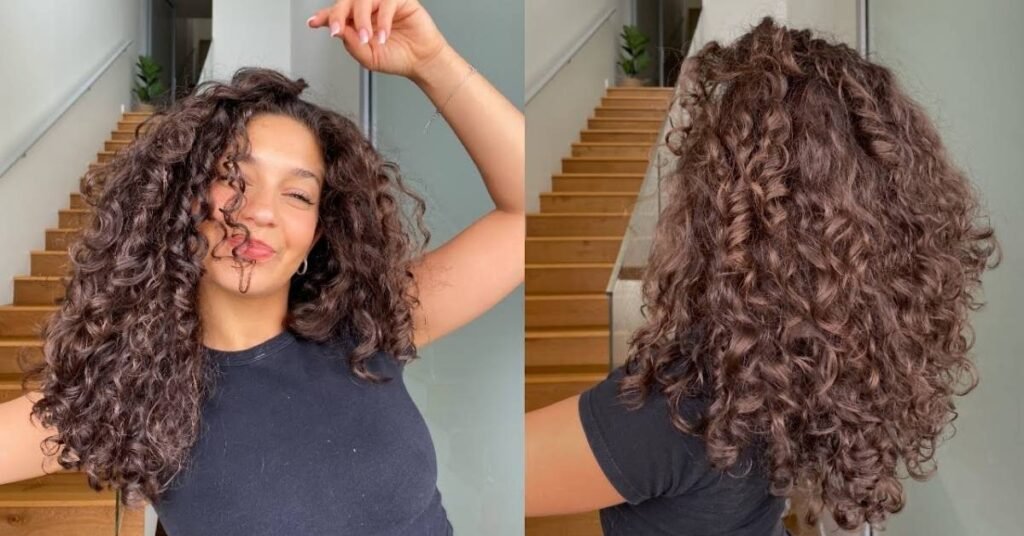
What products help wavy hair at the 2C level is a question that requires more nuance than a simple list. Best products for 2C hair share several key qualities: they’re sulfate-free, silicone-free, humidity-resistant, and rich enough to penetrate thick, coarse strands without sitting on top like a coating. The biggest product mistake 2C hair owners make is using products designed for fine wavy hair or full curly hair both of which have completely different absorption needs and hold requirements. 2C hair lives in a specific zone that needs its own thoughtful product strategy.
The layering system is everything when it comes to best products for 2C hair. Think of it as building a house: the leave-in conditioner is the foundation (moisture), the curl cream is the walls (definition and structure), and the gel is the roof (hold and frizz protection). Each layer serves a distinct purpose and they work together to create waves that are defined, bouncy, and resistant to frizz. Skip a layer and the structure weakens. Use the wrong product in any layer and the whole system breaks down. Curl enhancing products and curl defining products that are specifically formulated for thick, wavy hair consistently outperform generic options on 2C hair.
Best Shampoos for 2C Hair
Best shampoo for 2C hair must be sulfate-free this is a hard rule, not a suggestion. Sulfates (specifically sodium lauryl sulfate and sodium laureth sulfate) are powerful detergents that create a satisfying lather but strip the hair of every natural oil in the process. For frizz-prone wavy hair like 2C, this stripping effect is catastrophic. It leaves strands dry, brittle, and completely unable to form the smooth, defined waves that 2C hair is capable of. Making the switch to sulfate-free shampoo for curls is often the single change that transforms someone’s 2C hair experience overnight.
How to reduce frizz in 2C hair starts at the shampoo step and continues with knowing which ingredients to seek out and which to avoid. Hydrating ingredients like aloe vera, panthenol (vitamin B5), and glycerin (excellent in dry climates, use with caution in high humidity) nourish the hair while cleansing. Coconut-derived cleansers provide a gentle lather without stripping. On the avoid list: drying alcohols, heavy waxes, and any form of silicone that will build up over time and block moisture absorption. Once a month, use a clarifying shampoo to clear out any accumulated buildup from styling products this is especially important for 2C hair because its thickness makes it particularly prone to product accumulation.
| Ingredient | Use It or Lose It? | Why It Matters for 2C Hair |
| Aloe Vera | ✅ Use It | Hydrates, soothes scalp, defines waves |
| Panthenol (B5) | ✅ Use It | Strengthens strands, adds softness |
| Glycerin | ✅ Use It (dry climate) | Draws moisture to hair shaft |
| Coconut-derived cleansers | ✅ Use It | Gentle lather, no stripping |
| SLS / SLES (Sulfates) | ❌ Lose It | Strips oils, destroys wave pattern |
| Drying Alcohols | ❌ Lose It | Dehydrates strands severely |
| Heavy Silicones | ❌ Lose It | Blocks moisture, causes buildup |
| Glycerin (humid climate) | ⚠️ Use with caution | Can attract too much moisture, causing frizz |
Conditioners and Styling Creams for Type 2C Hair
How to use leave-in conditioner for curls correctly is a skill that transforms 2C hair results almost immediately. The leave-in conditioner for wavy hair is your base moisture layer applied to soaking wet hair right after you step out of the shower. It keeps the hair hydrated as you apply your other products and forms the foundation that everything else builds on. For 2C hair, choose a leave-in that’s rich enough to penetrate thick strands but not so heavy that it weighs your waves down. Water-based leave-ins with ingredients like aloe vera, rice water, or botanical extracts hit this balance beautifully.
How to use curl cream properly for 2C hair is just as important as choosing the right one. Curl cream for 2C hair provides both moisture and definition in one product it’s the workhorse of the 2C hair styling routine. Apply it in sections to soaking wet hair, using either the praying hands method (smoothing down each section between flat palms) for sleeker definition or the scrunching method for more volume and texture. The amount matters too: for medium-length 2C hair, about a golf-ball-sized amount of curl cream distributed through four sections gives even, thorough coverage. Layer a strong-hold gel on top to lock everything in place and create the protective cast that keeps frizz at bay as the hair dries. Silicone-free hair products throughout this entire layering process ensure that each product can actually penetrate the hair rather than sitting on the surface.
| Product Layer | Type | Purpose | Key Ingredients to Look For |
| Layer 1 | Leave-in conditioner | Base moisture | Aloe vera, rice water, panthenol |
| Layer 2 | Curl cream | Definition + moisture | Shea butter, avocado oil, glycerin |
| Layer 3 | Strong-hold gel | Lock-in + frizz shield | Hydroxyethylcellulose, flaxseed |
| Layer 4 | Light oil (optional) | Seal + shine | Argan oil, jojoba oil |
Styling Tips for 2C Hair
How to style type 2C hair well is about working with the wave pattern rather than trying to control it. 2C hair has incredible natural potential the wave definition is already there, built into the structure of every strand. Your job as the stylist of your own hair is simply to create the right environment for those waves to form freely, without interference from the wrong products or the wrong techniques. How to make wavy hair look defined comes down to three things: product application on wet hair, careful drying technique, and a firm commitment to keeping your hands away while it all sets.
How to add volume to 2C hair without sacrificing definition is a common challenge because the two goals can seem contradictory. More volume often means more frizz. More definition often means less volume at the roots. The solution is in the technique rather than the product diffusing upside down at the roots for volume before switching to a right-side-up position for length definition gives you both. How to keep curls bouncy all day also depends heavily on the quality of your gel cast. A firm cast that breaks softly when you scrunch it out (the SOTC scrunch out the crunch technique) releases defined, bouncy waves with hold built in, rather than waves that look great for an hour and then fall flat.
Heatless Styling Methods for 2C Curls
How to get defined curls without heat is not just possible for 2C hair it’s actually the preferred approach for long-term wave health. Heat permanently alters the hydrogen bonds in the hair shaft that create your wave pattern. Regular heat exposure gradually straightens 2C waves over time, making it harder and harder to get definition without heat a frustrating and self-reinforcing cycle. Heatless styling for wavy hair breaks that cycle and allows your natural wave pattern to strengthen and become more defined with every wash.
The plopping method is the cornerstone of heatless styling for 2C hair. After applying all your styling products to soaking wet hair, lay a microfiber towel or smooth cotton T-shirt flat on a surface, flip your hair forward onto it, and wrap the fabric up around your hair in a turban shape. Leave it for fifteen to twenty minutes. Plopping removes excess water without the friction of towel-drying, keeps the wave clumps intact, and significantly reduces drying time making how to air dry wavy hair a much more practical option. The rope twist method is another excellent heatless technique: twist sections of wet styled hair loosely around themselves and leave them to dry. When you release them, the twisting action has enhanced the wave definition beyond what scrunching alone achieves. Finger coiling wrapping individual wave sections around your finger while wet gives even more precise definition for 2C hair that tends toward irregular clumping.
How to Define and Enhance 2C Waves
How to define 2C curls naturally and how to enhance natural waves both begin with the same essential rule: wet hair is the only hair you style. Applying products to dry or even damp 2C hair is one of the most common reasons waves look crunchy, uneven, or undefined. The water in wet hair acts as a carrier for your products, helping them distribute evenly and penetrate the strand rather than sitting on the surface. If your hair has started to dry before you finish applying product, spray it with water to resaturate it before continuing.
How to diffuse curly hair correctly for 2C hair involves more technique than most people realize. Start with the diffuser on the lowest heat and speed setting high heat causes instant frizz on 2C hair and high speed blows the wave clumps apart before they set. Flip your head upside down and cup sections of hair into the diffuser bowl, lifting it toward the scalp. Hold each section for thirty to sixty seconds before moving to the next. This upside-down technique builds volume at the roots while encouraging the waves to clump and define. Once your hair is about eighty percent dry, switch to right-side-up diffusing to set the length and finish the ends. Finish with a cold shot switching to the cool setting for thirty seconds which seals the cuticle and dramatically increases shine and frizz resistance. How to keep curls bouncy all day relies heavily on this final cold shot step, which many people skip without realizing how much it matters.
“The cold shot at the end of diffusing is the most underrated step in the entire wavy hair routine. It seals the cuticle just like a cool water rinse does in the shower and the difference in frizz levels is immediately visible.” Common wisdom in the curl care community
Common Mistakes to Avoid with 2C Hair
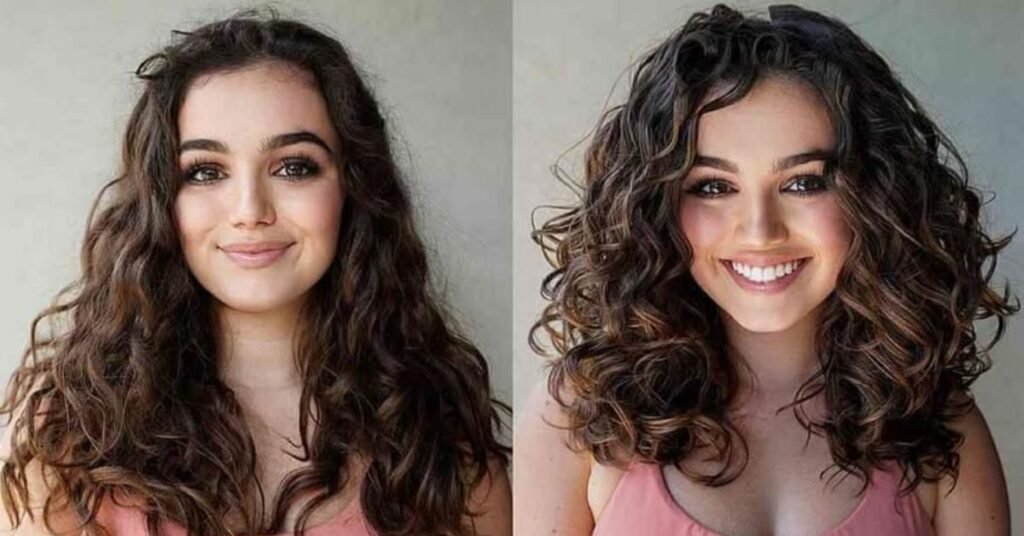
Even with the best intentions and the most expensive products, certain habits quietly destroy 2C hair day after day. How to maintain wavy curls over the long term means not just knowing what to do it means knowing what to stop doing. The most damaging mistakes aren’t exotic or obscure. They’re the everyday habits that feel harmless or even helpful but work directly against your wave pattern. Identifying them is often the breakthrough moment that finally makes everything click.
How to make wavy hair look defined is frequently more about removing bad habits than adding new techniques. The moment most people stop brushing their dry 2C hair, stop over-washing, and stop piling on products they don’t need, their waves improve dramatically sometimes within a single wash day. This section covers the two biggest categories of mistakes: washing habits that deplete your hair and product habits that suffocate it.
Over-Washing and Product Buildup Issues
Over-washing is the most common mistake in 2C hair routines and the most damaging. Every time you shampoo, you remove the natural oils from your scalp and strands. For 2C hair, which already has a harder time distributing those oils than straight or fine hair types, over-washing creates a cycle of permanent dryness that no amount of conditioner fully repairs. Why is my 2C hair frizzy despite using good products? If you’re washing daily or even every other day, over-washing is almost certainly a primary cause. The hair is too stripped and too dry to form smooth, defined waves so it compensates by frizzing.
Product buildup is the other side of this coin. Ironically, buildup often results from trying to compensate for over-washing. You use more product to combat the dryness, which creates more buildup, which makes your waves look worse, which makes you use more product and the cycle continues. How to reduce frizz in 2C hair caused by buildup requires a monthly clarifying shampoo session to strip the accumulated layers of product residue from your strands. After a clarifying wash, your hair will absorb moisture more readily, your products will perform better, and your waves will look more defined with less effort. Think of clarifying as a system reset necessary maintenance rather than a harsh treatment.
Using Heavy Products That Weigh Down Curls
Using heavy products that weigh down curls is a mistake that feels counterintuitive. You have thick, dense 2C hair surely it can handle rich, heavy products? Not necessarily. There’s a critical difference between products that are deeply nourishing and products that are physically heavy. Thick butters, heavy waxes, and dense creams don’t penetrate the hair shaft the way lighter, water-based formulas do. Instead, they sit on the surface of the strand, creating a coating that adds weight without adding moisture. Your waves go flat by midday not because your hair is thin but because it’s carrying a product burden it can’t lift.
How to prevent frizz in humidity actually gets harder when you’re using heavy products because they attract atmospheric moisture to the product layer on the surface of the strand rather than protecting against it. Silicone-free hair products are the foundation of solving this silicones create a smooth, shiny coating that looks great initially but builds up over time and blocks every moisture treatment you apply afterward from actually reaching the hair. When your deep conditioning masks stop making any difference despite consistent use, silicone buildup is usually the culprit. Switch to silicone-free hair products, do a clarifying wash, and give your hair two to three wash cycles to recalibrate. Most people see a significant improvement in definition, bounce, and frizz control for wavy hair within two weeks of making this switch.
Read More About: Trendy Curvy Outfits Inspo 2026 The Ultimate Fashion Guide for Every Curve, Every Occasion & Every Season
Best Hairstyles for 2C Hair
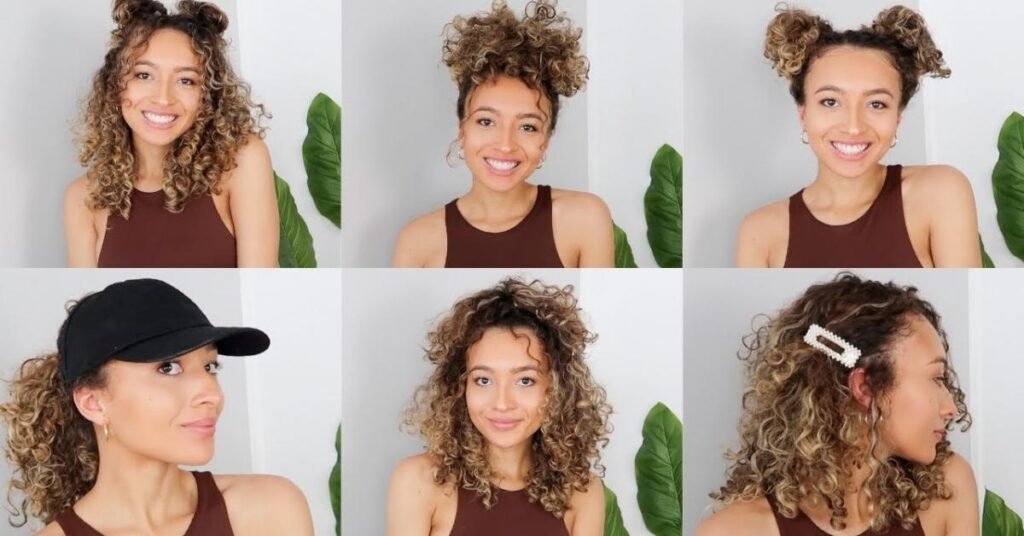
The right haircut is a game-changer for 2C hair and the wrong one is a quiet disaster that no amount of product or technique can fully fix. Best haircut for wavy hair at the 2C level always involves strategic layering. Without layers, 2C hair’s natural density and volume distribution creates a pyramid shape: flat at the crown and enormous at the ends. Layers remove the bulk at the right points, allow the waves to form freely along the entire length, and create the movement and shape that make 2C hair look its absolute best. Best hairstyles for 2C hair work with the wave pattern rather than against it.
Layered haircut for wavy hair is the universal recommendation across the curl care community for type 2C hair and it’s been the standard advice from professional curl stylists for decades. The specifics of which layered cut works best depends on your face shape, your hair density, and how much length you want to keep. But the principle is always the same: remove weight through the lengths and ends to allow the waves to spring up freely. Here are the most flattering and trending options for 2C hair right now.
Layered Cuts for 2C Hair
The shag haircut for curls is the reigning champion of 2C hair cuts in 2025. The shag features short layers at the crown, progressively longer layers through the mid-lengths, and wispy, textured ends a structure that is almost perfectly designed for 2C hair. Every layer creates a new point where a wave can form freely, which means more definition, more movement, and less of that dreaded bottom-heavy pyramid shape. Curtain bangs paired with a shag frame the face beautifully and add a soft, effortless quality that suits 2C waves particularly well. The shag works best for 2B and 2C hair types where there’s enough natural texture and density to fill out the layers dramatically.
The wolf cut wavy hair trend exploded in 2024 and it’s still one of the most requested cuts for 2C hair. The wolf cut takes the shag’s layering philosophy and amplifies it shorter, choppier layers at the crown with longer, wilder layers through the body of the hair. For 2C hair specifically, the wolf cut removes weight in all the right places while creating incredible movement and volume that the wave pattern naturally enhances. The octopus haircut layers a close relative of the wolf cut featuring very long, flowing layers that cascade from a shorter crown section also work beautifully on 2C hair for those who want maximum length with serious texture. All of these cuts share the same core principle: strategic layering that serves the wave pattern.
Short vs Long Hairstyles for 2C Hair
Best hairstyles for 2C hair span a wide range of lengths but each comes with specific considerations unique to type 2C texture. Short 2C hair is bold and striking. The waves cluster near the face and crown, creating texture and movement that’s even more dramatic at shorter lengths. A wavy bob at collarbone length is one of the most flattering options for 2C hair long enough to show the full wave pattern, short enough to be effortless and quick to style. A shag bob with layers adds even more dimension. Short pixie-length cuts with 2C hair require a stylist who genuinely understands wave patterns because the wrong cut at that length can result in uncontrollable volume and shape.
Long 2C hair is spectacular when managed well think long, flowing waves with serious volume and definition. The key challenge at long lengths is weight. As 2C hair grows, the sheer mass of thick, dense strands can pull the waves straighter, especially at the roots. Long layers solve this by reducing the weight at the lengths while keeping the overall length intact. Regular trims every eight to ten weeks prevent split ends from traveling up the shaft (which damages the wave pattern over time) and keep the shape of the cut working for you. Whether you choose short or long, the non-negotiable for every 2C hair hairstyle is this: the cut must be designed for your natural wave pattern, ideally shaped by a stylist who cuts curly or wavy hair specifically.
How to Refresh 2C Hair Between Wash Days
How to refresh 2C hair between washes is one of the most practical skills in your entire 2C hair toolkit. Nobody wants to wash and restyle every single day and for 2C hair, you really shouldn’t. Wash days are intensive. They’re also not necessary every day. Second and third-day 2C hair can look just as good as wash-day hair if you know how to refresh it properly. The secret is understanding that most styling products in your hair are water-activated. They don’t disappear after wash day they go dormant until moisture reactivates them.
How to enhance natural waves on refresh days requires significantly less product than a full wash day. The goal isn’t to restyle from scratch it’s to wake up what’s already there. A light mist of water reactivates the products in your hair. A small amount of additional product can boost definition where it’s needed. A brief diffuse session on low heat sets everything back in place. How to air dry wavy hair on a refresh day works just as well as diffusing if you have the time. The result, done correctly, is waves that look nearly as good as they did on wash day with a fraction of the effort.
Quick Frizz Fix for 2C Hair Without Washing
Quick frizz fix for 2C hair without washing starts with understanding what type of frizz you’re dealing with. Surface frizz the fine, halo-like frizz that sits on top of otherwise defined waves responds beautifully to a tiny amount of curl enhancing products like an anti-frizz serum or a light oil. Rub one or two drops between your palms and smooth them gently over the surface of your dry hair. Don’t scrunch it in scrunching anti-frizz product into dry 2C hair disrupts the wave clumps and can make things worse. Smooth it lightly over the surface to seal the cuticle and tame the frizz layer without disturbing the definition underneath.
How to refresh 2C hair between washes when the waves themselves have lost shape and definition not just surface frizz requires the “wet refresh” method. Fill a spray bottle with water and a small amount of leave-in conditioner for wavy hair (about one teaspoon per cup of water). Mist your hair until it’s lightly damp and the products in your hair begin to reactivate. Scrunch upward through the lengths to re-form the wave clumps. Add a tiny amount of curl cream for 2C hair to any sections that need more definition. Then either air dry or diffuse briefly on low. How to keep curls bouncy all day on a refresh day also benefits from the pineapple-and-shake technique: gather your hair in a loose pineapple, leave it for five minutes, release it, and gently shake your head at the roots to redistribute the volume. Simple, fast, and surprisingly effective.
FAQ
What is 2C hair type?
What is type 2C hair in the simplest terms? It’s the most defined and texture-rich subcategory of wavy hair on the curl pattern chart. Type 2C hair features strong S-waves that begin at the root and run through the full length of the hair. The strands are thick and coarse, the density is high, and the frizz tendency is very high especially in humidity. Is 2C hair curly or wavy? Technically wavy, but it sits right at the border of curly hair and is frequently mistaken for 3A curly hair because of how strong and defined the wave pattern is. The key difference is that 2C waves maintain a flat S-shape rather than forming the spiral coils of Type 3 curly hair.
How do you take care of 2C hair?
How to care for type 2C hair follows a clear system: wash two to three times per week with a sulfate-free shampoo, deep condition weekly, and style on soaking wet hair using layered products leave-in conditioner, curl cream for 2C hair, and a strong-hold gel. Use the scrunching technique to apply products and either plop and air dry or diffuse on low heat. Protect your waves overnight with the pineapple hair method and a silk pillowcase for curls. Refresh between wash days with a water and leave-in spray. Clarify once a month to remove product buildup. That’s the complete foundation of how to maintain wavy curls at the 2C level.
What products are best for 2C curls?
Best products for 2C hair follow a specific hierarchy. Start with a sulfate-free shampoo for curls that cleanses gently without stripping. Follow with a rich, silicone-free conditioner and use the squish-to-condish technique. Apply a leave-in conditioner for wavy hair as your base moisture layer. Layer a curl cream for 2C hair for definition and a strong-hold gel for frizz protection and hold. Monthly, use a clarifying shampoo to clear buildup. Look for curl defining products and curl enhancing products that are specifically formulated for thick, wavy, or wavy-curly hair these consistently outperform generic options on 2C hair because they’re built for similar texture and porosity profiles.
Is 2C hair curly or wavy?
Is 2C hair curly or wavy is genuinely one of the most debated questions in the curl typing community and the honest answer is that it’s both, in the best possible way. Officially, 2C curl type falls within the wavy hair category on the curl pattern chart. But in practice, 2C hair behaves more like a hybrid. The wave pattern is strong enough and defined enough that many 2C hair techniques, products, and routines overlap significantly with what’s recommended for Type 3A curly hair. The difference between 2C and 3A hair comes down to coil formation: 3A forms distinct spiral curls while 2C maintains a flat S-wave. But both need rich moisture, strong-hold products, and protective overnight care. Think of 2C hair as the bridge between wavy and curly and enjoy the best of both worlds.
Conclusion
2C hair is genuinely one of the most beautiful hair types in the entire curl pattern chart powerful, defined, voluminous, and full of character. It’s also one of the most demanding. But demanding doesn’t mean difficult. It means consistent. It means intentional. It means understanding your specific hair’s needs and showing up for them with the right routine, the right products, and the right techniques.
Start by confirming your type. Use the characteristic traits and comparison tables in this guide to place yourself confidently in the 2C curl type category. Build your wash day routine around sulfate-free shampoo for curls, deep conditioning, and wet-hair styling. Choose silicone-free hair products that hydrate deeply without coating your strands. Master the scrunching technique and the gel cast. Protect your waves overnight with the pineapple hair method and a silk pillowcase for curls. Find a haircut ideally a shag haircut for curls or a layered haircut for wavy hair that removes weight and lets your waves form freely.


