
Apps and Software AlienSync Explained Features, Uses, Benefits & Complete Guide 2026


Picture this. A customer pays you at 9 a.m. Your CRM shows the sale right away. Yet your shipping team has no idea until noon. That gap costs time, money, and trust. It is the exact problem that apps and software AlienSync claims to solve.
The AlienSync platform shows up online as a hub that links your tools and moves data between them. That sounds great. However, much of what you read about it is hard to confirm. You will learn how a software synchronization platform works, how it compares with Zapier, Make, and n8n, and how to stay safe. Let’s get started.
| Quick Snapshot | What We Know |
| Product category | Integration and sync tools (a real, proven category) |
| Official website | Not confirmed |
| Public price list | Not found |
| Independent reviews | None found on major review sites |
| Best first step | Compare it with proven AlienSync alternatives |
What Is Apps and Software AlienSync?
Apps and software AlienSync is described as a tool that links your digital tools into one hub. It aims to sit between your apps and move data in both directions. Many pages call it an AlienSync platform built for application synchronization. The idea is simple. You change a record in one place. The change shows up everywhere else.
Here is the catch. Public proof is thin. Reports found no clear company page, no public price list, and no listings on review sites. So treat every claim with care. Unverified does not mean fake. It does mean you should look before you leap.
AlienSync as a Technology Information Platform
Some web pages present the name as a tech information source instead of a working product. Others describe AlienSync software as a real sync engine. These stories do not always match. That mismatch is a warning sign worth noting. Before you trust any page, ask one question. Does it show a real product, a real team, and a real login screen? If the answer is no, you are reading marketing copy. Good research starts with that simple habit.
Understanding AlienSync as a Software Synchronization Concept
Think of two notebooks that copy each other’s edits. You write a phone number in one. The second notebook adds it a moment later. That is the core of real-time data sync. A software synchronization platform does this job across connected applications such as your CRM, email tool, and calendar. The concept is old and proven. Many trusted tools already do it well. So the idea behind AlienSync is sound. The open question is whether this specific product delivers it.
Why the AlienSync Name and Product Identity Matter
A clear identity builds trust. You need a company name, a domain, and a developer you can contact. Without them, you cannot judge AlienSync legitimacy. Lookalike names also cause trouble. Scammers copy brand names and push fake installers. A single wrong click can expose your passwords. So always confirm the AlienSync official website before you sign up. Check who owns it. Check how long it has existed. Those two checks take five minutes and can save you months of pain.
How Does Apps and Software AlienSync Work?
Most software integration tools follow the same four steps. You connect your apps. You set rules. Data moves on its own. Then you watch the results. Pages about AlienSync software describe this same flow. Treat it as a “typically described” path and not as proven fact.
This pattern is the backbone of workflow automation software. It turns boring copy-paste jobs into quiet background work. Each step below shows how the data transfer process unfolds. Read it as a general guide to how any sync tool behaves.
Connecting Different Applications and Software
Every sync journey starts with a connector. A connector is a small bridge between two apps. You pick your tools from a library and sign in with your account. This step relies on user authentication and application permissions. Grant only the access you need. If a tool wants full control of your inbox just to read contacts, pause and rethink. Good app connectivity starts with tight permissions. It ends with fewer surprises later.
Creating Automation Rules and Workflows
Rules tell the tool what to do. A rule has two parts. The first is a workflow trigger. The second is an automated action. For example, a new lead lands in your CRM. The tool then creates a task and pings your team chat. That is how you learn how to automate workflows between multiple applications. Start small with one trigger and one action. Name each rule clearly. A label like “Web form to CRM, new lead” beats “Sync 1” every time.
Synchronizing Data Across Connected Platforms
Now the data starts to flow. One-way sync copies data from a source to a target. Two-way sync updates both sides. Two-way sounds better. It is also riskier. If both sides change at once, you get clashes. So begin with one-way sync on low-stakes data. Try a contact list or a simple spreadsheet. Once you trust the setup, upgrade to real-time synchronization for sales or support records. Slow and steady wins here.
Monitoring and Managing Automated Workflows
A sync that runs silently can also fail silently. That is why dashboards matter. A good workflow management platform shows connection status, last sync time, and error alerts. Check it often during the first month. Turn on failure alerts from day one. Otherwise synchronization errors can pile up unseen. Then your team works from stale data without knowing it. A two-minute weekly review prevents that headache.
Core Features of Apps and Software AlienSync
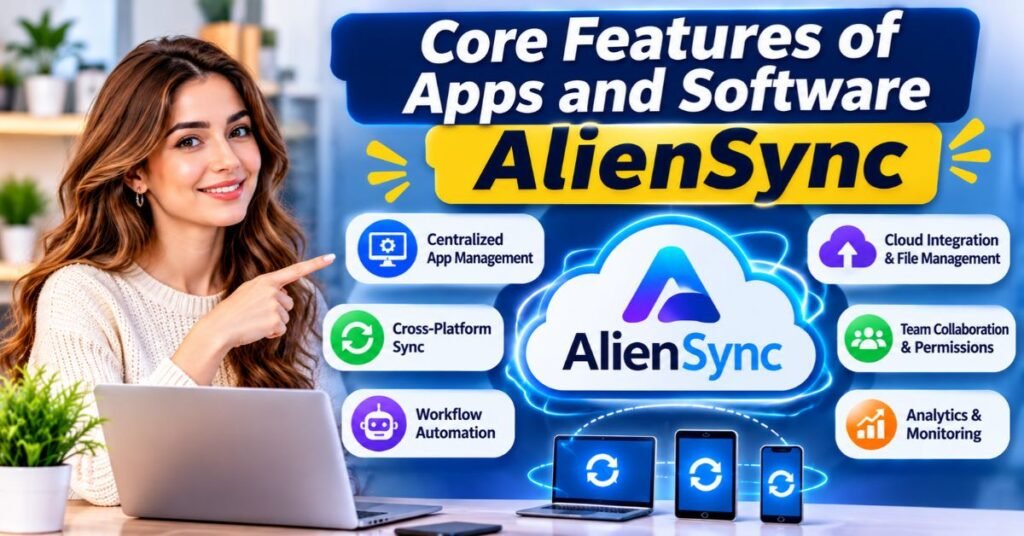
The AlienSync features below come from public descriptions. None is verified through a trusted source. Still, they match what strong tools in this field offer. Use them as a checklist when you test any platform.
The table shows each feature and its status. Keep in mind that a long feature list means little without proof. What counts is whether the tool works under real daily pressure.
| Feature | What It Does | Verified? |
| Centralized dashboard | Shows all connections in one place | Claimed only |
| Cross-platform sync | Updates data across apps | Claimed only |
| Automation rules | Runs trigger-and-action logic | Claimed only |
| Role-based access | Controls who edits what | Claimed only |
| API and webhooks | Builds custom connections | Claimed only |
Centralized Application Management
Imagine one screen that shows every tool you use. That is centralized app management. It saves you from logging into five dashboards each morning. A solid application management system lists each connection and its health. It also shows recent errors. This view helps you spot unused links that waste money. Many teams pay for tools they no longer need. A central panel exposes that waste fast. It also builds a centralized digital workspace that your whole team can follow.
Cross-Platform Data Synchronization
Your tools do not live in one ecosystem. You might use a Windows laptop, a Mac phone app, and a web-based CRM. Cross-platform integration makes them share facts. A change in one place appears in the rest. This supports cross-platform data management and keeps everyone on the same page. The big test is software compatibility. Does each connector handle your custom fields? Does it keep formats intact? Always test with a small batch before you move real customer records.
Automated Workflow Management
Here the tool does the busywork. Automated workflows can send alerts, create tasks, and update records. Good digital workflow automation also supports schedules and conditions. For example, send a reminder only if an invoice is overdue. This is business process automation at its simplest. It removes the dull steps that eat your day. Remember one rule though. Automate a clean process. Automating a messy process only makes the mess run faster.
Cloud Integration and File Management
Files travel too. Cloud integration links storage tools with your project apps. A signed contract can drop into the right folder on its own. A shared sheet can update a task board. This is cloud-based application integration at work. It also supports cloud software management by keeping files in one logical place. Check storage limits and file size caps before you commit. Some tools throttle big uploads. That detail can quietly break your plan.
Team Collaboration and User Permissions
Teams need guardrails. Team collaboration software should let admins decide who can view or edit each workflow. This is the heart of managing user access permissions. A junior intern should not delete a live automation. Role-based access prevents that accident. It also gives you an audit trail. If something breaks, you can see who changed what. Strong permission controls separate a toy from a true business tool.
Analytics and Activity Monitoring
Numbers tell the story. Workflow monitoring and analytics show how many tasks ran and how many failed. They also reveal slow spots. If one rule takes ten minutes each time, you can fix it. Activity logs help in audits too. They prove what moved where and when. Among data management tools, those with clear logs earn extra trust. Without logs, you are flying blind.
API and Webhook Integration
Not every app has a ready-made connector. That is where the application programming interface helps. API integration lets technical users build custom links. Webhook support goes further. A webhook sends a message the moment something happens. That powers webhook automation with almost no delay. Together, these API connections make a platform flexible. They also extend it to niche or in-house software that standard libraries skip.
What Types of Apps and Software Can AlienSync Connect?
No official connector list exists for AlienSync software. So the groups below show what sync tools usually link. Do not assume AlienSync supports all of them. Ask the vendor for a written list before you buy. Application compatibility is the first thing to confirm.
Broad support is a big plus for third-party integrations. It lets you grow your tool stack without rebuilding. The more categories a platform covers, the more flexible your scalable software infrastructure becomes. Still, depth beats breadth. A connector that handles ten fields well beats one that half-handles fifty.
Business and Productivity Applications
Calendars, documents, email, and chat form the daily core. A good link between them is pure productivity automation. A meeting invite can create a notes page. A shared doc can post a message to your team. These productivity tools work best when they speak the same language. By integrating productivity applications, you cut the tab-hopping that drains focus. Even small links, like auto-filing email receipts, add up to hours saved each month.
Customer Relationship Management (CRM) Tools
Your CRM holds your most valuable data. CRM integration keeps it fresh across sales, support, and billing. A deal marked “won” can trigger an invoice and a welcome email. This is connecting CRM and marketing tools in practice. The payoff is a single view of each customer. Be careful with duplicate data records, though. Set matching rules by email or ID. Otherwise one customer can appear three times.
E-Commerce and Payment Platforms
Online stores run on speed. E-commerce automation links orders, stock, shipping, and payments. When a buyer pays, the stock count drops and a label prints. Accounting software logs the sale on its own. These business software solutions reduce costly slips like overselling. Payment data is sensitive, so data encryption and strict permissions are a must. Never connect a payment tool to any platform you cannot verify.
Marketing and Communication Software
Marketers juggle email tools, social schedulers, and analytics. Syncing them gives a cleaner picture of each campaign. A new subscriber in one tool can join the right list in another. Chat alerts can flag a hot lead at once. This real-time information sharing helps teams act fast. It also supports synchronizing business information between sales and marketing. When both teams see the same facts, they argue less and close more.
Cloud Storage and Project Management Tools
Files and tasks belong together. A project board can link to the right folder. A completed task can archive its files by itself. This keeps cloud-based services tidy and easy to search. For remote teams, it also cuts the “where did I save that?” chat. Good software interoperability matters most here. If your storage tool and task tool cannot talk, your team wastes time on manual uploads.
Key Benefits of Apps and Software Synchronization
The strongest AlienSync benefits are really category benefits. Any solid sync tool can deliver them. They explain benefits of cross-platform application synchronization in plain terms. You save time, reduce errors, and give your team a shared truth.
Numbers help here. Studies often show that employees lose hours each week to repeat tasks. That time adds up to weeks each year. By automating repetitive business tasks, you win that time back. Then you can spend it on work that needs a human brain.
Reduced Repetitive Tasks and Manual Work
Copy-paste work is tiring. It is also easy to skip. Reducing manual data entry frees your day for real thinking. Suppose you log ten orders into three tools each morning. That is thirty entries. A sync rule cuts it to zero. Over a month, that is hours back in your pocket. This is a core goal of software integration and automation. Less drudgery also means happier teams.
Improved Data Accuracy and Consistency
When data lives in many places, it drifts. One tool shows an old address. Another shows the new one. Sync tools fix this by keeping one source of truth. Better automated data synchronization means fewer clashes and cleaner reports. You also trust your numbers more. That trust helps in meetings. Nobody wastes time asking whose spreadsheet is right. Consistency is quiet, but it powers every smart decision.
Better Team Collaboration and Productivity
Shared data creates shared focus. Sales sees the same notes as support. Finance sees the same totals as ops. That clarity speeds up handoffs and improving workflow efficiency becomes natural. Strong team collaboration software also cuts status meetings. People check the dashboard instead of asking around. Remote teams gain the most. Time zones matter less when updates land on their own.
Fewer Manual Errors and Workflow Delays
Humans make typos. Machines rarely do. A wrong digit in an invoice can cost real money. Sync rules remove that risk at the source. They also cut waiting time. A task no longer sits idle until someone remembers it. This is business process optimization in action. Fewer errors also mean fewer apology emails. That alone is worth the setup effort.
More Flexible and Scalable Digital Operations
Growth brings new tools. Without sync, each new tool adds more manual work. With sync, you plug it in and keep going. That is what makes software integration solutions so valuable for growing firms. A scalable software infrastructure adapts as your team grows. It also supports wider digital transformation solutions across the company. Think of it as laying pipes before you build more rooms.
Practical Uses of AlienSync Style Software Integration
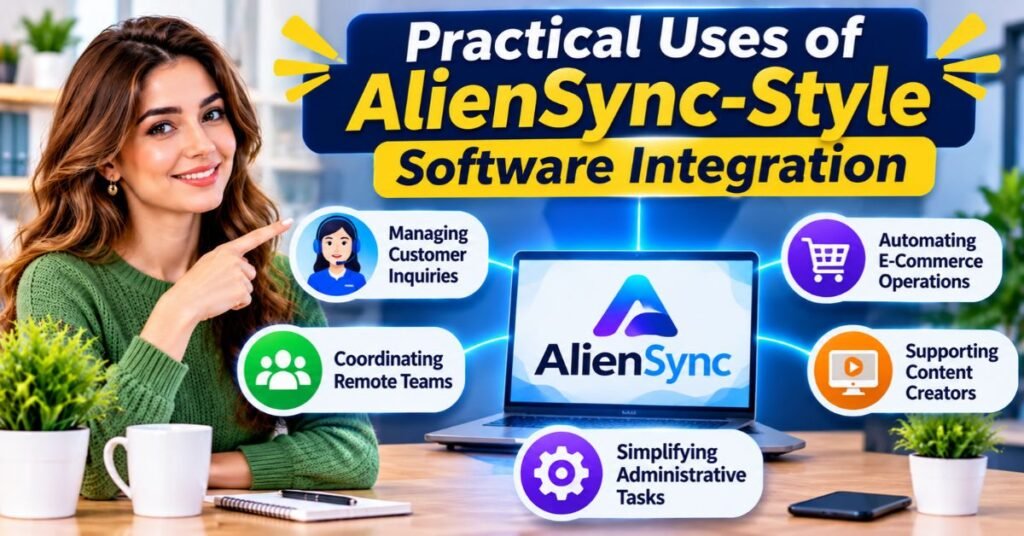
Real examples make the idea click. The AlienSync uses below apply to almost any sync tool. Each one shows how workflow automation software turns a dull chore into a quiet background task.
Here is a short, illustrative case study. Imagine Maya, a freelance designer. She sends invoices from one app and tracks them in a spreadsheet. Each Friday she spends an hour matching payments by hand. After she links the tools, paid invoices update the sheet on their own. Her Friday chore shrinks to five minutes. The example is hypothetical. Still, it shows the kind of gain people chase.
See Also: App and Socials AlienSync Explained Features, Setup, Safety & Complete Guide 2026
Managing Customer Inquiries and Business Data
A web form can feed your CRM. The CRM can then alert your sales team. Finally, an email tool can send a friendly reply. That chain protects you from lost leads. It also builds a clean record of every chat. When managing customer data this way, speed wins. A reply within minutes beats a reply within days. Clean records also help you spot repeat buyers and loyal fans.
Automating E-Commerce Operations
Orders trigger a chain of steps. Stock updates. Labels print. Customers get tracking emails. Accounting tools log the sale. Doing all that by hand is slow and risky. With e-commerce automation, it runs while you sleep. Peak seasons get easier too. A sale weekend will not bury your team in paperwork. Start with one step, such as order-to-email. Then add more links once it runs smoothly.
Coordinating Remote Teams and Projects
Remote work spreads people across time zones. Sync tools bridge that gap. A finished task can notify the next person. A shared board can update itself from chat messages. This gives you managing connected software systems without constant check-ins. Everyone sees progress at a glance. Fewer meetings mean more deep work. Over time, trust grows because the data is always visible.
Supporting Content Creators and Digital Marketers
Creators publish in many places. A new blog post can trigger a social share. It can also add itself to your newsletter queue. Analytics can flow into one sheet. This is productivity automation for people who live online. It frees you to create instead of copy links. Marketers also gain cleaner campaign data. They can see which post drove which sale. That insight sharpens every future plan.
Simplifying Administrative and Routine Tasks
Admin work is endless. Reminders, reports, and file sorting eat the day. Automation handles these with ease. A weekly report can compile itself and land in your inbox each Monday. Expense receipts can file themselves into the right folder. This is automated task management at its best. Small wins pile up fast. Soon your week feels lighter and far less rushed.
Apps and Software AlienSync vs. Other Automation Platforms
A fair comparison needs facts. The table below uses public details for proven tools. For AlienSync, nothing is confirmed. Check each vendor’s own site for current numbers before you decide, since app counts and prices change often.
This integration platform comparison points to one clear lesson. Proven tools publish pricing, reviews, and app lists. A new or obscure tool should do the same. You can read user ratings on G2 and Capterra to check real feedback.
| Factor | Zapier | Make | n8n | Power Automate | AlienSync |
| Public pricing | Yes | Yes | Yes | Yes | Not confirmed |
| Independent reviews | Thousands | Thousands | Hundreds | Thousands | None found |
| Open source | No | No | Yes (fair-code license) | No | Not confirmed |
| Self-hosting | No | No | Yes | Limited | Not confirmed |
| Free option | Limited free plan | Limited free plan | Free self-hosted | Limited or trial | Not confirmed |
| App count | Thousands | Thousands | Hundreds, extensible | Hundreds of connectors | Not published |
AlienSync vs. Zapier
The Zapier automation platform is famous for its huge app library. Its “Zaps” link a trigger to one or more actions. Setup is quick and friendly for beginners. Zapier also publishes its pricing and security details. AlienSync offers no such public data. So Zapier wins on trust and proof today. If AlienSync later shares its numbers, the gap could shrink. Until then, Zapier is the safer pick for most people.
See Also: Meals Included on PaxTravelTweaks Offers Complete Booking Guide 2026
AlienSync vs. Make
Make workflow automation uses a visual canvas. You drag modules and draw lines between them. That layout suits complex, branching flows. Many users like its fair pricing for heavy tasks. It also has a large, active user base and clear documentation. AlienSync has no public canvas, demo, or guide to compare. For visual thinkers, Make is a strong, proven choice. It lets you see your logic instead of guessing at it.
AlienSync vs. n8n
The n8n integration platform appeals to technical teams. You can self-host it and keep data on your own servers. That helps with strict privacy needs. It also supports low-code development for custom steps. n8n has a smaller app list but is highly extensible. AlienSync shows no self-hosting option in public sources. If control and privacy top your list, n8n deserves a close look.
AlienSync vs. Microsoft Power Automate
Microsoft Power Automate fits teams that live in Microsoft 365. It links Outlook, Teams, SharePoint, and Excel with ease. Large firms like its admin controls and compliance tools. It can feel heavy for small teams though. AlienSync has no known Microsoft tie-in. Verify Power Automate’s current plans and limits before you commit. Details change, and the official page is always the best source.
Which Software Integration Platform Is Best?
The best choice depends on your needs. Beginners often pick Zapier. Visual builders lean toward Make. Privacy-focused developers pick n8n. Microsoft shops choose Power Automate. For best software synchronization platforms for businesses, proof beats hype. Do not crown AlienSync without evidence. The same goes for any tool with no public record. Run a free trial of two options. Then pick the one your team actually enjoys using.
How to Choose the Right Software Integration Platform
Choosing workflow automation software is a big step. The wrong pick wastes money and time. A smart process keeps you safe. This section shows how to choose the right workflow automation software in six simple moves.
Think of it like buying a car. You would not skip the test drive. You would also check safety ratings. Treat choosing automation software the same way. Slow down. Compare. Then decide.
Identify Your Automation Requirements
Start with your pain points. Which tasks eat your time? List them in plain words. Maybe it is lead entry. Maybe it is invoice matching. Next, rank them by impact. Pick the top two. Those become your first workflows. Clear goals stop you from buying features you will never use. They also help you judge any application management system fairly against your real needs.
Check Application Compatibility and Integrations
A tool is useless if it cannot reach your apps. Confirm application compatibility with each tool you use. Look for native connectors first. Then check for API-based integrations as a backup. Also ask about field-level support. Can it sync custom fields? Can it handle attachments? Use third-party app connectors only when the source is trusted. A short compatibility test now beats a painful surprise later.
Evaluate Ease of Use and Customization
Good tools feel simple on day one. Yet they should still grow with you. Try building one workflow without help. Did it take minutes or hours? Strong AlienSync user experience claims mean nothing without a real test. Look for no-code automation for quick wins. Check for low-code development options when you need more power. Balance matters. Too simple and you hit walls. Too complex and nobody uses it.
Review Security and Data Privacy
Never skip this step. Ask about data encryption, both in transit and at rest. Look for compliance with rules like GDPR. Check for third-party audits such as SOC 2. Read the AlienSync privacy policy if one exists. If none exists, treat that as a red flag. Follow application security best practices. Use strong passwords and two-factor login. Your data is only as safe as your weakest link.
Compare Pricing, Plans, and Usage Limits
Prices can hide in the fine print. Ask what counts as one “operation” or “task.” Check whether complex rules cost extra. Compare software subscription plans by real usage, not by headline price. Also read contract length and cancel terms. A cheap plan with strict limits can cost more in the end. Build a simple budget using your expected monthly volume. Then add a small buffer for growth.
Test Features Before Full Implementation
Never go all in on day one. Use a free trial or a sandbox. Connect one low-risk workflow first. Use dummy data. Watch for synchronization errors and delays. Then expand step by step. This approach limits damage if something breaks. It also gives your team time to learn. A careful pilot is the cheapest insurance you can buy.
Is Apps and Software AlienSync Legit and Safe to Use?
This is the key question. AlienSync legitimacy is not confirmed today. Public sources show many articles but little hard proof. That does not prove a scam. It does call for caution. Treat the product as unverified until the vendor shows real evidence.
So, is AlienSync safe to download and use? Nobody can promise that yet. You can lower your risk with smart checks. The steps below help you protect your data and your devices. As a simple rule, remember this line.
If you cannot find who built a tool, do not hand it your data.
Use the checklist below before you go further.
| Check | What to Look For |
| Company identity | Name, address, and leadership team |
| Pricing page | Public, dated, and clear |
| Independent reviews | Listings on trusted review sites |
| Security policy | Encryption, compliance, and privacy terms |
| Trial or demo | Available before you enter payment details |
| Customer references | Named clients you can contact |
How to Verify AlienSync’s Official Website and Developer
Start with the domain. Use the ICANN lookup tool to see who registered it and when. A brand-new domain with hidden details is a warning sign. Look for a real company address and named leaders. Search for them on professional networks. Check if the site has working contact forms. A true AlienSync official website should answer these basics. If it cannot, pause. Trust grows from checkable facts, not from slick design.
Security and Privacy Risks of Connected Applications
Every connection is a door into your data. A weak tool can leak customer records or login tokens. That is why software security matters so much. Review application permissions before you click “allow.” Grant the least access needed. Confirm that the vendor uses data encryption and clear user authentication. Also check how they store your tokens. Strong AlienSync security claims need proof, such as audit reports. Words alone are not enough.
How to Identify Suspicious Software Downloads
Fake installers are common. Warning signs include odd domains, pushy pop-ups, and requests to disable your antivirus. Be wary of sites that offer a free AlienSync download with no company behind it. Real vendors link to official stores or their own verified site. Scan any file before you open it. Never run unknown installers on a work device. If something feels rushed or strange, close the page. Your gut is a decent security tool.
Important Checks Before Sharing Personal or Business Data
Test with fake data first. Create a dummy contact list and a dummy order. Watch how the tool handles them. Read the terms on data ownership and deletion. Ask where servers are located. Make sure you can export and erase your data any time. This is secure data synchronization in practice. Only move real records once the tool proves itself. Patience here protects your customers and your reputation.
AlienSync Availability, Downloads, and Pricing
Many readers want quick answers on AlienSync availability. Sadly, public sources give very few. No confirmed app store listing or official installer appears in the research. So the answers below stay honest. They say “not confirmed” where proof is missing.
Pricing is the same story. Pages mention that cost “scales with volume.” No rate card backs that up. Treat any number you see as unverified. Always get terms in writing from the vendor.
| Question | Current Status |
| Windows or Mac | Not confirmed |
| Android or iOS | No official store listing found |
| Browser-based | Unconfirmed, though common for sync tools |
| Free tier | Not confirmed |
| Public price list | Not found |
Is AlienSync Available for Windows and Mac?
No official AlienSync software requirements are published. That means you cannot confirm Windows or Mac support. Be careful with any download link you find. Random files can carry malware. If a vendor does exist, it should list system needs and version history on its own site. Until then, do not install anything. Ask for AlienSync compatibility details in writing. A real product team will answer in plain terms.
Can You Use AlienSync on Android and iOS?
No listing appears in the main app stores for this name. Official stores add a layer of review, so their absence matters. Do not trust sideloaded files from unknown sites. If a mobile app is later released, check the developer name, reviews, and permissions first. Many sync tools work through mobile browsers instead. Still, that remains unconfirmed here. For now, treat mobile support as unknown.
Is AlienSync a Browser-Based Platform?
Most modern sync tools run in the browser. You sign in and build workflows online. That model is common for cloud-based application integration. It avoids heavy installs and updates itself. However, no source confirms this for AlienSync. Ask the vendor how it runs. Also ask where data is stored and processed. A browser-based tool still needs strong login security. Turn on two-factor authentication wherever it is offered.
Is AlienSync Free or Does It Require a Subscription?
No confirmed free tier exists in public sources. Many rivals offer limited free plans. Those plans let you test the tool at no cost. If AlienSync wants payment before you can try it, be careful. Ask about software subscription plans and trial terms before you share card details. A fair vendor will explain what you get at each level. Vague answers should slow you down.
What Is Currently Known About AlienSync Pricing?
Only one claim appears. Cost “scales with volume.” There is no public rate card to verify it. So you cannot budget with confidence. Treat AlienSync pricing as unknown. Use the questions below when you contact the vendor.
| Question to Ask | Why It Matters |
| What counts as one sync or operation? | It sets your real monthly cost |
| Does rule complexity cost extra? | Hidden fees can appear here |
| What are the contract and cancel terms? | You avoid lock-in |
| Is there a trial without payment? | You can test risk-free |
Common Software Synchronization Problems and How to Fix Them
Every sync tool hits snags. The issues below show up across the whole industry. They are not unique to AlienSync. Learning them early saves hours of troubleshooting synchronization issues later.
The table gives a quick view. Each fix is simple once you spot the cause. Keep it handy during your first month. Most problems fade after you tune your rules.
| Problem | Likely Cause | Quick Fix |
| Duplicate records | Weak matching rules | Match by unique ID or email |
| Missing updates | Bad field mapping | Recheck mapped fields |
| Slow sync | Rate limits or long polling | Adjust timing and volume |
| Conflicting data | Two-way edits at once | Pick one source of truth |
| Auth errors | Expired tokens | Reconnect and review access |
Duplicate Records and Repeated Data
Duplicate data records are the most common headache. They happen when a tool cannot tell that two entries match. A contact appears twice with slightly different spellings. Fix this with strong matching keys. Use email or a unique ID, not just names. Clean old duplicates before you start syncing. Then run a small test. If clones keep appearing, pause the rule and check your logic. Prevention beats cleanup every time.
Missing or Incomplete Updates
Sometimes a change never arrives. The cause is often field mapping. One app calls a field “phone” while another calls it “mobile.” If they do not match, data drops. Review your mappings line by line. Also check filters that might block certain records. Turn on failure alerts so you hear about gaps fast. A quick weekly spot-check of five records can catch trouble early. Small habits prevent big losses.
Slow Synchronization and Connection Delays
Delays frustrate everyone. They often come from rate limits set by the apps themselves. Some tools check for changes only every few minutes. Others handle big batches slowly. Check your plan’s polling interval. Spread heavy jobs across quieter hours. Also review the data transfer process for oversized files. A leaner workflow runs faster. If delays stay high, ask support for performance data.
Conflicting Information Across Applications
Conflicts appear when two apps change the same record at once. Which version should win? You must decide in advance. Choose one app as the source of truth for each data type. For example, your CRM owns contact details. Your billing tool owns payment data. Document these rules. Then set the sync direction to match. Clear ownership keeps your application synchronization calm and predictable.
Expired Permissions and Authentication Errors
Logins do not last forever. Tokens expire. Passwords change. When that happens, syncs stop. Watch for sudden failures after a password reset. Reconnect the app and review its application permissions. Remove old connections that nobody uses. Strong user authentication habits help too. Use unique passwords and two-factor login. A short quarterly audit keeps access tidy and secure.
See Also: 42+ Jerry Speyer and Robert De Niro Their New York Connection Explained Through Historical Records
Who Can Benefit From AlienSync-Style Software Integration?
Almost anyone with several tools can gain from sync. The more apps you use, the bigger the payoff. Still, the benefit depends on the platform you choose and how you set it up.
Some people gain more than others. A person with one app needs no sync. A team with ten apps almost certainly does. The groups below show who tends to win most from connecting multiple applications.
Small Business Owners and Entrepreneurs
Owners wear many hats. They handle sales, support, and bookkeeping alone. Sync tools take chores off that plate. A new order can update stock and send a thank-you note on its own. These business automation solutions also stay affordable when you start small. They level the field with bigger firms. Just choose a trusted vendor. A tool that fails can hurt a small firm far more than a large one.
Freelancers and Content Creators
Freelancers juggle many clients and apps. Sync tools keep invoices, calendars, and files in line. Creators gain too. A published post can trigger a share and an email blurb. This productivity automation gives you back creative hours. Many tools offer free plans that suit solo work. Test a few. Pick the one that feels light and clear. Your time is your biggest asset.
Marketing and Sales Teams
These teams live on data. Leads, clicks, and deals all need to flow in real time. Connecting CRM and marketing tools lets both sides see the full story. Sales knows which email a lead opened. Marketing knows which leads became customers. That loop improves targeting and follow-up. Syncing also cuts the blame game over missing leads. Everyone works from the same numbers.
Students and Educators
Learning tools multiply fast. Students use notes, calendars, and shared drives. Teachers use grading tools, forms, and chat. Simple sync links save time. A form response can land in a gradebook sheet. A deadline can appear on a student’s calendar. Many no-code automation tools suit beginners here. They also teach valuable digital skills. Just protect student privacy. Check data rules before you connect any record.
Developers and IT Professionals
Developers want control. They use APIs, scripts, and webhooks to shape workflows. Webhook automation and API connections let them bridge odd systems. IT teams also care about logs, access rules, and uptime. A flexible workflow management platform with open standards fits them best. Self-hosted options like n8n give extra privacy. For this group, documentation quality often decides the winner. Poor docs waste more time than any missing feature.
Future of App Integration and Workflow Automation
The sync world moves fast. Tools get smarter, easier, and safer each year. These trends apply to the whole industry, not just AlienSync. Watching them helps you pick tools that last.
Expect more automation with less setup. Expect tighter rules on data privacy too. The winners will blend power with simplicity. Here is where the field is heading.
AI-Powered Workflow Automation
AI is entering automation fast. It can suggest workflows, write rules, and spot patterns. You may soon describe a task in plain words and get a working flow. That speeds up digital workflow automation for non-technical users. AI also helps sort messy data. Yet human review still matters. A smart tool can still make a wrong guess. Keep a person in the loop for key decisions.
More Accessible No-Code Integration Tools
Setup keeps getting easier. No-code automation now lets ordinary users build complex flows with drag-and-drop screens. Templates cover common jobs, like lead capture or invoice sync. This opens software integration and automation to teams without developers. Meanwhile, no-code automation tools and low-code workflow platforms blend together. You can start simple and add code later. That path keeps growth smooth.
Stronger Data Privacy and Security
Privacy rules keep tightening worldwide. Users demand clear policies and strong protection. Expect more focus on data encryption, audit logs, and region-based storage. Vendors that hide their practices will lose trust. Buyers will ask tougher questions about software security. That is good news for you. It pushes the whole market toward safer secure data synchronization. Always favor vendors who share details openly.
Smarter Error Detection and Troubleshooting
Tomorrow’s tools will find problems before you do. They will flag odd patterns, retry failed steps, and explain the cause in plain words. Better workflow monitoring and analytics will predict slow spots too. This cuts downtime and stress. It also lowers the skill needed to run complex flows. Fewer late-night fire drills mean happier teams. Look for tools that already show clear error messages today.
Integration Across Cloud and Local Systems
Not everything lives online. Many firms still run local servers and older software. Future tools will bridge both worlds more smoothly. This software interoperability lets cloud apps talk to on-site databases safely. Hybrid setups will grow common. They support steady digital transformation solutions without forcing a full move to the cloud. Flexible tools that handle both sides will have a clear edge.
Frequently Asked Questions
What Are the Main Features of AlienSync?
Public pages describe AlienSync features such as a central dashboard, cross-platform sync, automation rules, role-based access, and API support. None of these is independently confirmed. They match the standard set found in trusted sync tools. Ask for a live demo to see them work. Until you do, treat the list as a claim and not as fact.
Can AlienSync Connect Different Applications?
That is the stated goal. The platform claims to link CRMs, email tools, storage, and more. However, no public connector list exists. So you cannot confirm which apps work. Ask the vendor for a written compatibility list. Then test your key apps during a trial. Proven tools like Zapier publish their full lists openly.
Is AlienSync Available for Android and iPhone?
No official app store listing was found for this name. That means mobile support is unconfirmed. Avoid downloading files from unknown sites. If a real app appears, check the developer, reviews, and permissions first. Many sync tools also work through a mobile browser. Confirm that with the vendor before you rely on it.
Is AlienSync Free to Use?
No confirmed free plan exists in public sources. Some pages mention volume-based pricing. No rate card backs that up. Do not enter payment details until you see clear terms. Compare it with rivals that offer limited free tiers. A free trial without a card is the safest way to test any tool.
How Is AlienSync Different From Zapier?
Zapier is a proven platform with public pricing, large app libraries, and thousands of reviews. AlienSync lacks that public record. Both aim to connect apps and automate tasks. The big difference is trust and proof. Zapier shows its work. AlienSync, as marketed, does not yet. That gap matters when your business data is at stake.
Does Software Synchronization Require Coding Skills?
Not usually. Most basic setups work with no code at all. You pick apps, set triggers, and choose actions on screen. Custom API integration and webhook support may need some technical skill. Developers can go deeper with low-code development. Start simple. Learn as you grow. Most people never need more than the basics.
What Should You Do If You Cannot Verify the AlienSync Vendor?
Stop and compare. Do not share business data or payment details. Test proven options such as Zapier, Make, n8n, or Power Automate instead. Choose based on public pricing, real reviews, and clear security notes. If you still want to try AlienSync, use dummy data only. Ask for written answers on pricing, security, and support. No answer means no deal.
Final Thought
The need behind apps and software AlienSync is very real. Disconnected tools waste time and cause errors. Software integration tools can fix that. The category is mature and full of proven choices.
AlienSync itself remains unverified. Demand clear pricing, security details, and real customer references before you trust it. If it delivers, it earns a fair look. If it cannot, proven AlienSync alternatives are a safer start. Your next step is simple. Open a free trial of one trusted tool and build your first small workflow today.


