
Growth Navigate Funding Review 2026 Services Pricing & Legitimacy


Raising money can feel like walking through thick fog. You can’t see the path. You don’t know who to trust. That’s why many founders hire a guide. A solid Growth Navigate Funding review should start with one honest question. What does this guide actually do for you? You’ll find the answer here, along with its Growth Navigate Funding services, reported Growth Navigate Funding pricing, and the facts behind its big claims.
Here’s the short version. The company presents itself as a startup fundraising advisory. It doesn’t lend money. Many of its boldest numbers come from its own materials. You’ll learn what to verify, what to expect, and which startup funding alternatives may fit you better. Whether you run a business in Lagos, London, Lahore, or Los Angeles, the same smart checks apply.
What Is Growth Navigate Funding?
Not every name online points to the same business. Start by getting the basics straight. Then the rest of the picture falls into place.
Overview of Growth Navigate Funding
Growth Navigate Funding presents itself as a startup fundraising advisory. It helps founders prepare before they meet investors. It isn’t a bank. It isn’t an investment fund either. Think of it as one of many startup funding services that sell preparation, not cash. The company says it began in 2013 and lists offices in New York and San Francisco. Those details come from its own website. Independent confirmation wasn’t found. Be careful with the name too. GrowthNavigate.com is a separate site. It covers business coaching, financial advice, and capital access. No public record shows the two share an owner. Some blogs also use “growth navigate funding” as a general idea, such as matching capital to the next business milestone. That makes the funding advisory services label easy to mix up with other brands.
How Growth Navigate Funding Supports Startups
A good adviser works like a trail guide. The guide knows the route and carries a map. However, the guide can’t climb the mountain for you. A startup funding adviser like this one reportedly helps with plans, decks, models, and paperwork. It also offers investor introductions. A fundraising consultant of this kind can sharpen your story and cut wasted effort. That supports startup capital raising and builds startup investment readiness. It’s fundraising advisory for founders at its core. Still, your product, your customers, and your numbers decide the result. Investors back strong businesses. They don’t back strong slide designs alone. The best business funding solutions start with a business worth funding.
How Does Growth Navigate Funding Work?
Picture a road trip. You pick the destination first. Then you plan the route and pack the car. That’s how Growth Navigate Funding works in simple terms.
Assessing a Startup’s Funding Needs
Every plan starts with a hard look at your business. The adviser reviews your product, market, revenue, costs, cash, and ownership. This step shows how much money you really need. It also shows why you need it. Your business capital requirements might include hiring, inventory, marketing, or new technology. Good startup financial planning turns those wishes into numbers. You’ll need clean startup financial documents to do this well. These include profit and loss reports, balance sheets, and cash flow records. An investment readiness assessment then shows gaps before investors spot them. Fixing a gap early costs far less than explaining it later. Clear startup capital requirements also stop you from asking for too much or too little.
Developing a Fundraising Strategy
A plan without a target is just a wish. Your startup fundraising strategy sets the amount, the timeline, and the investor type. It also explains how you’ll use every dollar. Smart capital raising strategies match your stage to the right audience. A seed-stage founder shouldn’t chase late-stage funds. Investor targeting helps here. Instead of emailing hundreds of random names, you pick a short list of good fits. Timing matters too. Raise too early and you give away extra ownership. Raise too late and a desperate cash crunch weakens your position. The startup fundraising process usually takes months. Plan for that. Rushed rounds rarely end well.
Connecting Business Goals With Funding Opportunities
Money should follow goals. It shouldn’t lead them. Start with the milestone. Do you want to launch a product, enter a new country, or double your sales team? Then look at your startup financing options and pick the best match. Equity works for fast, risky growth. Debt suits steady income. Grants fit research or local programs. The choice between equity financing versus debt financing shapes your future control and your monthly cash. Good startup growth strategies link each funding source to a clear result. That also opens real startup investment opportunities instead of random meetings. For business expansion financing, the goal always comes first.
| Step | What Happens | What You Should Have Ready |
| Assess | Review product, market, cash, and ownership | Financial statements and customer data |
| Plan | Set the raise amount, timeline, and investor type | Use-of-funds breakdown |
| Prepare | Build deck, model, and data room | Pitch deck and forecasts |
| Outreach | Contact matched investors | Short investor list |
| Close | Run due diligence and review terms | Legal and tax records |
Growth Navigate Funding Services Explained
The company reports a full menu of help. Each item targets one part of the raise. Here’s what each one means for you.
Fundraising Strategy and Investor Targeting
Strategy comes before outreach. The company reports offering funding roadmaps, valuation comparisons, and positioning work. A strong investor outreach strategy also checks which investors back your industry, region, and stage. Ten warm leads beat a hundred cold ones. Venture capital firms often publish their focus areas. So do many angels. Read them closely. Next comes business valuation. Founders often guess too high or too low. Comparing similar deals gives a saner range. Finally, set a timeline that leaves room for delays. Rounds almost always run longer than expected.
Pitch Deck Development
Your deck has one job. It earns the next meeting. Pitch deck development usually covers the problem, solution, market, product, team, traction, and ask. The company reports decks of about 12 to 15 slides. That’s a handy guide. It isn’t a law. Some investors want shorter decks. Others want more detail. Strong investor pitch preparation also means practicing the talk. Expect hard questions about growth and costs. A good pitch deck and financial projections pairing tells one clear story. Pretty design helps. However, weak numbers still sink a beautiful deck. Keep every claim honest and easy to prove.
Investor Introductions and Relations
Warm introductions open doors. Cold emails often don’t. The company says it supports outreach, meeting prep, and follow-ups. It also claims relationships with more than 1,000 investors. That figure is company-reported. It hasn’t been independently confirmed. Even a real startup investor network guarantees nothing. Investors choose their own deals. Good investor relations continue after the first meeting. You’ll send updates, answer questions, and build trust. That’s investor relationship management in action. Ask any adviser which introductions it has made for startups like yours. Then ask what happened next.
Financial Modeling and Business Planning
Numbers tell your future story. The company reports financial modeling services such as revenue forecasts, scenario analysis, and dilution models. A model shows sales, costs, hiring, and cash needs over time. It also shows what happens if sales drop. That supports startup cash flow planning and a sound startup financial strategy. However, forecasts are estimates. They’re educated guesses, not promises. Investors will test your assumptions line by line. You must understand every number. If you can’t explain a cell, don’t show it. Own your model, even when someone else built it.
Due Diligence Preparation
Due diligence is the background check of fundraising. Investor due diligence looks at your books, contracts, ownership, and legal standing. Early due diligence preparation saves weeks later. Gather financial statements, company registration papers, shareholder lists, tax files, employee agreements, and intellectual property records. The full investor due diligence process often exposes small errors. Clean files build trust fast. Messy files raise doubts. Use a secure online data room. Share files only with people who truly need them. Track who opened what.
Cap Table and Equity Planning
Your cap table shows who owns what. Smart cap table management keeps that list accurate as new investors arrive. Each new round brings equity dilution. Your slice shrinks while the pie grows. The company reports cap table modeling, option pool planning, and term sheet support. Good equity planning shows how each round changes your control. Your startup equity structure also affects hiring, since staff often receive options. Read funding agreement terms closely. Look beyond valuation. Check voting rights, board seats, and investor protections. A lawyer’s review is money well spent.
| Service | What It Covers | What You Still Own |
| Strategy and targeting | Roadmap, valuation, investor list | Final choices |
| Pitch deck | Story, slides, design | Truthful claims |
| Introductions | Outreach and meeting prep | Relationships |
| Modeling | Forecasts and scenarios | Understanding the numbers |
| Due diligence | Document organization | Accurate records |
| Cap table | Dilution and term review | Legal sign-off |
What Funding Stages Does Growth Navigate Funding Support?
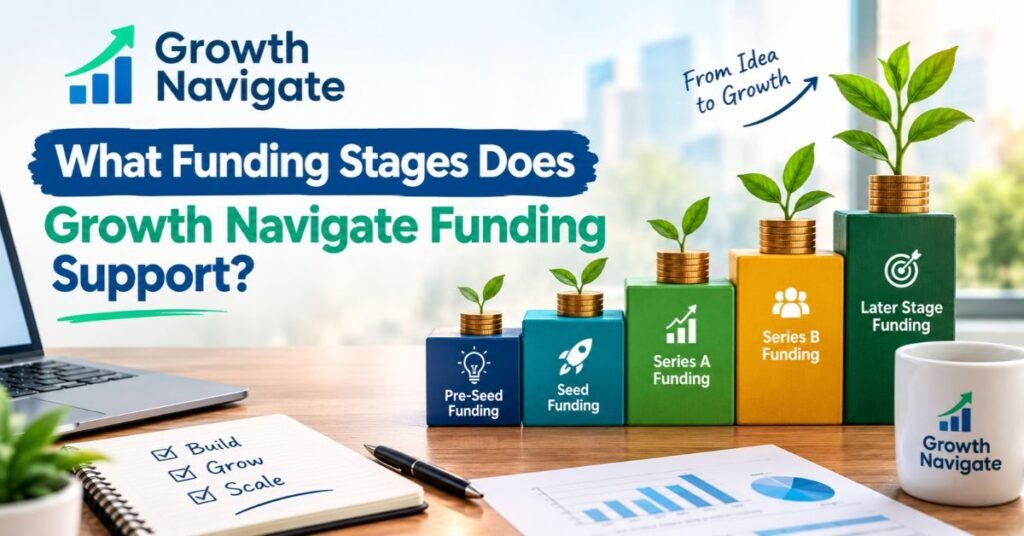
The company says it works from pre-seed to Series C and beyond. Each stage asks different questions. Here’s what investors usually want at every step.
Pre-Seed and Seed Funding
Early money bets on people. At the pre-seed funding stage, you may have only a prototype. Investors judge the founders, the idea, and the market size. Customer interest helps a lot. Seed funding services often center on a sharp deck and a simple model. Seed-stage investment usually follows early traction, such as pilot users or first sales. This is classic early-stage business financing. Amounts are smaller. However, mistakes here echo for years. Giving away too much equity now can hurt later rounds. Keep your story clear and your ask realistic.
Series A Funding
Series A is the proof stage. Investors want signs that growth repeats. They study revenue growth, customer retention, and unit economics. Series A funding often comes from larger venture capital funding firms. The venture capital fundraising process moves in steps. You’ll pitch, answer questions, share data, and negotiate terms. Your model must hold up under pressure. You also need a clear plan for the new money. Explain exactly which bottleneck it will fix. Vague plans lose deals.
Series B and Series C Funding
Later rounds fund scale. By Series B funding, you’ve proven the model. Now investors ask how fast you can grow without burning too much cash. Series C often supports bigger moves, such as new markets or acquisitions. This is business growth capital at a larger size. Investors check management depth, margins, and competition closely. A sound funding strategy for growing companies balances speed against efficiency. Requirements differ by country and industry. Treat any stage guide as a map, not a rulebook.
Growth Navigate Funding Pricing and Fees
Money questions deserve straight answers. So let’s look at the reported numbers. Then let’s look at what to ask before you sign.
How Much Does Growth Navigate Funding Cost?
The reported Growth Navigate Funding pricing has three packages. Launchpad costs $4,500 per month. Navigator costs $9,500 per month. Ascent uses custom pricing. A free 30-minute strategy call has also been advertised. These figures come from the source material, not from independent checks. Verify them directly. Prices change. Typical funding adviser costs add up fast, as the table shows. These examples don’t mean a three-month minimum exists. They only show how monthly fees stack.
| Package | Monthly Price (Reported) | 3 Months | 6 Months |
| Launchpad | $4,500 | $13,500 | $27,000 |
| Navigator | $9,500 | $28,500 | $57,000 |
| Ascent | Custom | Ask the company | Ask the company |
Potential Consulting Fees and Additional Costs
Monthly fees may not tell the whole story. Some advisers add success fees when you close a round. Others charge setup fees, extra reporting fees, or legal costs. The Growth Navigate Funding fees may include such items, so ask directly. Total fundraising costs also include your own time. Add lawyer fees, accountant fees, and travel. International founders should check currency rates and bank transfer charges too. Funding service fees vary widely across the industry. Compare at least three quotes. Ask about minimum terms and refund rules before you pay a cent.
What to Check Before Paying for Funding Services
Pause before you pay. A short fundraising preparation checklist can save thousands. Strong fundraising service evaluation compares what you get with what you pay. Demand business funding transparency on fees, scope, and results. Use the table below as a starting point.
| Question to Ask | Why It Matters |
| Which legal company will I pay? | Confirms who holds your money |
| What exactly is included? | Prevents surprise add-ons |
| Are there success fees? | Reveals the true cost |
| What’s the minimum contract? | Avoids lock-in |
| How do I cancel? | Protects your exit |
| Can I talk to past clients? | Tests the claims |
Does Growth Navigate Funding Provide Money Directly?
This is the most common question. Here’s the answer. Does Growth Navigate Funding provide direct funding? Based on the available information, no. It sells guidance, not capital.
Funding Advisory vs. Direct Lending
An adviser, a lender, and an investor do three different jobs. Mixing them up leads to costly mistakes. Paying an adviser doesn’t unlock a loan. It also doesn’t buy you shares from an investor. Banks offer business loan options that you repay with interest. Investors buy part of your company. Advisers prepare you for either path. Always ask who will provide the actual money. Then check their terms.
| Role | What They Do | How They Earn |
| Adviser | Prepares and guides you | Fees, sometimes success fees |
| Lender | Gives a loan | Interest and fees |
| Investor | Buys equity | Share of future value |
How Startups Can Access Investors Through Advisory Services
Advisers open doors. They don’t walk you through them. A typical path starts with research and a target list. Next come introductions and meeting prep. Then investors decide. Most will check funding eligibility requirements, such as stage, sector, and location. Many also run investor credibility checks on founders. Know your startup funding requirements before any meeting. The adviser can’t force a yes. Treat every introduction as a chance, not a promise.
Is Growth Navigate Funding Legit or a Scam?
Trust is the heart of this question. Is Growth Navigate Funding legit? The honest answer has two sides. The business has an online presence. But key claims lack outside proof.
Company Background and Business Transparency
Start with basic facts. Who owns the business? Where is it registered? Who runs it? Growth Navigate Funding legitimacy depends on clear answers to those questions. Public details about the Funding site are limited. The similarly named GrowthNavigate.com lists a San Francisco address and named leaders. However, nothing public ties it to the Funding site. This confusion fuels Growth Navigate Funding scam concerns. A confusing name doesn’t prove fraud. It does call for extra care. Check company registries in your country. Match the legal name on any contract with the one you researched. Any business funding adviser should pass that simple test.
Evaluating Funding Claims and Results
Big numbers need big proof. The company reports more than 300 startups helped and over $450 million raised for clients. It also advertises a 92% fundraising success rate. Yet no outside source confirms those figures. Ask how “success” is defined. Does it mean a signed term sheet or cash in the bank? Ask how many clients make up the 92%. Also remember the $450 million belongs to clients. It isn’t the company’s revenue or value. Market conditions matter too. Carta’s Q1 2026 data, as reported here, showed $30.4 billion in startup funding with more than 60% going to AI companies. A hot market can make any adviser look brilliant. Ask for case studies from startups like yours.
Warning Signs to Check Before Signing Up
Some red flags apply to every adviser. Guaranteed funding is the biggest one. No adviser controls an investor’s choice. Pressure to pay fast is another. Vague fees, missing contracts, and unclear services also deserve alarm. Never share banking or email passwords. Be wary of testimonials without names. The sister site’s homepage, for example, shows praise without named clients. A smart funding risk assessment weighs each flag. One warning sign doesn’t prove a scam. Several together should stop you. Spotting startup financing risks early protects both your cash and your reputation.
Benefits and Drawbacks of Growth Navigate Funding
Every service has trade-offs. Weigh both sides before you decide. A clear view beats a hopeful guess.
Potential Benefits for Startup Founders
The biggest benefit is time. Fundraising can swallow months. An adviser takes on research, documents, and polishing. You keep running the company. First-time founders gain the most. A guided path shows which startup funding decision-making steps come first. For example, imagine a hypothetical founder named Maya. She runs a small software firm with steady users. She’s never raised money. A guide helps her build a clean model, fix her data room, and target ten fitting investors. Without help, she might waste six months on random outreach. That’s an illustration, not a real client story.
Limitations and Possible Risks
Cost is the main drawback. Several thousand dollars a month hurts a small team. Meanwhile, results aren’t guaranteed. Introductions may lead nowhere. Some founders don’t need full service. Picture another hypothetical founder, Omar. He already knows investors and has a strong finance lead. He only needs a legal review of his term sheet. Paying for a full retainer wastes his money. A polished deck can’t fix weak demand either. Strong startup capital allocation starts with spending wisely, even on advice.
| Benefits | Drawbacks |
| Saves founder time | High monthly cost |
| Polishes materials | No guaranteed funding |
| Targets fitting investors | Claims need checking |
| Organizes due diligence files | Not needed by every team |
Safety, Privacy, and Financial Information
Fundraising means sharing secrets. Protect them. A leak can hurt your deal and your edge.
Protecting Sensitive Business and Financial Data
Your startup financial documents hold your most private facts. They show revenue, debts, owners, and plans. Share them only through secure systems. Use passwords and access limits. Ask for a signed NDA before you open the vault. Founders in Europe should also think about GDPR rules. Other regions have local privacy laws too. Track who views each file. Remove access when a deal ends. Never hand over banking or email passwords. No legitimate fundraising task needs them.
Read More: Fentomagazine Com USA Complete Guide to Features Content & Safety in 2026
Questions to Ask Before Sharing Company Documents
A few quick questions reveal a lot. Who will see my files? How will you store them? Can you share them with third parties? How long do you keep them? What happens when we stop working together? Honest firms answer clearly and in writing. Vague answers are a warning. Good business funding transparency extends to data handling. If privacy terms feel thin, ask a lawyer to review them. A small legal fee beats a big data leak.
How to Prepare Your Startup Before Seeking Funding
Preparation beats persuasion. Investors forgive small flaws. They rarely forgive chaos. Use this section as your founder fundraising resources starter kit.
Organizing Financial Statements and Business Records
Start with the basics. Collect profit and loss statements, balance sheets, cash flow records, tax files, debt details, and ownership papers. Keep them in one folder with clear names. Update them monthly. Clean books signal a careful founder. They also speed up diligence. Know your cash runway too. It shows how many months you can operate before money runs out. Investors always ask.
Defining Your Funding Goals and Capital Requirements
Decide why you need money. Then decide how much. Link each dollar to a result, such as two engineers or a bigger ad budget. Add a buffer for delays. Many founders aim for twelve to eighteen months of runway. Adjust that to your market. Clear goals make your pitch stronger. They also make startup funding requirements easier to judge against real offers.
Preparing a Business Plan and Investor Pitch
Write a plan that’s short and honest. Cover the problem, solution, market, model, team, and numbers. Then turn it into a pitch. Practice with friends who’ll challenge you. List the ten toughest questions and prepare answers. Strong investor pitch preparation builds calm confidence. It also shows respect for the investor’s time.
How to Compare Startup Funding Offers
The biggest check isn’t always the best deal. A smart funding offer comparison looks at cost, control, and risk together.
Comparing Fees, Equity, and Repayment Terms
Debt and equity cost you in different ways. A loan needs steady repayments. Equity costs you ownership. Check interest, fees, collateral, and personal guarantees on loans. Check valuation, voting rights, and liquidation preferences on equity deals. A low rate can hide high fees. A high valuation can hide harsh terms.
Read More: WiseStudySpot Com SEO Social Media & Digital Resources Guide 2026
| Feature | Debt | Equity |
| Repayment | Required, with interest | None |
| Ownership | You keep it | You share it |
| Risk if sales drop | Payments still due | Investors share losses |
| Best for | Steady income | Fast, risky growth |
Evaluating Investor Compatibility and Funding Conditions
Investors become long-term partners. Pick them as carefully as you’d pick a cofounder. Do they share your vision? Have they helped companies like yours? Ask founders in their portfolio. Check board rights and approval powers. Then imagine slow growth. How would this investor react? The answer tells you a lot. Compatibility often matters more than price.
Best Alternatives to Growth Navigate Funding
Many roads lead to funding. Some cost less. Others offer more help. Consider these alternative funding sources before you commit.
Direct Investor Outreach
You can contact investors yourself. This saves advisory fees. It also builds direct relationships. However, it eats time. You’ll research names, write messages, and follow up for weeks. Tools and warm intros from other founders can speed things up.
Startup Accelerators and Incubators
Startup accelerators offer training, mentors, and networks. Some also give cash for equity. They suit early founders who want structure. Competition is fierce. Public programs exist too. The Vienna Business Agency, for example, runs a Growth Navigator program that covers investment and financing topics for startups already on the market.
Angel Investors and Angel Networks
Angel investor networks connect founders with wealthy individuals. Angels often bring advice along with cash. They write smaller checks than funds. Many invest in sectors they’ve worked in. Pitch them with a clear plan and a warm intro.
Venture Capital Firms
Venture capital firms back companies that can grow very fast. They write large checks. In return, they take equity and often board seats. They want big outcomes. If your business grows steadily rather than explosively, VC may not fit.
Business Loans and Government Grants
Business loan options work for firms with regular income. You keep ownership but must repay. Government grants for startups may not need repayment. However, rules are strict and applications take time. Use official government websites only. Eligibility differs by country, so check your own region.
Equity Crowdfunding and Revenue-Based Financing
Equity crowdfunding platforms let many small investors buy shares. They suit consumer brands with loyal fans. Revenue-based financing gives cash that you repay as a share of monthly sales. Payments rise and fall with income. It’s a flexible form of alternative business financing.
Bootstrapping and Independent Funding Advisers
Bootstrapping means growing on your own profits. You keep full control. Growth may be slower. You can also hire single-task experts, such as a modeler or a lawyer. That often costs far less than a full retainer. Many founders mix these startup funding alternatives over time.
| Option | Cost to You | Control Lost | Best For |
| Direct outreach | Time | Low to medium | Connected founders |
| Accelerators | Often equity | Medium | Early teams |
| Angels | Equity | Medium | Seed rounds |
| Venture capital | Equity | High | Fast scaling |
| Loans | Interest | None | Steady revenue |
| Grants | Time | None | Eligible projects |
| Crowdfunding | Fees or equity | Low | Consumer brands |
| Bootstrapping | Slower growth | None | Careful founders |
Who Should Consider Growth Navigate Funding?
The right fit depends on your skills, budget, and stage. Be honest about your gaps.
Startups That May Benefit From Funding Guidance
First-time founders gain the most. They need help with decks, models, and investor research. Teams with strong products but no network may benefit too. Larger startups sometimes need expert help on complex rounds. In every case, the business must already show promise. Guidance sharpens a good company. It can’t invent one.
Businesses That May Need Other Funding Options
Skip full service if your budget is tight. Skip it if you already have investor contacts and a finance lead. Profitable small firms may prefer loans or revenue-based financing. Some founders only need one deliverable, like a model. Hire a specialist for that. Match the tool to the job.
Read More: Xuzhanikanoz3 2 5 0 Explained Meaning, Features, and Safety Guide 2026
Is Growth Navigate Funding Worth Considering?
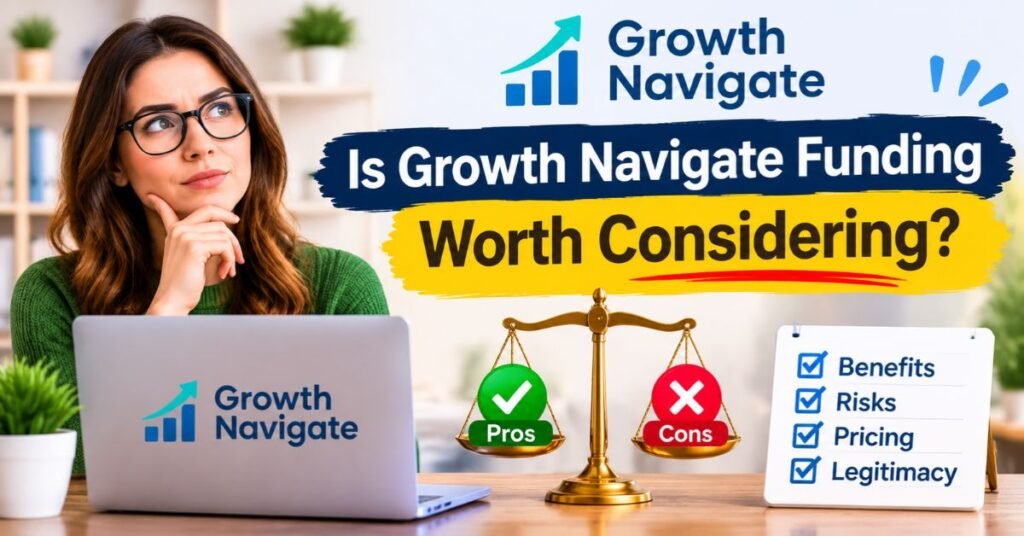
Growth Navigate Funding looks like a preparation service, not a funding source. Its listed services cover the right topics. Pitch decks, models, due diligence, and equity planning all matter. However, its biggest claims lack independent proof. The 92% success rate, the $450 million figure, and the 1,000 investors all need checking. So treat it as promising but unproven.
Verify before you pay. Confirm the legal entity. Read the contract slowly. Ask for references from similar startups. Use the free consultation as a low-risk test. If answers stay vague, walk away. If they’re clear and specific, compare the offer with two other options. A smart choice rests on evidence.
Frequently Asked Questions
What Is Growth Navigate Funding?
Growth Navigate Funding presents itself as a startup fundraising advisory. It helps founders prepare for investors with plans, decks, models, and documents. It isn’t a bank or an investment fund.
Is Growth Navigate Funding a Lender?
No. Available information shows it gives advice and support. It doesn’t lend money. Any funding would come from a separate investor or lender, so check their terms.
How Much Does Growth Navigate Funding Cost?
Reported prices are $4,500 per month for Launchpad and $9,500 per month for Navigator. Ascent uses custom pricing. Success fees may apply. Confirm everything directly before paying.
Does Growth Navigate Funding Guarantee Investment?
No. Nobody can promise that an independent investor will say yes. The company can prepare you and make introductions. The final decision belongs to the investor.
What Services Does Growth Navigate Funding Offer?
It reports funding strategy, investor targeting, pitch decks, investor introductions, financial modeling, due diligence help, and cap table planning. Exact services depend on your package and contract.
Conclusion
Growth Navigate Funding offers guidance for founders who want a clearer path to investors. Its reported services cover the right steps. Its prices are steep for small teams. Its proof is thin. That’s the full picture.
Your next move is simple. Verify the company. Compare alternatives. Prepare your own numbers first. Then choose the help that fits your stage and budget. Smart founders trust evidence, not promises.


