
Pappedeckel Meaning Uses Benefits, and Complete Guide 2026


You set a cold glass on a wooden table. A thin round disc catches every drop. That small piece of board is the kind of item people search for when they type Pappedeckel. Many readers want the Pappedeckel meaning first. Others want to know how to buy the right cardboard covers for a shop, a café, or a craft table.
This guide explains it all in plain words. You will learn the Pappedeckel definition, the main uses, the benefits, and the limits. You will also see how to choose a product and compare it with other materials. Pappedeckel One quick note: the more common German spelling is Pappdeckel. Both forms point to the same idea of a flat board cover.
What Does Pappedeckel Mean?
Let’s start with the word itself. Pappedeckel is a German compound. Pappe means cardboard or board, and Deckel means lid or cover. Put them together and you get a cardboard lid or a flat paperboard material cover. This German word translation sounds simple. Real life adds a few twists.
The twists come from context. A shop might use the word for a coaster. A bookbinder might use it for a stiff sheet of board. A packer might mean a lid for a box. The next three sections clear up each case so you never feel lost.
Pappedeckel Meaning in English
The Pappedeckel meaning in English is “cardboard lid” or “cardboard cover.” That is the direct German word translation, and it works for most cases. Some speakers also use the word for a plain sheet of stiff board. Think of the hard cover on an old notebook. That sense is common in bookbinding and craft shops. So Pappedeckel in English can mean a lid, a cover, or a flat board. You should always check the photo, the size, and the description before you buy. If you want a drink coaster, the German word Bierdeckel is usually the better search term.
Understanding the Difference Between Cardboard and Paperboard
People often use the words cardboard and paperboard as if they were twins. They are close cousins but not identical. Paperboard sheets are thick, solid, and flat. They can come from virgin paper fibers, recycled paper fibers, or a mix of both. Corrugated cardboard is different. It has a wavy, fluted layer between two flat liners. That wave gives cushioning and extra structural strength. A simple Pappedeckel often uses solid paperboard because the surface stays flat and cuts cleanly. In everyday talk, both materials are called cardboard. In the packaging industry, the difference matters for price and performance.
| Feature | Solid Paperboard | Corrugated Cardboard |
| Structure | One or more flat layers | Fluted layer between liners |
| Surface | Smooth and flat | Slightly ridged |
| Best for | Lids, coasters, dividers | Shipping cartons, cushioning |
| Cushioning | Low | High |
| Printing | Sharp and clear | Good but less crisp |
Why the Meaning of Pappedeckel Depends on Context
One word can describe many items. A café owner may picture a round coaster. A warehouse manager may picture a flat divider between layers of jars. A student may picture a backing board for a model. Each person is right. The word does not fix one size or one material thickness. That is why you should always add details when you search or order. Name the shape, the size, and the job. A short note such as “round, 1.5 mm, for cups” removes all doubt. Clear words save time and money.
What Is Pappedeckel Used For?
Flat board pieces show up everywhere. You may meet one at breakfast, at work, and at a hobby table in a single day. That wide reach explains why so many people ask, “What is Pappedeckel used for?” The short answer is this: it covers, separates, protects, and decorates.
The best use depends on three things. These are cardboard thickness, board grade, and contact with water. A thin piece works for a light craft. A thicker piece suits a protective packaging task. A coated piece handles damp cups better than a plain one. Keep these points in mind as you read the five uses below.
Food and Beverage Service
Cafés and bars use cardboard coasters every day. The disc soaks up drips and keeps tables safe. This is the most familiar form of food and beverage packaging and service ware. Some cardboard lids for cups and tray covers also come from paperboard. Others sit between food items as simple dividers. Be careful here. Not every board is safe for direct food contact. Only food-grade paperboard that meets food contact safety rules should touch open food. Always ask your supplier for proof before you buy.
Product Packaging and Shipping
Online sellers love flat board parts. A cardboard insert can hold a product in place. A divider can stop two items from rubbing. A lid can close a gift box with a neat finish. These parts are cheap and light. They also offer a clean surface for printing a logo. Still, a flat piece is not magic. Fragile goods need cushioning and a strong outer box for real shipping protection. Think of cardboard packaging for online orders as a team effort. The cover is only one player.
Household Storage and Organization
Your home likely hides a few of these pieces already. Photo boxes, document files, and craft bins often use board lids. Good cardboard storage solutions keep dust away and make stacking easy. They also help you sort small items into neat groups. A simple cardboard organizer can tame a messy drawer in minutes. Keep the boxes dry though. A damp basement can turn board soft and weak. For priceless papers, pick stronger containers.
Arts, Crafts, and DIY Projects
Crafters adore board. It cuts, folds, glues, and takes paint well. Cardboard craft materials become ornaments, tiny houses, frames, and school models. Round pieces turn into DIY coasters in an afternoon. Designers also use board for quick prototypes before they spend money on final parts. Thin sheets cut easily with scissors. Thick sheets need a sharp craft knife and a steady hand. Many DIY cardboard projects use clean recycled cardboard, which also keeps costs low.
Commercial and Industrial Applications
Factories and shops use board in quiet but important ways. Layer pads sit between stacked bottles. Backing cards hold retail goods on display. Small covers protect parts on a line. These are classic industrial cardboard products, and they fit many packaging applications. Consistency matters most here. Every piece needs the same size, thickness, and edge quality. A tiny error can slow a whole packaging line. Smart buyers check tolerances and not just the price per piece.
Key Benefits of Pappedeckel
Small parts can deliver big wins. A simple board cover can cut cost, save weight, and boost your brand. All of that happens when you choose the right grade. The wrong grade can turn those wins into headaches.
So let’s walk through the five main benefits. Each one ties back to packaging cost efficiency and good design. Read them as a menu and pick what matches your goals.
Lightweight and Easy to Handle
Board is light. A lightweight packaging material is easy to carry and ship. Compare it with glass, metal, or thick plastic. The difference is clear on a pallet. Lower weight can trim shipping protection costs across thousands of orders. It also makes hand packing faster and less tiring. Keep one thing in mind. A heavily reinforced board can weigh more than a thin plastic film. Always compare items that do the same job.
Affordable and Cost-Effective Material
Money matters to every buyer. Simple board parts offer affordable packaging solutions, especially in large runs. Standard shapes often need no special tooling. That keeps cost-effective packaging options within reach for small shops. But don’t chase the lowest price alone. A weak cover that tears or swells creates waste. Count the full cost, including storage, handling, rejects, and disposal. That is the true measure of packaging cost efficiency.
Custom Shapes, Sizes, and Designs
Board bends to your plan. Die-cut cardboard gives sharp, repeatable shapes at high volume. Digital cutters handle small batches and test runs. You can also crease, emboss, or laminate a piece. These options support custom packaging design and custom cardboard dimensions for almost any product. A snug fit looks better and moves less in the box. It also speeds up assembly. Good custom cardboard covers start with exact measurements.
Printing and Branding Opportunities
Flat board is a handy canvas. You can print a logo, a care note, or a bright pattern. This is where printing and branding meet printable cardboard surfaces. A café coaster becomes a tiny ad that sits in front of a guest. A packing divider can carry a thank-you message. Print quality depends on surface finish, ink, and color of the board. Coatings can change the look too. Always request a printed sample before you approve a big order.
Environmental Benefits of Paper-Based Materials
Paper-based goods can help the planet when you handle them well. Paper-based packaging often uses recycled paper fibers. It can also use less material than heavier choices. In the best case, it fits the circular economy, where used board returns as new board. However, “paper” does not always mean “green.” Coatings, glue, and long transport can change the picture. Think of eco-friendly cardboard as a result of smart choices and not a label.
Pappedeckel Materials and Manufacturing Process
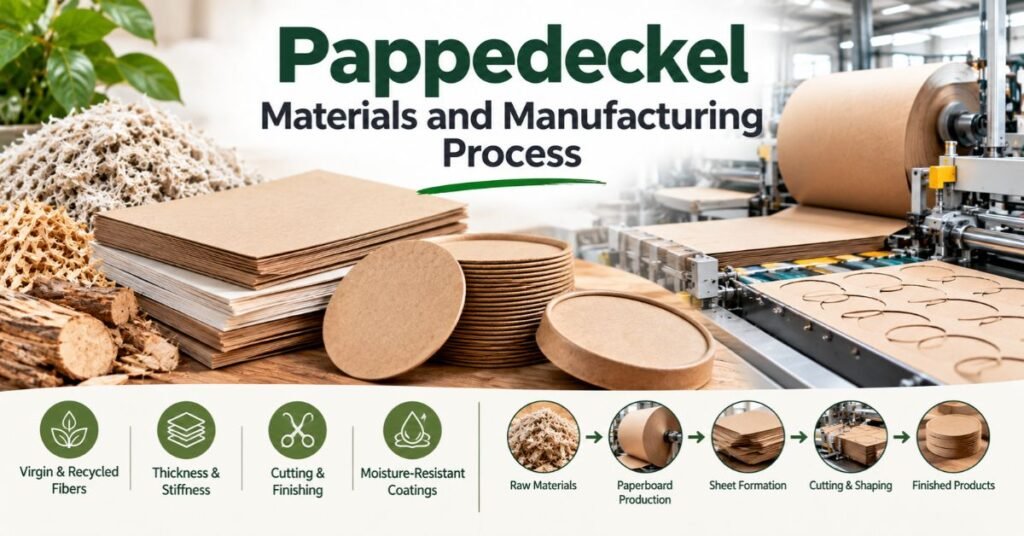
What sits inside the board? That question shapes strength, color, and price. Fiber type, thickness, and finishing all play a part. Knowing the basics makes you a sharper buyer.
The paper manufacturing process starts with pulp. Mills press and dry the pulp into sheets. Factories then cut, print, and finish those sheets. This is the core of cardboard manufacturing. The four parts below explain each step in simple terms.
Virgin Fibers vs. Recycled Fibers
Mills make board from virgin paper fibers, recycled paper fibers, or both. Virgin fibers are long and strong. They give a clean look and steady quality. Recycled paperboard production uses recovered paper and cuts demand for fresh wood. Recycled board may look grayer or feel rougher. Neither choice wins every time. Pick virgin fiber when you need a bright surface or top strength. Pick recycled cardboard when cost and sustainability lead your list.
Thickness, Stiffness, and Durability
Thickness is the first thing most people check. Yet thickness alone does not decide cardboard durability. Fiber quality, density, layers, and grain direction also matter. A thick but weak board can still bend under load. Test your sample in real use. Many coasters sit near 1 to 2 mm, while stiff lids can go thicker. Ask suppliers for exact numbers in GSM or millimeters.
| Use Case | Typical Thickness Idea | Main Need |
| Light craft work | Thin board | Easy cutting |
| Drink coasters | Medium board | Absorbency and shape |
| Box lids and covers | Medium to thick | Stiffness |
| Heavy dividers | Thick or layered | Load-bearing capacity |
Cutting, Shaping, and Finishing Methods
Good cardboard cutting techniques give clean edges. Die-cut cardboard uses a steel blade shaped like the final piece. It suits large orders. Digital cutting uses a moving blade guided by software. It suits custom-shaped paperboard and quick samples. Rough edges or loose fibers can jam machines and look sloppy. Finishing adds extras such as printing, embossing, or lamination. Each step changes the look and may affect recycling. Strong cardboard cutting and finishing gives you parts that fit and feel right.
Moisture-Resistant Coatings and Treatments
Plain board drinks water like a sponge. It softens, warps, and swells. Moisture-resistant cardboard uses coatings to slow that process. Some use water-based coatings. Others use films or wax-like layers. Remember one rule. Water-resistant does not mean waterproof. A coated disc may handle a few drops but fail in a puddle. Coatings can also change recyclable paperboard status. Ask the maker how the coating affects recycling in your area.
How to Choose the Right Pappedeckel Product
Picture this. You order a thousand covers. They arrive too thin and one size too small. Ouch. A short checklist can save you from that pain.
Follow six steps in order. Each one narrows your choice. The steps also help with selecting packaging materials wisely. By the end you will know what to ask any seller.
Identify the Intended Application
Start with the job. Does the piece cover, separate, absorb, protect, or decorate? A coaster needs moisture resistance. A box lid needs stiffness and a tight fit. A craft sheet needs easy cutting. Write the main job in one sentence. That sentence guides every later choice. It also makes it easy to compare quotes from different sellers.
Measure the Required Size and Dimensions
Measure twice. For round pieces, confirm the diameter. For rectangles, note both sides and the corner shape. If the piece sits inside a box, measure the inner space and not the outer shell. Add a small allowance for the build method. Machines need tighter limits than hand work. Good custom cardboard dimensions prevent gaps and wasted board. Share a simple drawing with your supplier to avoid mix-ups.
Select the Appropriate Material Grade
Match the grade to the stress. Light décor can use thin board. Protective packaging may need thicker or layered board. Think about pressure, rubbing, and damp air. Consider choosing cardboard thickness as a balance between cost and strength. Look at structural strength and load-bearing capacity too. Ask for a data sheet when the job is serious. Numbers beat guesses every time.
Check Food Safety and Hygiene Requirements
Food changes the rules. Use only food-safe packaging materials that suit your use. In the European Union, Regulation (EC) No 1935/2004 sets the base rules for food contact materials. In Germany, the BfR publishes guidance for paper and board. In the United States, the FDA oversees food contact substances. Ask suppliers for compliance papers on board, ink, and glue. Good packaging hygiene standards protect both guests and your brand.
Compare Quality, Cost, and Supplier Options
Price is only one piece of the puzzle. Compare cardboard packaging suppliers on quality, lead time, and minimum order. Check how steady their output is. Supplier quality shows up in cut accuracy and board density. Read reviews and request references. When comparing packaging suppliers, ask the same questions of each one. That keeps the test fair. A slightly higher price often buys fewer rejects.
Test Samples Before Placing a Bulk Order
Never skip samples. Bend them, wet them, stack them, and fit them. Try them in real conditions with real products. A café should serve a few busy hours with test coasters. A shop should pack a few parcels and ship them. Note any warping, tearing, or smudging. Share your findings with the maker. A small test is cheap compared with a failed bulk order.
Common Limitations and Challenges of Pappedeckel
No material is perfect. Board has real weak spots. Knowing them early helps you avoid costly errors. It also builds trust with your customers.
Here is the honest list. Each point links to a fix or a smarter choice. Treat these limits as guide rails and not as warnings to stay away.
Sensitivity to Moisture and Water
Water is board’s biggest foe. Cardboard water absorption makes pieces soft and wavy. Even humid air can cause swelling over time. This is classic moisture damage to cardboard. Coatings help but do not make it waterproof. Keep stock in dry rooms. For wet places, choose plastic or treated alternatives. Learn how to protect cardboard packaging from moisture by using sealed bags and dry storage.
Weight Limits and Structural Strength
A flat piece can hold light pressure. It may fail under a heavy or pointed load. These paperboard strength limitations change with grade, span, and support. No single safe weight fits all products. Test the real setup with real items. Do not assume thicker always means stronger. When strength is critical, consider corrugated or molded options.
Wear and Tear During Repeated Use
Daily use can fray edges and crack folds. A board made for one-time packing may not survive weeks of handling. Cardboard product durability drops with each bend and rub. For reusable roles, compare board against washable plastic or metal. Sometimes a stronger first purchase saves money later. Match the lifespan of the material to the lifespan of the task.
Variations in Quality Between Suppliers
Two covers can look alike but act differently. Fiber mix, density, and cutting skill vary from maker to maker. These gaps affect fit and strength. They hit businesses with automated lines the hardest. Always approve a sample and write down the specs. A clear contract protects you if a batch drifts off target.
Recycling and Disposal Challenges
Paper-looking items are not always easy to recycle. Plastic films, metal foils, and strong glues can complicate the recycling process. Grease and food waste cause cardboard recycling contamination. Local rules also differ from city to city. Check your local waste management guide before you toss anything. When possible, choose simple, uncoated board for easier recovery.
Practical Examples of Pappedeckel in Everyday Life
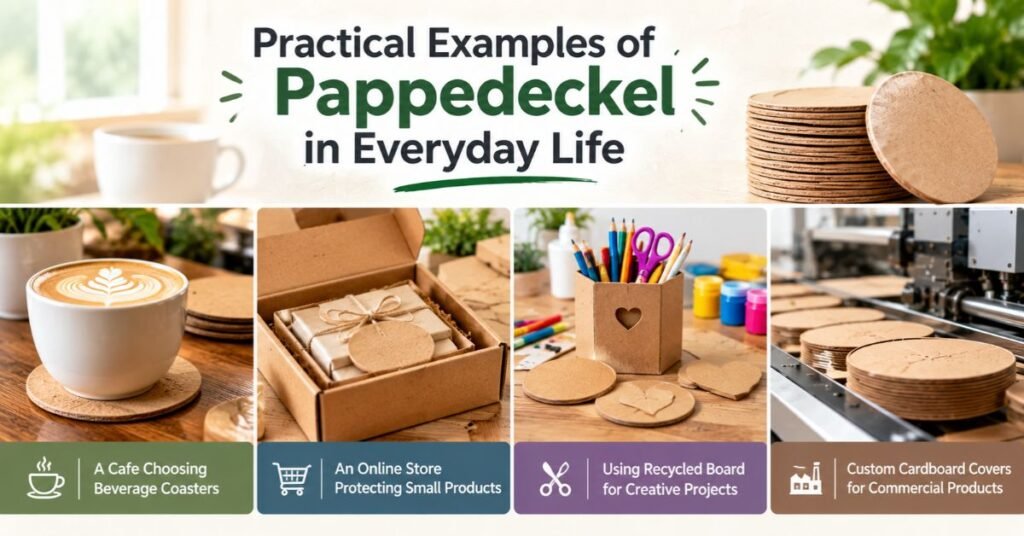
Theory is nice, but stories stick better. Here are four short case studies based on common situations. They are illustrative scenarios and not reports about named companies. Each one shows how the checklist works in real life.
Notice the pattern as you read. Every winner starts with a clear goal. Then they test, adjust, and scale up. You can copy that pattern for your own needs.
See Also: MenBoosterMark Software Program Complete Guide to Features Safety & Alternatives 2026
How Cafes Use Cardboard Beverage Coasters
Picture a small café with a busy lunch rush. The owner wants coasters that drink up condensation and hold a printed logo. She orders two sample types and tests them over a weekend. One sample turns soggy in minutes. The other keeps its shape for the whole service. She picks the second one and orders in bulk. This simple trial shows why cardboard coasters for cafes need real-world testing.
How Online Stores Protect Small Products
Now think of a seller who ships small candles. Early parcels arrive with scuffed labels. He adds cardboard inserts as dividers and wraps each candle in paper cushioning. Damage drops sharply. He also trims the outer box size to cut waste. His case proves that cardboard product protection works best as a full system. The insert, the cushion, and the carton must all fit together.
Using Recycled Board for Creative Projects
A teacher collects clean packaging scraps for a class project. Students cut them into houses, trees, and signs. Thin board bends easily and glues fast. Thicker board holds walls upright. Paint adds color but may limit later recycling. The class learns both art skills and cardboard waste reduction habits. Great cardboard craft materials often come from things you already own.
Custom Cardboard Covers for Commercial Products
A small maker of gadgets needs thousands of matching covers. Her team defines size, thickness, finish, and tolerance on one page. The supplier sends a sample for sign-off. After tests, they fix one corner shape and approve the run. The final batch fits the line smoothly. This is how custom cardboard covers and cardboard packaging solutions become reliable. Clear specs make for calm production days.
Is Pappedeckel Environmentally Friendly?
Many people assume paper is always green. The truth is more nuanced. Board can be a smart, low-impact choice. It can also create waste if used poorly. The environmental impact of packaging depends on the whole life cycle.
That life cycle covers sourcing, making, shipping, use, and disposal. Each stage adds or removes impact. Look at the full picture before you claim a product is sustainable packaging materials. The four topics below break it down.
Recycled Content and Responsible Material Sourcing
Recycled fiber lowers demand for new wood. Recycled cardboard content is a strong sign of care. Responsible paper sourcing adds another layer. Look for trusted marks such as FSC, which backs well-managed forests. This supports sustainable sourcing and builds buyer trust. Still, ask for clear, checkable proof. Vague claims like “fully natural” tell you very little.
What Affects Cardboard and Paperboard Recyclability?
Several things decide whether a piece can be recycled. Coatings, plastic films, and heavy glue make sorting harder. Grease and food scraps ruin paper pulp. Clean, dry, uncoated board is the easiest to process. Local plants also differ in what they accept. Follow paperboard recycling guidelines from your city. When in doubt, ask the maker for a full list of materials in the product. Good recyclable packaging materials are simple in build.
Reusable vs. Single-Use Cardboard Products
Some board pieces can live a second life. Clean, dry lids and dividers may serve again for storage or shipping. That makes them reusable packaging in practice. Single-use packaging, such as a food-stained coaster, should go to the right waste stream. Reuse is smart only when hygiene stays safe. Never reuse board that touched raw food or strong chemicals. Pick the path that protects people first.
Ways to Reduce Packaging Waste
You can cut waste with a few easy moves. Right-size every piece so no board goes unused. Choose the lightest grade that still does the job. Skip extra layers that add no value. These steps support packaging waste reduction and save money too. Explore sustainable alternatives to plastic packaging where they fit. Over time, small changes add up to big savings.
See Also: Simplifydiggs Com Review 2026 What It Is, Safety & Trustworthiness
Pappedeckel vs. Other Packaging Materials
Which material should you choose? That question comes up in almost every buying talk. A fair packaging material comparison looks at strength, cost, moisture, and recycling. No single option wins every round.
Use the table below as a quick map. Then read the four short sections for the details. They will help you match the right material to your task.
| Factor | Pappedeckel (Paperboard) | Plain Paper | Corrugated Cardboard | Plastic Covers |
| Rigidity | Medium to high | Low | High | Medium to high |
| Cushioning | Low | Very low | High | Low to medium |
| Moisture handling | Weak unless coated | Weak | Weak unless coated | Strong |
| Cost | Low | Very low | Low to medium | Medium |
| Recycling ease | Good if uncoated | Good | Good | Varies by type |
| Reuse | Limited | Very limited | Moderate | High |
Pappedeckel vs. Paper
Paper is thin and flexible. Board is thick and stiff. For wrapping or light liners, paper is fine. For lids, coasters, and dividers, board holds shape far better. Paper costs less per sheet but gives little protection. If you need a flat, firm surface, pick paperboard sheets. If you only need a light layer, plain paper may do.
Pappedeckel vs. Corrugated Cardboard
Corrugated board brings cushioning and strength thanks to its fluted core. It shines in shipping cartons. Solid paperboard offers a smoother surface and sharper print. It also fits where space is tight. A flat lid or coaster rarely needs a fluted core. Heavy or fragile goods often do. Many packs use both. A corrugated box holds the load while a paperboard insert keeps items neat.
Pappedeckel vs. Plastic Covers
Plastic handles water far better than board. It can also last through many uses. Yet plastic raises concerns about waste and recycling. In the debate of cardboard covers vs. plastic covers, board often wins on sustainable packaging alternatives and print appeal. Plastic often wins in wet or long-term use. Think about where the item lives and how long it must last.
See Also: 77+ DreamMeaniing Com USA Review Features Safety and Reliability
Which Material Is Best for Your Needs?
Let the job pick the winner. For dry, short-term, printed items, choose board. For heavy shipping, choose corrugated. For wet or repeat-use roles, think about plastic or coated options. Consider advantages and disadvantages of paperboard packaging together with your budget. When unsure, order samples of two materials and test them side by side. That small step reveals the best best cardboard materials for product packaging quickly.
Frequently Asked Questions
What Does Pappedeckel Mean in English?
Pappedeckel means “cardboard lid” or “cardboard cover” in English. The German word joins Pappe (cardboard) and Deckel (lid). It can also point to a flat sheet of stiff board, so context matters. The more common spelling is Pappdeckel.
What Is Pappedeckel Commonly Used For?
People use it for coasters, box lids, product dividers, storage covers, and craft bases. Businesses use it for packing, display backing, and layer pads. Home users use it for organizing small items. The best use depends on thickness, grade, and moisture exposure.
Is Pappedeckel the Same as Cardboard?
Not exactly. Pappedeckel is a type of product made from cardboard or paperboard. Cardboard is the wider material family. It includes thin board, thick board, and corrugated board. A Pappedeckel is usually a flat cover or disc cut from that family.
Can Pappedeckel Be Recycled?
Often yes. Clean, dry, uncoated board is usually easy to recycle. Coatings, plastic films, grease, and food waste can block recycling. Local rules differ, so check your city’s guidelines first. When unsure, ask the supplier what the product contains.
Conclusion
You now know what Pappedeckel means and how people use it. It is a flat cardboard lid or cover with many jobs. It serves cafés, shops, homes, schools, and factories. Its main perks are low weight, low cost, custom shapes, and strong print appeal. Its main limits are water, heavy loads, repeated use, and tricky recycling.
Ready to act? Define the job first and measure the size. Pick a grade that fits, check food safety if needed, and compare suppliers. Then test samples before you place a large order. Follow those steps and you will get a cover that works, looks great, and wastes little.