
Hairstyles for Black Women 2026 The Ultimate Guide to Braids Curls & Beyond


There has never been a more powerful, more celebratory, or more creatively rich moment to be a Black woman navigating the world of hair. In 2026, hairstyles for Black women are not simply a beauty topic they are a cultural conversation, an act of self-expression, a declaration of identity, and increasingly, a global trendsetting force that the entire beauty industry is watching and learning from. From the runways of New York and Lagos to the TikTok feeds of millions, Black hair in all its glorious, versatile, and deeply personal forms is setting the agenda for what beauty looks and feels like right now.
What makes 2026 particularly exciting is the breadth of what’s being celebrated. Braids always a cornerstone of Black hair culture have evolved into breathtaking works of art, with techniques and designs that are pushing creative boundaries in ways that feel genuinely new. Curls are being embraced and styled with a sophistication and intentionality that would have been unimaginable in the era of chemical relaxers. Locs, twists, afros, and protective styles are all thriving simultaneously, held up by a community of incredibly skilled stylists and an audience of women who have fully stepped into the understanding that their natural hair is not a limitation it is a superpower.
This guide is a comprehensive, expert-level resource for every Black woman looking for her next favorite hairstyle in 2026. Whether you are natural, relaxed, transitioning, or somewhere in between whether you want a protective style that gives your hair a rest, or a show-stopping braid design that makes every room turn this article covers it all with the depth, honesty, and professional insight you deserve. Let’s get into it.
Read More About: Wedding Hairstyles 2026 The Ultimate Guide to Bridal Hair Ideas Trends & Styling Tips
Latest Trends in Hairstyles for Black Women 2026
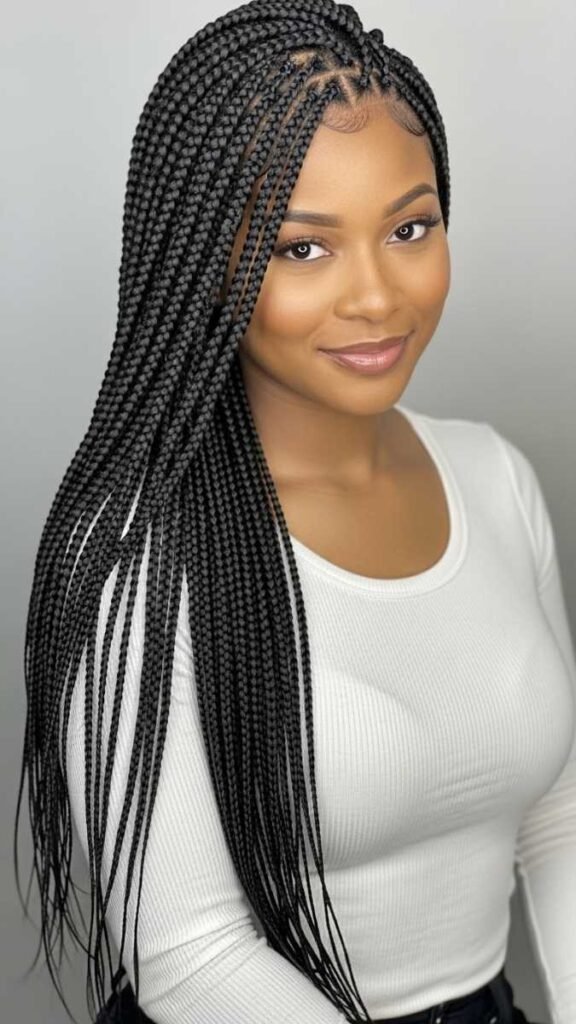
The dominant theme in Black women’s hairstyles in 2026 is what industry insiders have started calling “elevated roots” a movement that honors the deep cultural heritage of traditional African and African-American hairstyling techniques while pushing them into bold, contemporary, and undeniably fashion-forward territory. This is not appropriation dressed up as innovation. This is Black women reclaiming, redefining, and advancing their own hair culture on their own terms and it is spectacular.
Knotless braids remain one of the most requested styles in salons across the United States, the UK, and across the African continent, and in 2026 they have been elevated further with intricate parting designs, color play, and finishing techniques that make them look more polished than ever. The appeal of knotless braids is well-established they’re gentler on the hairline, more comfortable to wear, and they move more naturally than traditional box braids but what’s new in 2026 is the level of artistic sophistication being applied to the style. Geometric parts, curved rows, and asymmetric designs are being incorporated into knotless braid installations in ways that make the style feel genuinely editorial.
Defined curl styles are having a massive renaissance, fueled largely by the explosion of curl-specific product lines, the natural hair community’s growing sophistication around moisture and protein balance, and a generation of young Black women who have grown up without ever chemically altering their hair and are now in their prime styling years. In 2026, defined curls are being worn in ways that are deliberately bold: voluminous wash-and-go styles with dramatic shape, curl-out styles that create a stunning halo effect, and defined twist-outs that are so precisely executed they look almost architectural.
Loc journeys are also deeply trendy in 2026, partly because there is now a full generation of women whose locs have matured into their most beautiful stage long, thick, and incredibly versatile. Loc styles in 2026 range from the classic freeform aesthetic to intricately styled loc updos, loc braids, and loc wraps adorned with gold cuffs, cowrie shells, and beads that feel simultaneously ancient and completely modern.
Short hair is having a powerful moment in 2026. The TWA (Teeny Weeny Afro), the tapered cut, the defined finger wave on short natural hair, and the sharp, sculptural fade are all deeply in fashion. Short natural hair in 2026 is not a compromise it is a choice, a statement, and increasingly, a red-carpet look. Actresses, athletes, and influencers are wearing short natural styles on some of the biggest stages in the world, and the cultural conversation around Black women and short hair has shifted enormously as a result.
Best Hairstyles for Black Women: Braids, Curls & Beyond
Knotless Box Braids
If there is a single style that defines Black women’s hair culture in this era, it is the knotless box braid. The evolution from traditional box braids to the knotless technique was a genuine game-changer the absence of the tight knot at the root means significantly less tension on the scalp and hairline, less pain during installation, and a more natural, fluid movement of the braid itself. In 2026, knotless box braids are being installed in sizes ranging from micro (pencil-thin and incredibly delicate) to jumbo (bold, chunky, and dramatic), and in lengths from chin-grazing bobs to floor-length maximalist statements. The style suits virtually every face shape and can be customized endlessly through color, size, length, and parting design. It works for the corporate professional who keeps them in a neat bun all week and lets them down on the weekend, and equally for the creative who adorns every braid with beads, threads, and metallic wraps.
Fulani Braids
Fulani braids inspired by the Fula people of West Africa and characterized by a central cornrow, side braids, and traditionally adorned with beads and cowrie shells have experienced a remarkable cultural resurgence in recent years, and in 2026 they are more beautifully executed and widely celebrated than ever. Modern Fulani braid interpretations incorporate elements like colored extensions, gold rings, elaborate bead work, and creative parting designs that honor the traditional roots of the style while allowing for individual expression. This is a style with deep cultural meaning, and the growing mainstream awareness of that meaning has made conversations around its proper appreciation versus appropriation more visible and important. For Black women, wearing Fulani braids in 2026 is a connection to ancestry as much as it is a fashion choice.
Goddess Locs
Goddess locs are one of the most strikingly beautiful protective styles available in 2026, and their popularity continues to grow for very good reason. Unlike traditional faux locs, goddess locs incorporate wavy or curly texture throughout the body of the loc usually achieved by using a wavy extension hair creating a style that is simultaneously structured and romantically soft. The contrast between the neat, coiled root and the flowing, textured length is visually extraordinary, and goddess locs photograph with a kind of effortless glamour that very few other styles can match. They are particularly stunning when installed in warm, rich tones: honey blonde, auburn, burgundy, and copper all interact beautifully with the wavy texture of the loc.
Wash-and-Go Curls
For the naturally curly-haired woman who wants to let her texture do the heavy lifting, the wash-and-go is the ultimate expression of confidence in 2026. But make no mistake a truly great wash-and-go is a skilled art. The best ones involve careful product layering (a leave-in conditioner, a curl cream, and a gel or mousse applied in the right sequence to wet hair), deliberate application technique (raking or praying-hands method depending on curl type), and the discipline to let the hair dry without disturbance either air-drying or diffusing on low heat. When executed well, a wash-and-go in 2026 produces defined, juicy, bouncy curls that move beautifully and last multiple days with proper nighttime protection. This style celebrates every curl type from 3a waves to 4c coils, and the natural hair community has produced an extraordinary wealth of tutorials and product knowledge specifically tailored to each curl pattern.
Twist-Outs & Braid-Outs
The twist-out remains one of the most versatile and beloved styles in the natural hair community, and in 2026 it has been refined to a level of precision that makes it a genuinely stunning option for any occasion from office to red carpet. A well-executed twist-out set on freshly washed, deeply conditioned hair, allowed to dry completely, and carefully unraveled with oil on the fingertips produces a defined, voluminous, stretched curl pattern that is unlike anything else in the natural hair style repertoire. The braid-out, which follows the same principle using braids instead of twists, produces a slightly different texture more angular, more defined waves and is particularly effective on 4b and 4c hair that benefits from the additional stretching the braid provides.
Cornrows with Creative Designs
Cornrows in 2026 are not what your grandmother styled. While the classic straight-back cornrow remains timeless and beautiful, the artistry being applied to cornrow designs in 2026 is genuinely breathtaking. Feed-in cornrow patterns that curve, intersect, spiral, and create geometric shapes across the scalp have turned this foundational technique into high art. Some of the most viral cornrow designs of 2026 feature curved patterns that follow the natural contour of the head, intricate partings that form flowers, stars, or abstract geometric forms, and the seamless integration of cornrows into larger styles transitioning into box braids, locs, or a dramatic ponytail. The skill level required for these designs means that finding the right stylist is essential, and the best natural hair braiders are genuinely in high demand.
The Big, Beautiful Afro
In 2026, the afro is not just a hairstyle it is a symbol, a statement, and one of the most powerful and beautiful things a Black woman can wear. Whether it is a freshly stretched and shaped afro pick-out, a defined afro achieved through a braid-out on 4c hair, or a lush, soft halo achieved through a pineapple-stretched wash-and-go, the afro in all its forms is deeply celebrated. Modern styling techniques, high-quality afro picks, and a growing range of products specifically formulated for afro-textured hair have made it easier than ever to achieve and maintain a beautifully shaped afro. And in 2026, with Black women wearing afros on magazine covers, film sets, and international runways, the cultural moment could not be more affirming.
Seasonal Colors & Combinations for Black Women’s Hair in 2026
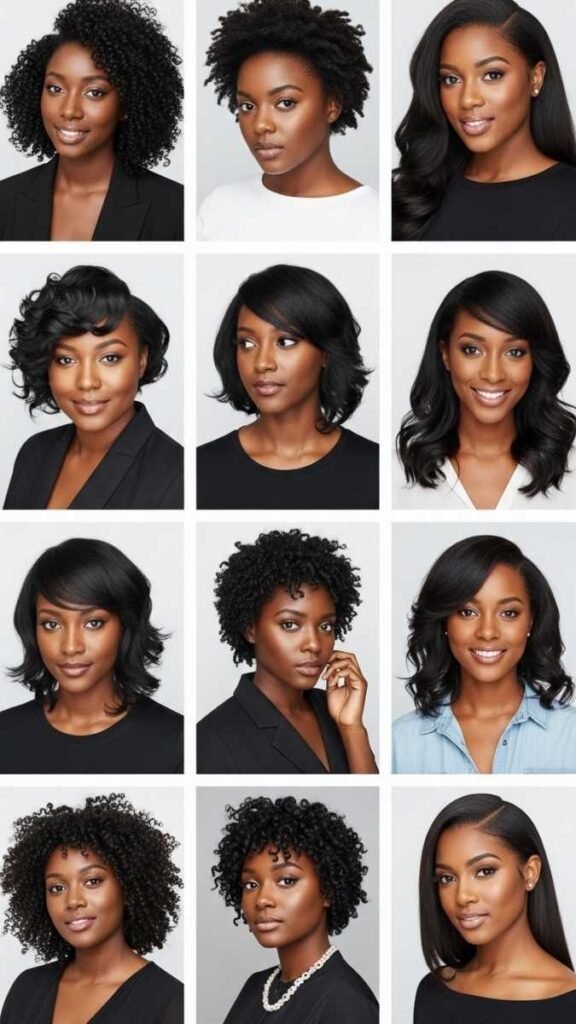
Color is one of the most exciting dimensions of Black women’s hairstyling in 2026, and the approach to color has become far more sophisticated and intentional than it has ever been before.
In spring, the dominant color story for Black women’s braids and natural styles is warm honey and amber tones think honey blonde ombre on knotless braids, golden highlights applied to defined curls using a careful hand, and the warm cinnamon and cognac tones that photograph luminously in natural spring light. These warm blonde and brown tones work beautifully with a wide range of skin tones, and their popularity has been significantly boosted by the growing number of Black celebrity colorists who specialize in creating color that works specifically with the undertones of deeper skin.
Summer 2026 brings a bolder color story. Vivid, expressive colors electric blue, rich burgundy, forest green, and bright copper are being integrated into braided styles, particularly through the use of colored kanekalon extensions. The ombre effect, where the braid transitions from natural dark roots into a vivid pop of color at the ends, is particularly popular and provides a way to experiment with bold color without committing to chemical treatment of the natural hair underneath.
Autumn’s color palette is rich and deeply beautiful for Black women’s hairstyles: deep auburn, burnt sienna, dark burgundy, and chocolate brown are all strongly trending as both extension colors and as natural hair color choices for women who choose to color their natural texture. These tones have an extraordinary warmth under autumn lighting and work across all hair styles braids, locs, twists, and curls.
Winter 2026 brings two distinct color stories. The first is deep, dramatic jewel tones: midnight blue, deep plum, and forest green rendered in shiny, luxurious extensions that create a striking contrast with deeper skin. The second is a surprising counter-movement toward ice tones and silver: platinum locs, silver-tipped braids, and the bold choice of embracing natural grey or silver hair without apology a trend that is growing rapidly among Black women in their 40s and 50s who are choosing to own their silver with extraordinary style.
Step by Step Guide How to Plan and Maintain Your 2026 Style
Planning a major protective style installation or a natural hair journey requires thought, preparation, and the right resources and doing it well makes an enormous difference in both the result and the health of your hair.
Know Your Hair’s Current Health.
Before any major style decision, assess the current condition of your hair and scalp. Is your hair retaining moisture, or does it feel perpetually dry and brittle? Is your scalp healthy, or are you experiencing tension, flakiness, or sensitivity? Is your hairline full and intact, or showing signs of traction from previous styles? Honest answers to these questions will guide every choice you make including whether protective styling is appropriate right now, and which style is most suitable.
Choose the Right Stylist.
For braids, locs, and protective styles, the stylist you choose is the most critical decision you will make. Research thoroughly: look at portfolios, read genuine reviews, and if possible, ask for personal recommendations from women whose styles you admire. A skilled, experienced natural hair stylist will assess your hair’s health before beginning, install the style at appropriate tension, and give you comprehensive aftercare guidance. The difference between a style installed by an experienced specialist and one rushed through by someone without proper training can mean the difference between healthy hair and significant breakage or hairline damage.
Prepare Your Hair Properly.
Before any braid or protective style installation, your hair should be freshly washed and deeply conditioned. Clean hair braids more cleanly, holds style longer, and is significantly more comfortable to wear. Do not skip the pre-style wash because you think it will make the style last longer this is a common and damaging misconception. Properly washed and conditioned hair is the foundation of a beautiful and healthy protective style.
Establish a Maintenance Routine.
The life of any protective style is determined almost entirely by how well it is cared for during wear. Scalp oiling (using lightweight oils like jojoba, argan, or peppermint-infused oil applied directly to the scalp with a nozzle applicator) should happen every two to three days. Braids and locs should be moisturized regularly with a diluted leave-in spray. Every single night, your style should be protected with a satin or silk scarf, bonnet, or pillowcase this single step dramatically extends the life of any style and prevents the frizz, dryness, and damage that cotton pillowcases cause.
Know When to Take It Down.
Every protective style has a recommended wear duration, and exceeding it no matter how well-maintained the style begins to work against the health of your hair. Knotless and box braids: six to eight weeks maximum. Twists: four to six weeks. Faux locs and goddess locs: six to eight weeks. Taking down a style that has been worn too long often reveals significant new growth that has tangled or matted with the extension hair, creating unnecessary breakage during removal. Remove your style on time, detangle gently with your fingers and a wide-tooth comb, and give your hair a thorough cleanse and deep conditioning treatment before starting again.
Styling Ideas for Different Occasions
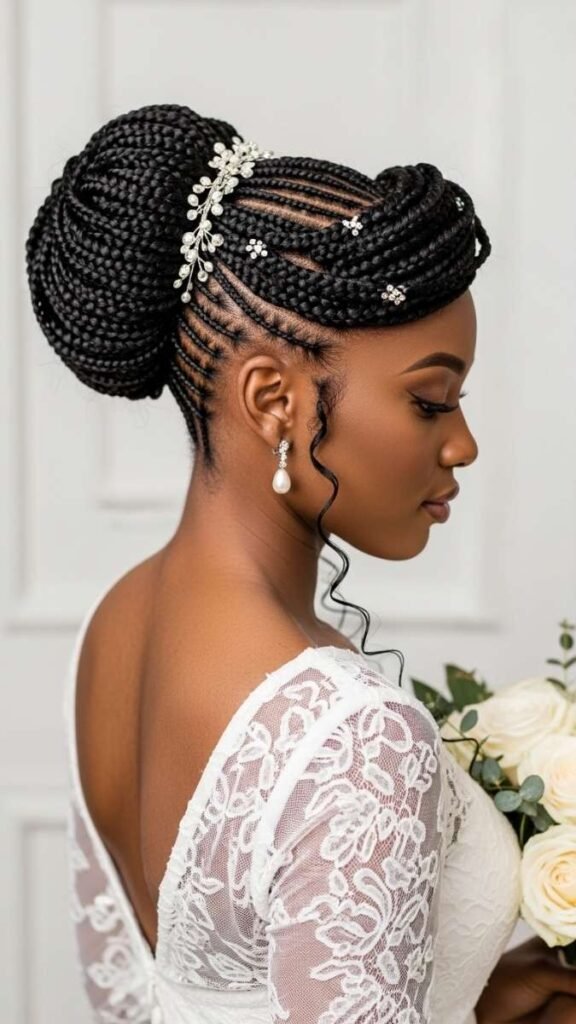
The extraordinary versatility of Black women’s hairstyles means that a single installation can be styled in dozens of different ways to suit every occasion on your calendar.
For everyday professional settings, knotless braids worn in a sleek high ponytail, a low bun, or a half-up style project a polished, put-together appearance while keeping the style protected and tidy. Natural styles like a well-defined twist-out worn in a low puff or a side-swept look also read beautifully in professional environments. The key is in the finishing edges laid with a quality edge control product and a soft bristle brush complete any natural style and give it a polished, intentional appearance.
For social events and parties, this is where protective styles truly shine. Knotless braids worn loose and flowing, adorned with gold cuffs and beads, look genuinely spectacular at an evening event. A beautifully shaped afro with a bold makeup look is one of the most striking combinations in fashion. For events with dancing and movement, a high ponytail or a half-up style keeps hair out of your face while looking effortlessly chic.
For weddings whether as a bride or a guest Black women in 2026 have an extraordinary range of options. Bridal protective styles are increasingly popular, with brides choosing goddess locs, Fulani braids adorned with jewelry, or intricate cornrow designs as their wedding hairstyle. For natural hair brides, an elaborate twist-out or a beautifully styled and adorned afro are genuinely stunning options that photograph with extraordinary beauty.
For athletic and active occasions, the protective value of braids and twists is unmatched. Cornrows or knotless braids keep natural hair secure and protected during intense physical activity, and styles worn in a high bun or secured ponytail stay in place through even the most demanding workouts. This is genuinely one of the greatest practical advantages of protective styling and it’s worth celebrating.
Celebrity & Social Media Trends Shaping Black Women’s Hair in 2026
The influence of Black celebrity culture on hair trends has always been enormous, but in 2026 the connection between what celebrities wear and what women are requesting in salons has become nearly instantaneous, driven by the speed and reach of social media.
Beyoncé’s ever-evolving hair journey continues to set the agenda for millions. Her embrace of long, flowing braids and locs in various visual projects has reinforced the aspirational beauty of protective styling at the highest level of global celebrity. Similarly, Zendaya whose hair evolution has been closely followed for years has used public appearances to champion both elaborate protective styles and natural texture, consistently working with stylists who treat her hair with visible care and skill.
On TikTok and Instagram, Black hair creators have built audiences of millions by sharing tutorials, product reviews, and style transformations that have genuinely democratized access to high-quality hair knowledge. Creators like those behind the most-followed natural hair accounts have made it possible for women with no formal styling training to achieve professional-quality wash-and-gos, twist-outs, and braid styles at home. The collective knowledge and community support available in the Black hair space online is one of the most extraordinary and genuinely useful corners of the internet.
The influence of African celebrities and content creators has also grown enormously in 2026. Nigerian, Ghanaian, South African, and Kenyan beauty influencers are bringing traditional African styling techniques, natural hair care wisdom, and an incredibly rich aesthetic vocabulary to the global conversation and their influence is reshaping what “aspirational” Black hair beauty looks like, in the most expansive and exciting possible way.
Read More About: Bob Hairstyles 2026 The Ultimate Guide to Modern Bob Cuts That Are Redefining Beauty This Year
Do’s and Don’ts for Black Women’s Hairstyles
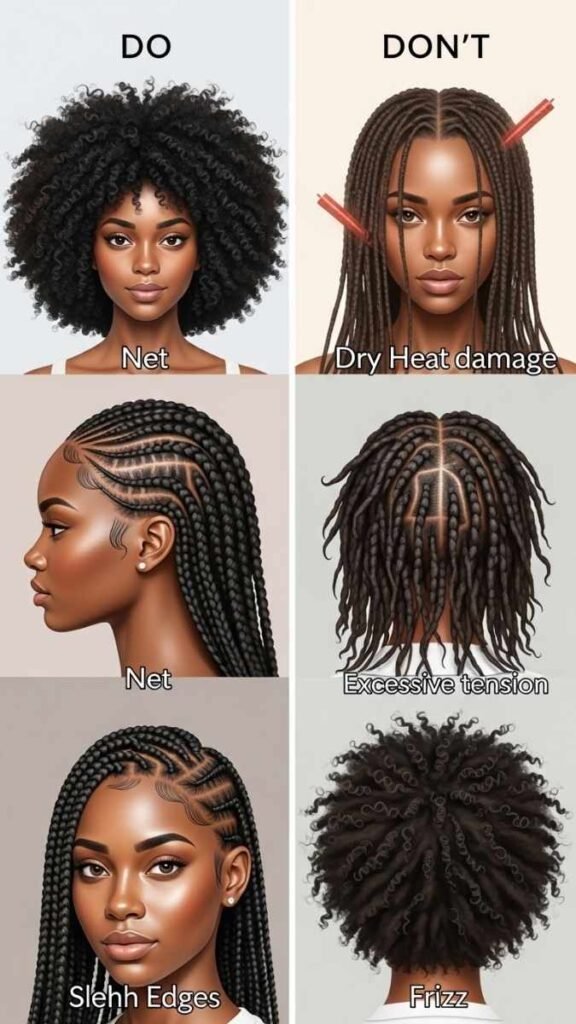
Do
prioritize the health of your scalp and hairline above the aesthetics of any style. The most beautiful braid in the world is not worth it if it is installed at a tension that damages your edges or causes traction alopecia. If a style hurts during installation, speak up. Pain during braiding is not normal and is not something you should endure.
Do
invest in quality hair products specifically formulated for your hair type and texture. The natural hair care market has expanded enormously, and there are now genuinely excellent products for every curl pattern, every porosity level, and every styling need. Generic, alcohol-heavy drugstore products that were not formulated with textured hair in mind are simply not your best option in 2026.
Do
protect your hair at night, every single night. Satin and silk bonnets, scarves, and pillowcases are among the most impactful investments you can make for the long-term health and appearance of your hair. Cotton pillowcases absorb moisture and create friction both of which are deeply damaging to natural hair over time.
Don’t
keep a protective style in beyond its recommended wear time. The temptation to extend a style because it still looks good on the outside is understandable, but the reality is that significant new growth, product buildup, and tangling are occurring beneath the surface and they will cause damage during removal if left too long.
Don’t
neglect your scalp while in a protective style. A clean, moisturized, healthy scalp is the foundation of healthy hair growth, and weeks of accumulated product buildup, dry scalp, or inflammation will set back your hair health significantly. Incorporate regular scalp cleansing and oiling into your protective style routine without fail.
Don’t
compare your hair journey to anyone else’s. Hair texture, density, porosity, and growth rate are all highly individual what works beautifully for a 3c curl type may be completely ineffective for 4c hair. Find what works specifically for your hair and commit to that, rather than chasing results that were achieved by someone with fundamentally different hair biology.
Common Mistakes to Avoid
One of the most common and genuinely damaging mistakes is installing a new protective style on top of hair that has not been properly cleansed and deeply conditioned after the previous style was removed. The temptation to move quickly from one protective style to the next is real especially when your hair is at a length or stage where you feel more comfortable with it tucked away but this approach consistently results in buildup, tangling, breakage, and moisture deficit that accumulates over time and can significantly compromise hair health.
Another widespread mistake is the use of extension hair that is too heavy for the natural hair beneath it. Jumbo braids and very long box braids can be genuinely stunning, but if the weight of the extension hair exceeds what your natural hair can comfortably support at the root, the tension causes breakage particularly at the hairline and nape, which are the most fragile areas. If you love a heavy style, discuss weight management techniques with your stylist and ensure the installation distributes weight as evenly as possible.
Product overload is another frequent mistake in natural hair care, particularly among those who are newer to their natural hair journey. Using too many products simultaneously multiple leave-ins, creams, gels, and oils layered in excessive quantities creates buildup that weighs the hair down, attracts lint and dirt, and ultimately makes detangling and styling harder. Simplify your routine: a good leave-in, a curl cream or butter, and a hold product if needed are usually sufficient for most styling needs.
Finally, skipping regular trims because you are trying to retain length is a mistake that costs more than it saves. Split ends travel up the hair shaft if left unaddressed, causing breakage that removes far more length than a timely trim would have. A small trim every eight to twelve weeks keeps the ends of your hair healthy and prevents the kind of escalating damage that undermines a length retention journey.
Budget Friendly Black Women’s Hairstyle Ideas
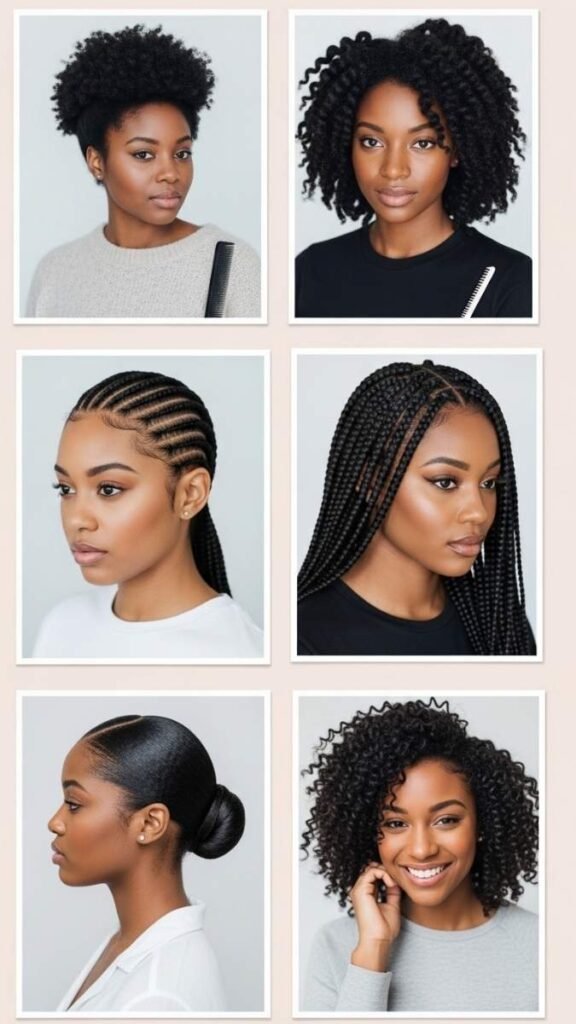
Beautiful, healthy, and stylish hair does not require an unlimited budget, and 2026’s most powerful trend celebrating and working with natural texture is actually one of the most cost-effective approaches available.
The wash-and-go, when mastered, requires only a small number of products and no professional salon visit, making it one of the most genuinely affordable ways to wear natural hair beautifully. The initial investment is in finding the right products for your specific curl type which may require some trial and error but once you have found your routine, the ongoing cost is very manageable.
For those who love braided styles but want to minimize salon costs, there are several strategies worth considering. Purchasing your own extension hair and bringing it to your appointment reduces the total cost of many braid styles significantly, since salons often mark up the cost of hair substantially. Learning to install simpler styles yourself basic two-strand twists, single braids, or cornrows is also a skill worth investing time in, particularly given the wealth of free tutorial content available on YouTube and TikTok.
For loc wearers, the initial installation cost can be significant, but the long-term economics of locs are actually very favorable once mature, locs require only regular retwisting appointments (which are considerably less expensive than full braid installations) and a consistent home care routine. For women who want the loc aesthetic without the commitment, faux loc styles using pre-twisted or pre-looped extension hair can be installed by a skilled stylist at a moderate cost and worn for six to eight weeks.
Premium & Luxury Black Women’s Hairstyle Ideas
At the premium end of the market, Black women’s hairstyling in 2026 has reached an extraordinary level of artistry and investment-level quality.
The most sought-after braid stylists particularly those known for intricate knotless designs, Fulani braids, and creative cornrow art are booking months in advance and commanding rates that reflect the genuine skill, time, and artistry involved in their work. A full knotless braid installation by a top-tier specialist can range from $300 to over $700, and for the quality, longevity, and health of the style, this investment is often entirely worthwhile.
At the luxury end of the natural hair care market, a new category of boutique salons specializing exclusively in textured hair has emerged and flourished. These salons offer a full-service experience comprehensive hair health consultations, professional steam treatments, custom blended products, and styling by specialists who have trained specifically in natural texture techniques. The experience is genuinely elevated: thorough, educational, and deeply affirming for women who have often felt underserved by mainstream hair salons.
For loc wearers, luxury salon experiences now include loc detox treatments, loc tightening using high-end interlocking tools, and styling sessions that transform mature locs into elaborate bridal or event styles using professional techniques that simply cannot be achieved at home. These experiences are premium priced and worth every penny for a special occasion.
How to Maintain & Care for Black Women’s Hairstyles

The long-term health and beauty of any Black woman’s hairstyle natural, protective, or loc rests on a foundation of consistent, thoughtful maintenance. And in 2026, with the natural hair community’s collective knowledge at an all-time high, there has never been more accessible, high-quality guidance available.
Moisture is the cornerstone of natural hair health. Black natural hair particularly 4a, 4b, and 4c textures tends toward dryness because the coiled structure of the hair shaft makes it difficult for the scalp’s natural oils to travel down the length of the hair. This means that external moisturizing is not optional it is essential. The LOC or LCO method (Liquid, Oil, Cream or Liquid, Cream, Oil, depending on your hair’s porosity) applied on wash day and refreshed throughout the week is one of the most effective moisture retention strategies available.
Scalp health is equally critical and often overlooked. A clean, balanced scalp free of buildup and inflammation is the environment in which healthy hair grows. Scalp massages with stimulating oils like peppermint, rosemary, or tea tree diluted in a carrier oil promote circulation and have been shown in studies to support hair growth over time. Regular scalp cleansing whether you are wearing your natural hair open or in a protective style should be a non-negotiable part of your routine.
Deep conditioning every wash day (typically once a week or every two weeks) is the single most impactful treatment you can incorporate into your natural hair routine. A quality deep conditioner applied to clean hair, covered with a heat cap or warm towel, and left for twenty to thirty minutes provides a level of hydration and protein support that no everyday conditioner can match. The difference in your hair’s softness, elasticity, and overall manageability after consistent deep conditioning is genuinely transformative.
Comparison Table: Best Black Women’s Hairstyles 2026
| Style | Best For | Hair Type | Occasion | Protective | Duration | Maintenance |
| Knotless Box Braids | All hair lengths | All natural types | Any | Yes | 6–8 weeks | Medium |
| Wash-and-Go Curls | Defined curl lovers | 3a–4c | Casual/Social | No | Daily refresh | High |
| Goddess Locs | Romantic, soft look | All types | Any | Yes | 6–8 weeks | Low–Medium |
| Fulani Braids | Cultural expression | All types | Events/Social | Yes | 4–6 weeks | Low |
| Twist-Out | Versatile everyday | 3c–4c | Any | No | 3–5 days | Medium |
| Cornrow Designs | Art lovers | All types | Any | Yes | 2–4 weeks | Low |
| The Afro | Bold statements | 4a–4c | Any | No | Daily | Medium |
| Tapered Natural Cut | Low-maintenance | All natural | Professional | No | Permanent | Low |
Expert Tips & Pro Hacks
One of the most impactful insider tips from seasoned natural hair stylists: always stretch your hair before braiding or twisting. Hair that has been stretched whether through banding, African threading, or blow-drying on low heat with a heat protectant braids more smoothly, tangles less during the process, and produces a more even, polished result. This single step is what separates a professional-looking twist-out from a lumpy one.
For wash-and-go longevity, the secret that most tutorials skip: apply your styling products to soaking wet hair. Not damp soaking. The water on the hair is what activates the product and allows it to distribute evenly through each curl. If your hair begins drying before you finish applying, mist it with water as you go. This is the difference between a frizzy, undefined result and a juicy, defined curl that lasts days.
For edge care one of the most discussed topics in the Black hair community less is more. Over-use of edge control products, combined with the tension of styles that pull at the hairline repeatedly, is one of the leading causes of traction alopecia. Give your edges regular breaks, use edge products sparingly, and ensure that any style that touches the hairline is installed at the gentlest possible tension.
For loc wearers: palm rolling while the locs are damp (not soaking wet) after a retwist appointment, and then sitting under a hooded dryer or using a hair steamer, produces significantly tidier, more compact locs that maintain their shape beautifully between appointments.
Read More About: Braided Ponytail Hairstyles 2026 The Ultimate Guide to This Year’s Hottest Trends
Trend Forecast Black Women’s Hairstyles Beyond 2026
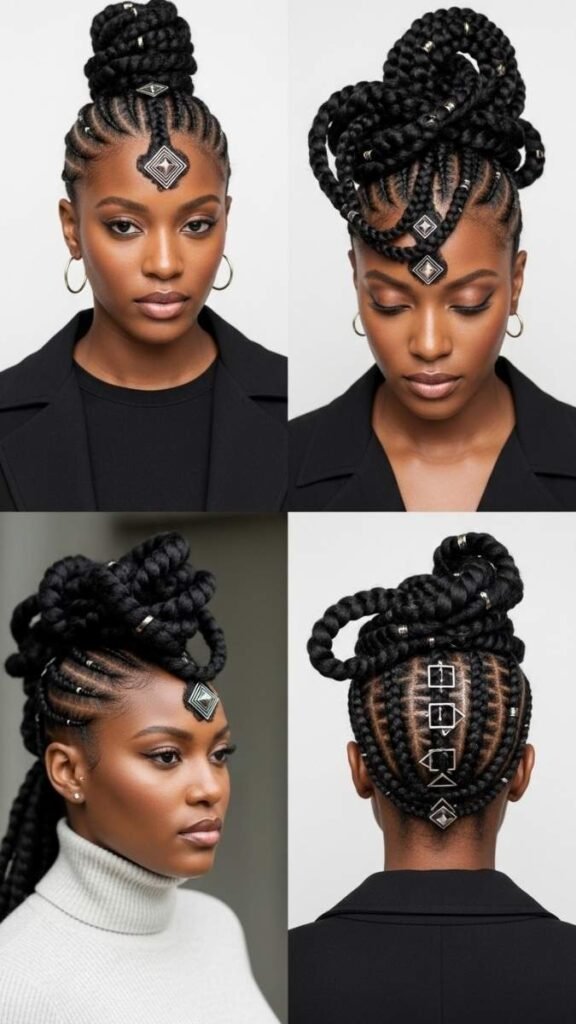
Looking ahead, the trajectory of Black women’s hairstyles is moving toward an even deeper integration of cultural heritage and contemporary fashion. By 2027 and into 2028, we anticipate the rise of what stylists are calling “heritage couture” the elevation of traditional African hairstyling techniques (threading, wrapping, intricate plaiting) into fully fashion-forward, runway-ready styles that are recognized globally as the high art they have always been.
The natural hair care product market will continue to specialize and improve, with an increasing focus on ingredient transparency, sustainability, and products specifically formulated for individual curl patterns and porosity types rather than generic “for natural hair” labeling. Personalized hair care including AI-assisted product recommendations and professional hair health diagnostics will become more accessible and more accurate.
The representation of Black women’s natural and protective hairstyles in mainstream media, fashion, and beauty will continue to improve, driven by a generation of Black creators, stylists, editors, and decision-makers who are reshaping what these industries look like from the inside. The future of Black women’s hair in fashion is not just bright it is absolutely radiant.
FAQs
What are the most popular hairstyles for Black women in 2026?
The most popular hairstyles for Black women in 2026 include knotless box braids, goddess locs, defined wash-and-go curls, Fulani braids, creative cornrow designs, and the big afro. The overarching trend is toward styles that celebrate natural texture, honor cultural heritage, and prioritize the long-term health of the hair all while looking extraordinarily beautiful.
How long do knotless braids last?
Knotless braids, when properly installed and consistently maintained, typically last six to eight weeks. The key to maximizing their lifespan is a dedicated maintenance routine: oiling the scalp every two to three days, moisturizing the braids with a diluted leave-in spray, protecting the style with a satin bonnet every night, and avoiding styles that put excessive tension on the roots. Beyond eight weeks, the risk of matting and damage during removal increases significantly.
What is the best protective style for hair growth?
The most effective protective styles for hair growth are those that are installed at low tension, require minimal manipulation, adequately protect the ends of the natural hair, and are maintained with a consistent scalp care routine. Knotless braids, twists, and loose buns are all excellent options. Equally important is what you do between styles: deep conditioning, scalp massages with growth-stimulating oils, and a healthy diet all contribute significantly to hair growth.
How do I maintain natural curls in 2026?
Maintaining natural curls in 2026 starts with understanding your specific curl type and porosity, and building a routine around your hair’s individual needs. Core practices include weekly or bi-weekly washing with a sulfate-free shampoo, deep conditioning every wash day, applying moisture in layers using the LOC or LCO method, protecting hair with satin or silk at night, and minimizing heat styling. Refreshing curls between wash days with a water and leave-in spray, and pineappling (gathering hair loosely on top of the head) overnight preserves curl definition significantly.
Are braids good for natural hair growth?
Yes when installed correctly and cared for properly, braided protective styles support hair growth by minimizing daily manipulation, protecting the ends of the hair from environmental damage and breakage, and allowing the hair to retain length that would otherwise be lost through everyday handling. However, braids that are installed at excessive tension, particularly along the hairline and nape, can cause traction alopecia a form of gradual, potentially permanent hair loss. The key is finding a skilled stylist who installs at appropriate tension, limiting wear time to the recommended duration, and maintaining scalp health throughout the wear period.
Conclusion
Black women’s hairstyles in 2026 are a celebration of culture, of creativity, of community, and of the extraordinary, versatile, magnificent hair that grows from your scalp exactly as nature intended. Whether you are deep in your natural hair journey and refining your wash-and-go technique, choosing your next protective braid style, loc-ing your hair for the first time, or simply exploring what’s possible with the hair you have the most important thing is that you approach your hair with love, patience, and the knowledge that you deserve to feel spectacular in every single style you wear.
The tools, the knowledge, the community, and the cultural moment are all on your side. This is the most affirming era in the history of Black women’s hair, and it is only getting richer. Book that salon appointment, try that new style, invest in your hair’s health, and walk into every room knowing that your crown is genuinely, unapologetically magnificent.


