
TheJavaSea me Leaks AIO TLP371 Risks, Facts, and Online Safety Guide 2026


You type a strange phrase into a search bar. Results flood in. One page screams “massive breach.” Another promises a free download. A third says nothing useful at all. Who do you believe?
That confusion sits at the heart of TheJavaSea me Leaks AIO TLP371 searches. The phrase mixes a domain name with a code. Nobody has shown clear proof of what it means. Even so, scammers love vague phrases like this one. They know curiosity drives clicks.
This digital safety guide 2026 keeps things simple. You’ll learn what is known and what isn’t. You’ll also see how to protect your devices, your accounts, and your personal data. Every step uses plain words and short sentences.
What Is TheJavaSea.me Leaks AIO TLP371?
The phrase has three parts. First comes a website name. Next comes the word “leaks.” Last comes the code AIO-TLP371. Put together, they form a search term. They don’t form proof. A search term can spread fast online even when no real data breach sits behind it.
Think of it like a rumor in a crowded hallway. One person whispers it. Ten more repeat it. Soon everyone “knows” it. Yet nobody checked it. That is how many online data leaks claims grow. Strong source credibility is the only cure.
What Is TheJavaSea.me?
TheJavaSea.me is a website name that appears in many leak-related searches. Public information about it is thin and often contradictory. Any honest TheJavaSea.me review must admit that. Sites that host or link to leaked material often carry extra risk. Pop-ups, forced redirects, and fake download buttons are common.
You can run a website reputation check before going near it. Tools like Google’s Safe Browsing report (https://transparencyreport.google.com/safe-browsing/search) and VirusTotal (https://www.virustotal.com) offer quick website safety checks.
What Does AIO-TLP371 Mean?
The true AIO-TLP371 meaning is unconfirmed. Some pages say “AIO” stands for “all-in-one.” Others call it a toolkit, a task tool, or a bundle of logs. Those guesses disagree with each other. That alone is a warning sign. Without a trusted source, treat every definition as a guess. Numbered variants such as TLP142 and TLP370 also float around in similar articles. Repeating a pattern doesn’t prove it’s real.
Is AIO-TLP371 a Confirmed Data Breach?
No evidence confirms it. A real data breach investigation usually leaves a trail. Look for a statement from the affected company. Look for a regulator notice. Look for a report from known security researchers. TheJavaSea me Leaks AIO TLP371 None of that exists for AIO-TLP371 in public view. So the safest label is “unverified.” AIO-TLP371 leak claims should stay claims until proof appears.
Why Is TheJavaSea me Leaks AIO-TLP371 Attracting Attention?
Leak keywords pull people in. They hint at secret files and hidden data. Fear plays a part too. Many users worry their own details were exposed. That mix of curiosity and worry fuels searches. It also fuels suspicious leak websites that want your click.
Attention isn’t the same as truth. A phrase can trend because many sites copy each other. It can also trend because scammers target it on purpose. Always ask one question first. Who gains when I click?
Online Discussions and Search Trends
Content farms often chase trending phrases. They publish near-identical posts within days. Each post cites the others. The result looks like a crowd of witnesses. In truth, it is one echo. Different pages even claim different things about TheJavaSea.me leaks. One says “task tool.” Another says “pirated toolkit.” A third says “millions of stolen records.” Real cybersecurity awareness means noticing that mismatch.
Concerns About Personal Information and Privacy
Many readers search because they fear personal information exposure. That fear is fair. Leaked records can include emails, passwords, and phone numbers. Criminals use them for identity theft and account takeovers. However, no trusted source says AIO-TLP371 holds any such records. To check your own exposure, use Have I Been Pwned (https://haveibeenpwned.com). It works from known, documented breaches. You never need to download a suspect file to find out.
How to Separate Verified Facts From Online Claims
Good data breach verification takes a few calm steps. First, find the original source. Next, look for independent verification from a second, unrelated source. Then check dates, because old leaks often return as “new.” The table below turns this into a quick routine.
| What You See | Red Flag | What to Check |
| “Millions of users exposed” | No named company or source | Official statement or breach database |
| Exact dates and numbers | No link to evidence | Whether other trusted outlets repeat them |
| “Download the full archive” | Pressure to act fast | Never download; verify elsewhere |
| Copied wording across sites | Same text, different domains | Who published first |
| Dramatic headline | Thin body text | Whether the article cites real sources |
Case study: Collection #1. In 2019, security researcher Troy Hunt reported a huge pile of leaked credentials called Collection #1. Headlines were loud. The files held hundreds of millions of email addresses. Yet his analysis showed much of it was recycled data from older breaches (https://www.troyhunt.com/the-773-million-record-collection-1-data-reach/). The lesson is clear. Size doesn’t equal novelty. Careful checking separates a fresh breach from an old one wearing new clothes.
Cybersecurity Risks Associated With Unverified Leak Websites
Leak sites sell one thing: curiosity. The price is often your browser security. Visiting such pages can expose you to cybersecurity risks you never expected. Some pages are harmless noise. Others are traps. You can’t tell which by looking.
The table below sums up the main online security risks. Read it once. Then keep it handy.
| Threat | How It Works | Warning Sign |
| Malware | Infected files disguised as “leaks” | Unknown .exe, .zip, or .rar files |
| Phishing | Fake login pages steal passwords | Requests to “verify” an account |
| Tracking | Ad networks follow your activity | Endless pop-ups and redirects |
| Scams | Fake paywalls or survey traps | “Pay to unlock the archive” |
| Legal trouble | Possessing or sharing stolen data | Files holding private records |
Malware and Suspicious File Downloads
Malicious downloads love leak-themed bait. A file named “full database” sounds exciting. Inside, it may hide an infostealer that grabs saved passwords and browser cookies. Archives can also hide harmful scripts. Good malware protection starts with one rule. Don’t open unknown files. Keep updated antivirus on. Rely on malware detection tools to scan anything you already saved. Weak leaked files security habits cause real damage fast.
Phishing Attacks and Credential Theft
Phishing attacks copy trusted pages. A fake file-sharing screen might ask you to log in. A fake “age check” might ask for your email password. Each fake page is a phishing website. The goal is credential theft. Never type your main password into a page you can’t verify. Hover over suspicious links before you click. Check the web address letter by letter. CISA offers solid guidance at https://www.cisa.gov.
Privacy Risks, Tracking, and Misleading Redirects
Shady pages often use heavy tracking. They log your device, your location, and your clicks. That builds your digital footprint without your consent. Redirect chains can also push you toward scam stores or fake alerts. These digital privacy risks add up quietly. Use a clean browser profile. Block pop-ups. Deny notification requests. Strong safe browsing practices shrink the problem fast.
Risks of Sharing Leaked or Private Images
Private images shared without consent cause deep harm. This is intimate image abuse. Victims can face shame, fear, and online extortion. Sharing such images also hurts you. Platforms ban accounts. TheJavaSea me Leaks AIO TLP371 Courts can impose penalties. Think of it this way. Every forward adds another wound. Strong image-based abuse prevention begins with one choice. Don’t view, save, or pass along private images.
Legal and Ethical Consequences of Redistributing Leaked Content
Unauthorized data distribution can carry serious legal consequences. Laws differ by country. Many places punish sharing private records or stolen credentials. Rules like the EU’s GDPR and the UK’s Computer Misuse Act 1990 show how seriously lawmakers treat these issues. Even holding stolen data can create risk in some regions. TheJavaSea me Leaks AIO TLP371 Ethics matter too. Real people sit behind every record. This article isn’t legal advice. A local lawyer can explain your situation.
How to Verify Claims About AIO TLP371 Safely
You can check a claim without touching a single risky file. Work like a detective at a safe distance. Read. Compare. Question. Never download. That approach protects both your device and your online privacy.
Verification also saves time. Most hollow claims fall apart after two or three checks. Real incidents leave traces in many places. Fake ones live on a handful of copycat pages. Spotting that difference is strong online threat prevention.
Check the Original Source and Available Evidence
Start with the first page that made the claim. Who wrote it? Do they name a company, a date, or a file? Real reports link to proof. Weak ones just say “sources say.” Good data breach verification also checks whether the author has a track record. A mystery blogger with no history deserves doubt.
Look for Independent Confirmation
One source is never enough. Look for a second that didn’t copy the first. Trusted examples include security firms, national cyber agencies, and breach-alert services. A company statement helps too. A claim backed by none of them stays unconfirmed. Strong source credibility takes more than repetition. It takes proof.
Identify Misleading Claims and Unsupported Information
Learn the tricks. Fake pages use exact numbers with no source. They mix real terms like “encryption” and “server logs” to sound smart. They also copy words from other sites. Compare two pages side by side. Identical sentences are a bad sign. This skill sharpens your cybersecurity awareness for every future rumor.
Why You Should Avoid Downloading Unverified Archives
Suspicious archive downloads are the most common way people get infected. Curiosity wins. The file opens. Then trouble starts. Some archives run code the moment you extract them. Others hide a second file inside. You don’t need the archive to check your exposure. Use breach-alert services instead. Good leaked data privacy habits mean you never become the next victim of your own curiosity.
What to Do If You Have Already Visited a Suspicious Website
Take a breath. A visit alone rarely harms your device. Most damage comes from what you did next. Did you download something? Did you enter a password? Did you allow notifications? Your answers decide your next steps.
Act in order. Scan first. Then secure your accounts. Then clean your browser. Strong account security measures work best when you move calmly and quickly.
Scan Your Device for Potential Security Threats
Run a full scan with updated antivirus software. Quick scans can miss hidden files. Restart your device afterward. Check your downloads folder for anything you don’t recognize. Don’t open it. Delete it. Signs of infection include slow speeds, odd pop-ups, and fans running hard for no reason. Good threat detection habits catch these early.
Change Compromised Passwords and Enable Two-Factor Authentication
Did you type a password on a doubtful page? Change it now. Use a different, clean device if possible. Start with email. Then do banking and social media. Never reuse a password. Strong password protection uses long, unique phrases stored in a password manager. Then turn on two-factor authentication. An authenticator app beats text messages. This step blocks many cases of account compromise.
Review Account Activity and Browser Permissions
Open your login history. Look for unknown devices or places. Sign out of all sessions if anything looks odd. Next, open your browser settings. Remove strange extensions. Clear notification permissions you don’t remember granting. These steps boost browser security and cut off sneaky tracking.
Avoid Suspicious Downloads, Pop-Ups, and Follow-Up Links
Scammers often follow up. A pop-up may say your device is “infected.”TheJavaSea me Leaks AIO TLP371 An email may offer a “fix.” Ignore them. Close the tab. Never call numbers shown on pop-ups. Practice online scam prevention by trusting only official sites you type in yourself. Pressure and panic are classic scam tools.
What to Do If Your Personal Information or Images Are Leaked
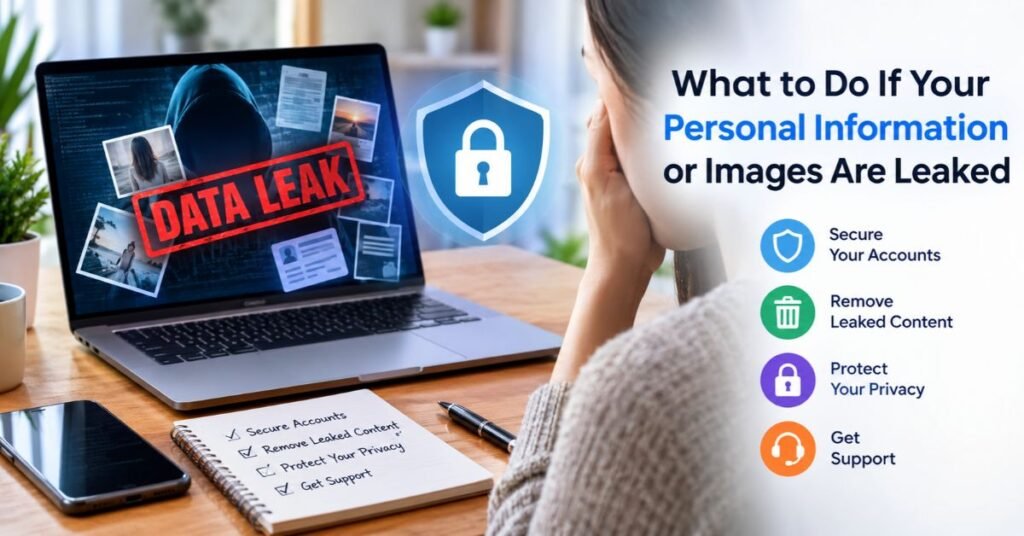
This moment feels awful. That reaction is normal. You didn’t cause this. Focus on small, clear steps. Each one reduces harm. Most people regain control faster than they expect.
The table below gives a simple order of action. Follow it from top to bottom.
| Step | Action | Where to Go |
| 1 | Save proof without saving the file | Screenshots of the page and URL |
| 2 | Report to the host | The site’s abuse or removal form |
| 3 | Ask Google to remove results | Google’s removal request tools |
| 4 | Block re-uploads | StopNCII.org or Take It Down |
| 5 | Report threats | Local police and national cybercrime units |
Document the Content Without Downloading or Redistributing It
Record where the content lives. Copy the web address. Note the date and time. Take a screenshot of the page context only. Don’t save or share the private file itself. Careful content reporting needs evidence. It never needs more copies. A trusted friend can help if viewing it feels too painful.
Report the Material to the Hosting Platform
Most sites have an abuse form. Use it. State that the content is private and posted without consent. Include your saved links. Hosting companies and domain registrars also take reports. TheJavaSea me Leaks AIO TLP371 Many remove such material fast. In the US, the TAKE IT DOWN Act of 2025 pushes covered platforms to act promptly on valid requests for intimate images. Strong leaked content removal begins at the source.
Read More: 20xBusiness com Review 2026 Ultimate Guide to Features & Trust
Request Removal From Google Search Results
A Google removal request can hide harmful links from search results. Google accepts requests for non-consensual explicit images and certain personal details. Start at https://support.google.com/websearch/ and look for the removal options. This is search engine removal. It doesn’t erase the page itself. It does make the page much harder to find.
Use Appropriate Image-Removal and Hashing Services
Image hashing turns a picture into a digital fingerprint. Partner platforms then block matching uploads. StopNCII.org (https://stopncii.org) offers this for adults. The image never leaves your device. TheJavaSea me Leaks AIO TLP371 For images taken before age 18, use NCMEC’s Take It Down (https://takeitdown.ncmec.org). These services deliver image-based abuse prevention at scale and help stop further spread of private content.
Report Threats, Harassment, or Extortion
Someone may demand money or more images. Don’t pay. Payment rarely ends the threat. Save every message. Then file cybercrime reporting with local police. In the US, use the FBI’s IC3 (https://www.ic3.gov). Support groups can help too. Examples include the Cyber Civil Rights Initiative (https://cybercivilrights.org) and the UK Revenge Porn Helpline (https://revengepornhelpline.org.uk). You deserve support. You don’t face this alone.
Legal and Ethical Considerations of Leaked Content
Law and ethics often point the same way. Don’t spread what isn’t yours. Don’t dig through private records out of curiosity. Both choices protect real people. They also protect you.
Rules differ across the world. Some regions focus on privacy violation. Others focus on computer misuse or copyright. Consequences range from account bans to fines and even prison. Treat every leaked file as a possible legal trap.
Privacy Rights and Unauthorized Distribution
People hold rights over their own data. Laws like GDPR in the EU set strict data protection duties. Spreading private records can break those rules. It can also break platform terms. Unauthorized access to accounts or files is a separate offense in many places. Strong internet privacy protection starts with respect for other people’s data.
Read More: Methatreams Explained Meaning, Safety, Legality & Sports Streaming Alternatives
Why Sharing Private or Intimate Images Can Cause Harm
A shared image can follow someone for years. It can hurt jobs, family life, and mental health. Harm spreads with every repost. This is why intimate image abuse is treated so seriously worldwide. Ask one thing before you share anything. Would I want this passed around if it were me? If the answer is no, stop.
When to Seek Professional or Law Enforcement Assistance
Call the police if you face threats, stalking, or extortion. Contact a lawyer if you need takedown notices or a civil claim. Bring in an IT professional if you suspect deep account compromise. Early help limits damage. Waiting rarely helps. A professional data breach investigation can also map exactly what was exposed.
How Organizations Can Reduce Data Leak Risks

Leaks hurt businesses too. Trust vanishes fast. Costs pile up. The good news is simple. Most leaks trace back to basic gaps. Closing those gaps works better than any fancy tool.
Think of it as locking every door in your house. Not just the front one. TheJavaSea me Leaks AIO TLP371 Layered information security keeps a single mistake from becoming a disaster. As security expert Bruce Schneier often says, security is a process, not a product.
Strengthen Access Controls and Account Security
Give people only the access they need. That is called least privilege. Strong access controls limit how far a stolen password can travel. Add multi-factor sign-in everywhere. Remove accounts when staff leave. Review permissions every quarter. These account security measures block many common attacks.
Keep Software and Security Systems Updated
Attackers love old software. Known flaws stay open for months. Regular security updates close those doors. Turn on automatic patching where possible. Monitor systems around the clock. Effective threat detection spots odd behavior early. Speed matters.
Protect Sensitive Information With Encryption
Data encryption scrambles data so thieves can’t read it. Use it for files at rest and data in transit. Guard the keys with care. Lost keys defeat the purpose. Good sensitive information security also means deleting data you no longer need. Less stored data means less to leak.
Read More: TheTechyx com Review 2026 Tech News, Reviews, Tools & Helpful Guides 2026
Develop an Incident Response and Recovery Plan
A written incident response plan saves precious time. Name who leads. Name who talks to customers. Name who calls the authorities. Practice twice a year. The US NIST guidance at https://csrc.nist.gov offers a trusted framework. Share findings through responsible disclosure when outside researchers report flaws. Ongoing security awareness training keeps every employee ready.
Frequently Asked Questions
Is TheJavaSea.me Leaks AIO-TLP371 a Confirmed Data Breach?
No. No trusted source has confirmed it. Pages online disagree about what it is. Until a company statement or credible research appears, it remains an unverified claim.
Is AIO-TLP371 Related to the Traffic Light Protocol?
Probably not. The Traffic Light Protocol is a real sharing standard from FIRST. It uses labels like TLP:RED, TLP:AMBER, TLP:GREEN, and TLP:CLEAR (https://www.first.org/tlp/). No reliable source links AIO-TLP371 to it. The similar letters are likely a coincidence.
Is TheJavaSea.me Safe to Visit?
Safety can’t be assumed. Sites tied to leaks often carry risky ads, redirects, and downloads. Check its website reputation with scanning tools first. The safest move is to skip it entirely.
Does AIO-TLP371 Contain Personal or Sensitive Information?
Nobody can say for sure. No verified report describes its contents. Be wary of any page that lists specific records. Those details are often invented to lure clicks.
Can Downloading Files From Leak Websites Harm My Device?
Yes. Such files may hide malware or credential stealers. A convincing name proves nothing. Always keep malware protection active and avoid unknown archives.
Can Changing My Password Protect Me After Visiting a Suspicious Website?
It helps if you typed a password on a bad page. Change it at the real service. Then add two-factor authentication and scan your device. A password change alone won’t remove malware.
How Can I Remove Leaked Images From Google?
Use Google’s removal request tools for non-consensual explicit images. Also report the page to its host. Add StopNCII.org or Take It Down to block re-uploads. Layering these steps works best.
Should I Download the Archive to Check Whether I Am Included?
No. Downloading adds risk and may create legal problems. Use Have I Been Pwned instead. It checks known breaches without any file.
Is It Legal to Access or Share Leaked Material?
It depends on the content and the country. Sharing private records or images is risky almost everywhere. When in doubt, don’t share. Ask a local lawyer for advice.
Final Thoughts
TheJavaSea.me leaks AIO-TLP371 is a phrase with more noise than proof. Its meaning is unclear. Its claims are unverified. Yet the risks around leak sites are real. Malware, scams, and tracking all thrive on curiosity.
You hold the power here. Verify before you trust. Never download unknown archives. Lock down your accounts with strong passwords and two-factor sign-in. If your images or data are exposed, act step by step and use the removal tools above. Small, steady habits build lasting data privacy protection and a safer digital safety guide 2026 for everyone.


