
BackToFrontShow Pricing 2026 Plans, Costs, Features, and Review


Why do some websites list BackToFrontShow pricing 2026 at $29 while the official page says $1,200? That gap confuses many buyers. This guide clears it up with a simple breakdown of BackToFrontShow plans and pricing, features, and real costs. You’ll also learn who should buy it and who should skip it.
The figures below come from the draft you supplied, dated September 16, 2026. Check the official BackToFrontShow site before you pay.
BackToFrontShow Pricing at a Glance
Here’s the short version. The BackToFrontShow Basic plan costs $1,200 per month. The BackToFrontShow Pro plan costs $3,600 per month. The BackToFrontShow Enterprise plan has no public price. You must ask for a quote.
The yearly numbers in the table are simple math. They aren’t official annual packages. Treat them as a planning tool for your BackToFrontShow monthly cost and BackToFrontShow annual pricing.
| Plan | Published Monthly Price | 12-Month Calculation | Best For |
| Basic | $1,200 | $14,400 | Core podcast audience analytics |
| Pro | $3,600 | $43,200 | Advanced behavior and integrations |
| Enterprise | Custom pricing | Custom | Large teams with deep needs |
What Is BackToFrontShow?
BackToFrontShow presents itself as a podcast analytics platform. It helps podcasters and media teams study their listeners. It covers listener demographics, devices, locations, and audience engagement metrics. Think of it as a podcast analytics software dashboard for your show.
It doesn’t focus on publishing episodes. It focuses on what listeners do after they press play. That makes it a tool for podcast data analysis rather than a home for your audio files. Many buyers miss this point at first.
How BackToFrontShow Works
The site describes a four-step process. First, you connect your podcast. Next, the platform gathers listener data. Then you review results on the analytics dashboard. Finally, you build a custom report. This flow turns raw download statistics into listener insights you can act on. Each step feeds the next one. The result is a clear picture of episode performance and listening patterns.
Who Is BackToFrontShow Designed For?
The tool suits people who turn data into business choices. That includes professional podcasters, large networks, media companies, and marketing teams. Agencies that run several shows may also like it. These users often need audience measurement for sponsors and advertisers. A hobbyist who only wants download counts will likely find it too much. The platform rewards teams that act on what they learn.
Podcast Analytics vs. Podcast Hosting
Hosting and analytics solve different problems. Podcast hosting services store your episodes and send them to apps. A podcast analytics platform studies who listens and how. Hosts usually include basic stats and cost less. Advanced analytics tools cost much more. BackToFrontShow sits in the second group.
| Podcast Hosting | Podcast Analytics |
| Stores and distributes episodes | Studies listener behavior |
| Includes basic statistics | Offers deeper demographics |
| Focuses on delivery | Focuses on insights |
| Often lower cost | Advanced tools cost more |
How Much Does BackToFrontShow Cost?
The BackToFrontShow subscription cost depends on your plan. The official page lists three pricing tiers. Basic and Pro show fixed monthly subscription fees. Enterprise needs a custom quote. Your BackToFrontShow cost per month therefore ranges from $1,200 upward.
This isn’t a budget tool. It sits in the professional podcast analytics pricing range. Before you buy, compare the price with the money the data can earn. The sections below explain each plan and how to confirm the numbers.
BackToFrontShow Basic Plan Pricing
The Basic plan costs $1,200 per month. Over a year, that adds up to $14,400. You get core Basic plan features such as demographics, playback locations, and engagement tracking. This is the lowest paid tier. For many small shows, it’s still a big monthly bill. Weigh it against your current podcast monetization before you commit.
BackToFrontShow Pro Plan Pricing
The Pro plan costs $3,600 per month. That’s $2,400 more than Basic. Across 12 months, the Pro plan totals $43,200. The extra money buys deeper Pro plan features like behavior tracking, device analytics, and API integrations. The jump is steep. Make sure your team will use the extra tools.
BackToFrontShow Enterprise Pricing
Enterprise has no public fixed price. The pricing page says to contact the company. This is common for large software deals. Your Enterprise plan pricing will likely reflect your team size and needs. Ask for an enterprise quote in writing. Include the number of shows, users, and reports you need.
Are the Published Prices Official and Verified?
The $1,200 and $3,600 figures come from the first-party pricing page. That makes them verified subscription costs at the time of writing. Software prices can change without notice. Always run your own pricing verification before you pay. Open the official site and compare the numbers. Save a screenshot with the date for your records.
Why Do Websites Show Different BackToFrontShow Prices?
Search results show a messy picture. Some pages list $29, $79, or $149. Others list $1,200 and $3,600. That’s a huge gap. It creates real trouble for anyone building a budget.
Poor pricing transparency across the web makes it worse. Many articles copy each other without checking the source. A few may describe an older product. Others may guess based on generic software prices.
BackToFrontShow.com vs. Similarly Named Platforms
The name causes extra confusion. The same domain once hosted The Back to Front Show. That was a web development podcast hosted by Keir Whitaker and Kieran Masterton. The current homepage now sells a podcast analytics platform. The two have different goals. Don’t assume the old show and the new service are linked. The public pages don’t explain that history.
Why Third-Party Pricing Estimates May Differ
Third-party pricing estimates often rely on old or unverified data. Some writers confuse similar product names. Others copy a number from one blog to the next. A few use generic software averages. Any of these habits can produce a wrong figure. Use outside guides for ideas and comparison only. Trust the vendor’s own page for the final number.
How to Verify the Latest Pricing Information
Start with the official pricing page. Note the date you checked. Then email the sales team and ask for the current price in writing. Ask about billing frequency, contract terms, and any extra fees. Compare their answer with this guide. If the numbers differ, trust the written quote.
What Does the BackToFrontShow Basic Plan Include?
The BackToFrontShow Basic plan covers the essentials of podcast audience analytics. The dedicated pricing page lists demographics, playback locations, and engagement monitoring. It also lists likes, shares, and comments. Support runs 24/7. Data security features come with it too.
The homepage describes Basic a bit differently. It mentions episode performance tracking, listening trends, and customizable reporting. It also lists feedback analysis and accessibility. Confirm the exact list with the vendor before you buy.
Basic Plan Features and Limitations
The Basic plan gives you solid listener demographics and audience engagement metrics. However, the pricing page doesn’t list several advanced tools under Basic. These include listening behavior tracking, device analytics, AI sentiment analysis, and API integrations. The table shows the gap. It doesn’t prove Basic can never offer them. It shows how the page presents each tier.
| Capability | Basic | Pro | Enterprise |
| Listener demographics | Yes | Yes | Yes |
| Engagement monitoring | Yes | Yes | Yes |
| Listening behavior | Not listed | Yes | Yes |
| Device analytics | Not listed | Yes | Yes |
| API integration | Not listed | Yes | Yes |
| Geographic analytics | Not listed | Not listed | Yes |
Who Should Choose the Basic Plan?
Basic fits an established show with real income. Perhaps you sell sponsorships and need better proof of audience quality. Maybe you want to track listener retention rate and improve content choices. In that case, $1,200 can pay for itself. A small hobby show will struggle to justify it. Match the cost to your revenue first.
What Does the BackToFrontShow Pro Plan Include?
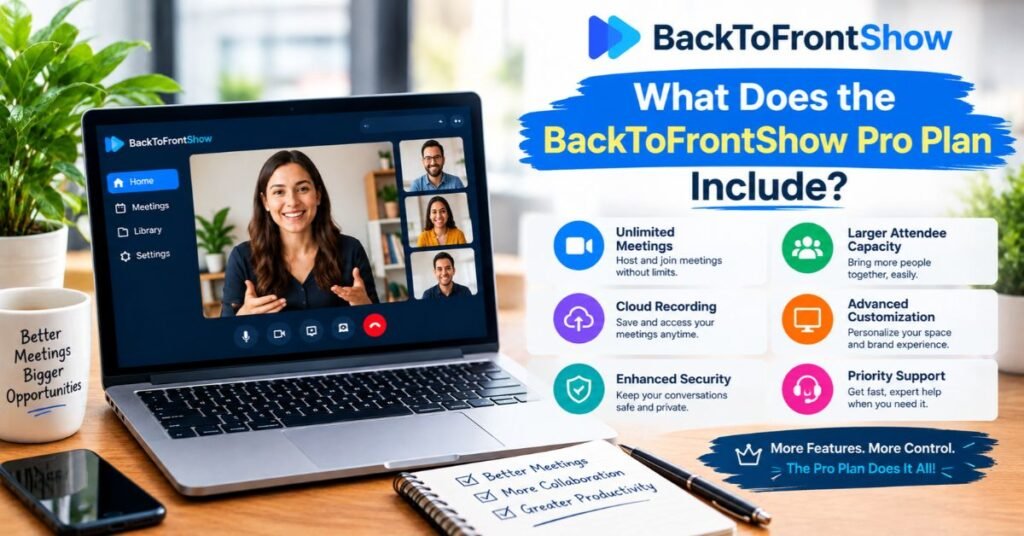
The BackToFrontShow Pro plan is the serious analysis tier. It adds behavior tracking, device analytics, sentiment analysis, and real-time updates. The homepage says Pro includes everything in Basic. It also adds audience growth, churn rates, and segmentation.
Larger teams often need this depth. They want to know why listeners stay or leave. They also want to link data with other systems. Pro aims at those needs.
Read More: 32+ TheStripesBlog Com Frank Fisher Who He Is and How to Verify Contact Information
Advanced Podcast Analytics and Reporting
Pro lists episode popularity and average listening time. It also lists multi-platform device data and feedback collection. With real-time podcast reporting, you can spot changes fast. Listening behavior analysis shows which episodes hold attention. Strong podcast performance metrics then guide your next topic. Good podcast reporting tools save hours of manual work.
Audience Segmentation and Churn Analysis
Raw growth can hide trouble. Imagine a show gains 20,000 new listeners in one month. It also loses 15,000 regular listeners. The net gain is 5,000. That looks great, but it hides a leak. Audience churn analysis exposes the loss. Podcast segmentation then splits your fans into groups such as new, loyal, and occasional listeners. With this view, churn reduction becomes a clear goal.
API Access and Integrations
The pricing page lists API integrations under Pro. This lets you connect the platform with outside systems. That’s API connectivity and third-party integrations in simple terms. The public page doesn’t explain request limits, endpoints, or export rules. Ask about each one. Also ask whether technical help comes with the plan.
Who Should Choose the Pro Plan?
Pro suits podcast networks, media groups, and bigger marketing teams. It also fits companies that use several data tools. If you need churn and segmentation data, Pro is the route. More features don’t always mean more value. The extra insight must earn more than the extra $2,400 a month.
What Does the BackToFrontShow Enterprise Plan Include?
The BackToFrontShow Enterprise plan is the widest option. It adds geographic analytics, custom reports, white-labeling, and premium report templates. It also gives priority feature requests and a dedicated account manager.
The homepage lists extra items for this tier. These include predictive analytics and CRM integration. The two official pages don’t match perfectly. So confirm each feature in writing. That’s the safest way to protect your budget.
Custom Analytics and Reporting
Enterprise lists custom analytics reports and wider geographic data. You can study regional trends and build reports for each client. Custom dashboards and data visualization help busy teams read results fast. Automated reporting can also cut manual work. Ask the vendor how deep the customization goes. The words “custom” and “customizable” can mean very different things.
Dedicated Support and Onboarding
Large teams need more than software. Enterprise lists a dedicated account manager, advanced user training, and monthly webinars. It also lists custom onboarding services. Good customer support can save weeks during setup. Ask about response times behind the “24/7” claim. Strong vendor support often matters as much as the features themselves.
How to Request an Enterprise Quote
Prepare before you call sales. Gather the number of podcasts, users, and your audience size. List the reports you need and any API or CRM links. Mention how much historical analytics data you want. Note training and white-label needs too. A clear brief helps the team price your setup. Always ask for the final enterprise quote in writing.
BackToFrontShow Basic vs. Pro vs. Enterprise
A BackToFrontShow pricing comparison helps you pick the right tier. The three plans differ in depth, not just price. Basic gives you the core view. Pro adds behavior and integration tools. Enterprise adds customization and service.
Read the table slowly. Then check the “Not listed” entries with the vendor. Some may exist in practice. The page simply doesn’t show them.
Read More: MiloMagazine Co Uk USA Complete Guide to the UK Magazine Website in 2026
Feature-by-Feature Plan Comparison
This table pulls the BackToFrontShow features into one view. Two official pages describe tiers differently. That’s why direct confirmation matters before you sign.
| Feature | Basic | Pro | Enterprise |
| Listener demographics | Yes | Yes | Yes |
| Engagement monitoring | Yes | Yes | Yes |
| Listening behavior | Not listed | Yes | Yes |
| Device analytics | Not listed | Yes | Yes |
| Sentiment analysis | Not listed | Yes | Yes |
| Real-time updates | Not listed | Yes | Yes |
| API integration | Not listed | Yes | Yes |
| Geographic analytics | Not listed | Not listed | Yes |
| Dedicated account manager | No | No | Yes |
| White-labeling | No | No | Yes |
Basic vs. Pro: Key Differences
Basic vs Pro comes down to depth and cost. Basic costs $1,200. Pro costs $3,600. The monthly gap is $2,400. Over a year, that’s $28,800 more (2,400 × 12). For that money you gain behavior tracking, device data, sentiment tools, and API access. Ask a simple question. Will those tools add at least $28,800 in value each year?
Pro vs. Enterprise: Which Offers More Value?
Pro vs Enterprise is mostly about customization and service. Pro has a published price. Enterprise doesn’t. Enterprise adds geographic data, white-labeling, training, and an account manager. Large organizations may find real value for money there. Smaller teams may not need it. Choose Enterprise only when you can name the features you’ll use.
What Features Do You Get With BackToFrontShow?
The BackToFrontShow features focus on audience understanding. You get insights on who listens, where they live, and what devices they use. You also see how they react. Together, these tools work as podcast analytics tools for serious publishers.
Each feature links to a business use. Demographics help with sponsors. Behavior data helps with content. Integrations help with workflow.
| Feature | What It Explains |
| Listener demographics | Who your listeners are |
| Engagement tracking | How listeners interact |
| Listening behavior | What they play and for how long |
| Device analytics | Which devices they use |
| Sentiment analysis | How feedback feels |
| Real-time updates | Recent changes in data |
| API access | Links with other tools |
Listener Demographics and Audience Insights
The platform tracks listener demographics and playback locations. These numbers show who your fans are. They also help you prove audience demographics to advertisers. A sponsor wants to know age, place, and habits. Clear listener statistics make that pitch stronger. This supports audience acquisition and better ad deals.
Audience Engagement and Listening Behavior
Downloads alone don’t tell the full story. The pricing page lists likes, shares, comments, and average listening time. These audience engagement metrics show real interest. They reveal engagement trends over time. Pair them with listening behavior analysis to see which topics keep people hooked. Then make more of what works.
Device and Podcast Platform Analytics
Listeners use many apps and devices. Multi-platform device analytics shows which ones win. You may find most fans listen on phones. Or maybe a smart speaker leads. That insight guides your format and promotion. It also helps with platform choices. Better podcast performance tracking starts with knowing where people tune in.
Real-Time Analytics and Custom Reports
Pro and Enterprise list real-time data updates. Enterprise lists custom reports. Fast data lets you react to a viral episode or a sudden drop. Custom reports then share results with clients or bosses. Strong real-time podcast reporting keeps teams ahead. Ask how often the data refreshes in practice.
API Integrations and Data Export
API integrations link the platform to your other tools. They help you move data into dashboards or a CRM. The public pages don’t describe data export options in detail. Ask about file types, limits, and analytics exports. Check historical data access too. Good export rules protect you from lock-in.
How Much Does BackToFrontShow Cost Per Year?
The site shows monthly prices. It doesn’t publish an annual package. So BackToFrontShow annual pricing here is simple math. Basic totals $14,400 across 12 months. Pro totals $43,200. Enterprise stays custom.
Don’t assume a discount exists. The company must confirm any annual rate. Until then, use these numbers as your safe budget.
| Plan | Monthly Rate | Calculation | 12-Month Cost |
| Basic | $1,200 | $1,200 × 12 | $14,400 |
| Pro | $3,600 | $3,600 × 12 | $43,200 |
| Enterprise | Custom | Custom | Custom |
Monthly vs. Annual Billing
Subscription billing options can change your cash flow. Monthly billing keeps you flexible. Annual billing may lower the rate, but it locks you in. Compare the monthly equivalent, subscription renewal rules, and cancellation terms. Ask about pro-rated refunds too. Flexibility often matters more than a small saving. Pick the option that fits your risk level.
Does BackToFrontShow Offer Annual Discounts?
The public page doesn’t clearly show annual subscription discounts. So don’t promise yourself any savings. Ask the sales team directly. Request the annual price and the monthly equivalent. Then compare them side by side. An annual deal helps only when the numbers truly drop.
Are Long-Term Contracts Available?
The pricing page doesn’t publish full contract terms. You won’t see contract length or renewal rules there. Ask before you sign anything. Find out how long the agreement runs. Learn what happens at renewal. Also ask about cancellation fees. Clear terms protect you from surprise bills.
Does BackToFrontShow Offer a Free Plan or Free Trial?
Here, wording matters. The BackToFrontShow free plan doesn’t appear in the pricing structure. Only paid tiers are listed. Yet the site shows a “Start free Trial” link.
That link opens a Request Access page. You apply, choose a plan, and wait for approval. So the BackToFrontShow free trial may not be instant. Confirm the details before you plan around it.
Free Plan Availability and Limitations
The current structure lists Basic, Pro, and Enterprise. No permanent free tier shows up. If you want affordable podcast software, you may need another route. Some budget tools offer free basics. You’ll find ideas in the alternatives section below. For this platform, expect a paid start.
Free Trial Eligibility and Conditions
Free trial eligibility isn’t clearly explained. The access page says approval is required. It doesn’t state the trial length, limits, or card rules. It also doesn’t say whether the trial turns into a paid plan on its own. Ask each of these questions first. Get the answers in writing. That way a “free” test won’t become a surprise charge.
Are There Any Hidden BackToFrontShow Costs?
The public page doesn’t list every possible charge. That doesn’t prove extra fees exist. It means you should ask. Hidden subscription fees are a common worry with software. A short written breakdown solves it.
Treat the items below as questions. They aren’t claims about this vendor. Good pricing transparency starts when you ask the right things.
Potential Add-On Fees and Extra Charges
Ask about setup fees and onboarding costs. Ask whether extra users or extra podcasts cost more. Check API usage charges and any custom development work. Confirm costs for storage, bandwidth, and old data. These are questions only. No such fee is confirmed. Still, one clear email can prevent a costly surprise.
Total Cost of Ownership
The total cost of ownership goes beyond the plan price. You may also spend on training, setup, and workflow changes. Building reports takes time. Moving data takes effort. Someone must manage the tool each day. Add these hidden costs to your cost-benefit analysis. Only then can you judge the real subscription ROI.
Questions to Ask Before Purchasing a Plan
Start with price basis. Is it per podcast or per account? Next, ask about user limits and history. Check API limits, onboarding, and report depth. Then ask about support, refunds, and cancellation. Finish with the data privacy policy. Send the list by email. Keep the replies for your files.
Who Should Use BackToFrontShow?
This tool works best when data drives revenue. If better insight can win sponsors or cut audience churn, the price makes sense. Teams with real commercial goals get the most value.
Think about business scalability too. A platform that grows with you saves a painful switch later. Match the plan to where your show is heading.
Independent Podcasters and Small Creators
Small creators face a tough choice. At $1,200 a month, the cost may exceed income. It’s hard to justify unless the data will unlock major deals. Some indie shows with strong sponsors might manage. Most should start with cheaper tools. Revisit this platform once podcast revenue growth supports it.
Read More: TechNewsOutlets Com USA Features, Legitimacy, and Tech News Guide 2026
Growing Podcasts and Professional Teams
A growing show often hits a wall. Sponsors ask tougher questions. Listeners drift away without a clear reason. Better listener conversion and retention data can help here. Basic or Pro can give that edge. The key is action. Use the data to fix weak episodes and pitch better ad packages.
Agencies, Networks, and Enterprise Publishers
Agencies and networks juggle many shows. They need shared reports and clean data links. Enterprise podcast analytics can bring those pieces together. White-labeling lets them brand reports for clients. API links feed other systems. Strong customer reviews and trial feedback should guide the final choice. Test the fit before a long deal.
Who May Not Need BackToFrontShow?
Not every podcaster needs deep analytics. If download counts answer your questions, this tool is overkill. Spending $14,400 a year to read simple charts makes little sense.
Be honest about your goals. Some creators simply want to publish and grow slowly. Others need hosting more than insight.
Beginners With Basic Analytics Needs
New podcasters often need only simple stats. Downloads, top episodes, and rough locations may be enough. Free dashboards inside hosting apps can cover that. Learn the basics first. Add paid podcast analytics software later. Skipping that step wastes money and time.
Podcasters on a Limited Budget
Budget matters. A show earning a few hundred dollars a month can’t carry a $1,200 bill. Look for affordable podcast software instead. Many tools offer lower podcast subscription plans. Spend your limited cash on better audio or marketing. Those choices often boost audience growth faster.
Creators Who Only Need Podcast Hosting
Some creators just need a place to publish. They want RSS feeds and storage. Analytics is secondary. In that case, a hosting service fits better. BackToFrontShow isn’t built for that job. Don’t pay for insight when you only need delivery.
BackToFrontShow Break-Even Calculation: Is the Cost Justified?
A simple rule guides the decision. Monthly value created must equal or beat the monthly price. For Basic, that means at least $1,200. For Pro, it means at least $3,600. Moving from Basic to Pro needs an extra $2,400 of value.
A dashboard creates nothing alone. Value comes from the choices you make with the data. Good return on investment needs action.
How to Calculate the Potential Return on Investment
List where the money could come from. New sponsors, higher ad rates, and better retention all count. So do stronger conversions and smarter marketing spend. Estimate each gain in dollars. Add them up. Compare the total with the monthly fee. If the total is higher, the BackToFrontShow review verdict is positive. If not, wait.
Example: Evaluating Costs for a Small Podcast
This is an illustrative case study. Podcast A earns $800 a month. It has 4,000 listeners and one team member. The Basic plan costs $1,200. That’s more than the show earns. To break even, the data would need to add over $1,200 in monthly value. That’s unlikely at this size. A cheaper tool is the smarter pick.
Example: Evaluating Costs for a Growing Podcast
Here’s another illustrative case. Podcast B earns $50,000 a month. It has 500,000 listeners and a 12-person team. Sponsorship income is strong. The $1,200 fee is only about 2.4% of revenue. If better data lifts sponsor deals by a small amount, the plan pays for itself. This is where the platform shines.
| Metric | Podcast A | Podcast B |
| Monthly revenue | $800 | $50,000 |
| Monthly listeners | 4,000 | 500,000 |
| Team size | 1 | 12 |
| Basic plan as % of revenue | 150% | 2.4% |
When Does the Pro Plan Make Financial Sense?
Pro makes sense when its extra tools earn at least $2,400 more each month. That equals $28,800 a year. Perhaps churn data saves a key audience group. Maybe API links cut manual work for a big team. Write down the gain you expect. If you can’t name it, stay on Basic.
BackToFrontShow Pros and Cons
Every tool has trade-offs. This platform offers strong depth but a high price. The table gives a fast view. The sections below explain each side.
| Pros | Cons |
| Detailed audience data | High entry cost |
| Engagement monitoring | Big jump from Basic to Pro |
| Listener behavior analysis | Enterprise price not public |
| API support | Unclear trial terms |
| Real-time data | Two pages list different features |
| Dedicated Enterprise support | Some contract details unclear |
Potential Advantages
The biggest plus is depth. You get rich listener insights, engagement data, and behavior tracking. Pro adds API links and real-time updates. Enterprise adds hands-on support and custom reports. These tools suit teams that live on data. For them, premium analytics tools can sharpen sponsor pitches and content plans.
Limitations and Pricing Concerns
The cost is the main worry. Basic starts at $1,200. Pro triples that. Enterprise pricing stays hidden. Trial terms are vague too. The two official pages also list features differently. Add unclear contract details, and you have a few plan limitations to weigh. None of these kills the deal. They just call for careful questions.
BackToFrontShow Alternatives: Are There More Affordable Options?
Yes, cheaper tools exist. Many podcast analytics alternatives give basic stats at lower prices. Smaller shows may find those enough. Larger teams may still prefer deeper tools.
Compare more than price. Depth, support, and security all count. A cheap tool that misses your needs costs more in the end.
Comparing Podcast Analytics Alternatives
Use a fair checklist. Compare price, segmentation, reporting, and API support. Check historical data and export options. Look at user limits, support, and security. The table shows what to weigh. Fill it in for each tool on your list. Check each vendor’s current price on its own page. Never rely on old blog posts.
| Factor | Why It Matters |
| Price | Controls total spending |
| Audience analytics | Shows depth of insight |
| Segmentation | Separates listener groups |
| Reporting | Supports business choices |
| API support | Connects other tools |
| Historical data | Enables long-term study |
| Data export | Avoids lock-in |
| User limits | Matters for big teams |
| Support and security | Protects your business |
BackToFrontShow vs. Cheaper Competitors
A cheaper tool may offer simple charts at a fraction of the cost. That’s fine for small shows. But compare the interface, report depth, and integration quality. Check stability and support, too. Lower price helps only when the tool meets your needs. Otherwise you’ll pay twice when you switch.
How to Choose the Right Alternative
Start with your budget and team size. Solo creators should pick low-cost tools. Growing teams may want mid-range options with segmentation. Large networks should test enterprise-grade platforms. Run a trial where possible. Ask peers for customer reviews. Then choose the tool that fits your goals.
What to Check Before Paying for BackToFrontShow
A short checklist protects your budget. Many buyers skip it and regret the choice. Spend one afternoon on these questions. It’s cheap insurance against a costly deal.
Send the questions by email. Keep the answers. If a reply feels vague, ask again. Clear answers show a trustworthy vendor.
Is Pricing Per Podcast or Per Account?
This detail matters most for networks. If you pay per podcast, ten shows could cost ten times more. If you pay per account, one fee may cover all shows. The public page doesn’t say. Ask directly. Get the billing basis written into your agreement.
How Many Users Are Included?
Teams need shared access. Ask how many seats come with each plan. Find out whether extra users cost more. Check permission levels too. A marketing team, an editor, and an analyst may all need logins. Surprise seat fees can quietly raise your bill.
Is Historical Analytics Data Included?
Old data reveals long-term trends. Ask how far back the history goes. Find out whether you can import past data from another tool. Check the limits on historical analytics data per plan. Without history, you can’t compare this year with last year. That weakens every report.
Are API Access and Integrations Included?
The pricing page lists API access under Pro and Enterprise. Still, confirm the details. Ask about request limits and available endpoints. Check export rules and technical help. Ask about CRM links too. Weak API connectivity can ruin a workflow plan.
Is Onboarding Included in the Price?
Only Enterprise clearly lists custom onboarding. For Basic and Pro, the answer is unknown. Ask whether setup help is free. Find out if training costs extra. Good onboarding speeds up results. Poor onboarding wastes the first months of your subscription.
Are Custom Reports Included?
Enterprise lists custom reports. The homepage also mentions customizable reporting elsewhere. These can differ in depth. Ask for a sample report. Find out how much you can change. Check whether automated reporting is possible. This helps you avoid paying for a feature you can’t truly shape.
What Level of Customer Support Is Available?
The pricing page advertises 24/7 support. Ask what that means in practice. Learn the response time and the channels. Find out whether Enterprise gets faster help. Strong support matters when a client report is due in an hour. Written service levels give you real protection.
Can You Upgrade, Downgrade, or Cancel Your Plan?
The public pages don’t explain plan changes in full. Ask when a downgrade takes effect. Find out if it waits for the end of the billing cycle. Ask whether features vanish right away. Check the subscription cancellation policy and any fees. Know your exit before you enter.
Are Refunds, Discounts, or Special Rates Available?
The pricing pages don’t show a detailed refund policy. They also don’t list student or non-profit rates. If you qualify, ask the sales team. Request institutional or education pricing in writing. Ask about pro-rated refunds too. Don’t assume a discount exists until you see it on paper.
Data Ownership, Security, and Migration
Your analytics data is a valuable asset. Before you commit, know who controls it. Think about leaving, too. A tool you can’t exit becomes a trap.
These questions don’t suggest any problem. The public pages simply lack detail. A professional team should ask anyway.
Who Owns Your Podcast Analytics Data?
Ask who owns the raw data and the reports. Find out what happens to your data after you cancel. Check if you can keep access during a move. Clear ownership terms protect your business. Get the answer in your contract, not just in a chat.
Data Export and Migration Options
Ask what formats you can export. Check whether you can download past analytics in bulk. Find out if the vendor helps with migration. Good data export options make switching easier. They also let you back up key numbers. Test an export during your trial if you can.
Data Security and Privacy Considerations
The pricing page mentions podcast data security features in broad terms. Dig deeper. Ask where data lives and whether it’s encrypted. Check user access controls and retention rules. Read the data privacy policy. Don’t assume any certification without proof. Ask for documents that back up each claim.
How We Evaluate BackToFrontShow Pricing
A fair review starts with first-party facts. Plan prices and feature claims come from the vendor’s own pages. Anything unclear gets flagged as a question. Nothing is guessed.
This method keeps the facts clean. It also separates confirmed data from math and open questions. You can follow the same steps for any software.
Official Pricing vs. Third-Party Estimates
The official pricing page sits at the top of the trust ladder. Outside articles come second. Some outside sites list prices far below the official figures. Use them for context only. Never base a budget on an unverified blog number. Always return to the source.
Why Pricing Dates and Sources Matter
Software prices shift. A figure from last year may be wrong today. That’s why dates and links matter. Note when you checked each number. Save the source page. These small habits make your pricing verification solid. They also help if a dispute comes up later.
What to Confirm Before Making a Purchase
Before you pay, confirm the contract length and trial terms. Check user, data, and API limits. Ask about history, exports, and onboarding. Request a list of possible extra charges. Get all answers in writing. Then you can sign with confidence.
Frequently Asked Questions
How Much Does BackToFrontShow Cost Per Month?
The BackToFrontShow cost per month depends on the plan. Basic is listed at $1,200. Pro is listed at $3,600. Enterprise needs a direct quote. Always check the official page for the latest figures before you buy.
What Is the Cheapest BackToFrontShow Plan?
The cheapest paid plan with a public price is Basic. It costs $1,200 per month. That equals $14,400 over 12 months. No permanent free plan appears in the current pricing structure.
How Much Does the Basic Plan Cost?
The Basic plan costs $1,200 per month. It covers listener demographics, playback locations, engagement monitoring, support, and security features. The homepage lists a slightly different set of items. Confirm the exact list with the vendor.
How Much Does the Pro Plan Cost?
The Pro plan costs $3,600 per month. That’s $2,400 more than Basic. It adds behavior tracking, device analytics, sentiment analysis, real-time updates, and API integration. Over a year, it totals $43,200.
How Much Does the Enterprise Plan Cost?
Enterprise pricing isn’t public. The pricing page says to contact the company. Your quote will likely depend on your team size and needs. Prepare details on shows, users, reports, and integrations before you ask.
How Much Does BackToFrontShow Cost Per Year?
At the listed monthly rates, Basic costs $14,400 per year. Pro costs $43,200. These are calculations, not official annual packages. Enterprise stays custom. Ask about real annual pricing before you commit.
Does BackToFrontShow Have a Free Plan or Trial?
No permanent free plan appears in the pricing structure. The site shows a “Start free Trial” link. It opens a Request Access page with approval required. Trial length, limits, and card rules aren’t clearly published.
Does BackToFrontShow Offer Annual Discounts?
A guaranteed annual discount isn’t clearly shown. The page mainly lists monthly prices. Ask the sales team for an annual rate. Compare it with the monthly cost before you lock in a longer term.
Are There Hidden Fees or Additional Charges?
No complete fee list is published. That doesn’t prove extra fees exist. Ask about setup, onboarding, extra users, extra podcasts, API use, and custom work. Get a written breakdown before you sign.
Can You Upgrade or Downgrade Your Plan?
The public site doesn’t fully explain plan changes. Ask when a downgrade takes effect. Ask whether it starts at the next billing cycle. Also ask if features disappear at once. Confirm everything in writing.
Does BackToFrontShow Offer Refunds?
A detailed refund policy isn’t clearly shown on the pricing page. Ask about refunds and pro-rated refunds before you sign. Get the terms in your contract. Don’t rely on verbal promises.
Is BackToFrontShow a Podcast Hosting Platform?
No. The homepage presents it as a podcast analytics platform. It focuses on audience behavior, engagement, demographics, and reporting. If you need to publish episodes, you’ll need a separate hosting service.
Why Do Different Websites List Different Prices?
Some third-party guides show old, copied, or guessed numbers. A similar product name may also cause mix-ups. The official page lists $1,200 and $3,600. Verify prices there before budgeting.
Are Historical Data, API Access, and Custom Reports Included?
The pricing page lists API integration for Pro and Enterprise. It lists custom reports for Enterprise. Historical data terms aren’t fully explained. Ask for each item in writing before you pay.
Can You Cancel a BackToFrontShow Subscription?
The public pages don’t spell out cancellation rules. Ask about notice periods, renewal terms, and cancellation fees. Check whether refunds apply. Understand your exit before you start.
Final Thought
This is not a low-cost podcast tool. The $1,200 Basic plan and $3,600 Pro plan place it in the professional analytics class. The real question is simple. Can the data lead to smarter choices and more income? Large networks may say yes. Small shows may struggle to see the return.
Verify before you pay. Confirm the price, trial terms, user limits, and exports. Ask about hidden fees and cancellation rules. Good analytics helps only when you act on it. Numbers on a dashboard don’t grow a show. Smart decisions do.


