
Connectivity HSSGamepad Complete Guide to Connection Issues


Your character freezes in the middle of a fight. You mash the buttons. Nothing happens. A second later, you’re down. Sound familiar? In most cases, the problem isn’t your skill. It’s connectivity HSSGamepad issues hiding in the background.
This guide walks you through every step. You’ll learn why HSSGamepad connection problems happen. You’ll also learn how to fix HSSGamepad connection issues on PC, phone, tablet and console. Grab a snack. Let’s get your controller working.
What Is Connectivity HSSGamepad and How Does It Work?
Connectivity HSSGamepad describes how your controller talks to your device. It covers the cable, the dongle, the Bluetooth technology and the software. Think of it like a highway. Your button press is a car. The controller chip is the engine. The signal is the road. Your game is the destination. If any part slows down, you feel it right away.
This is why HSSGamepad connectivity troubleshooting starts with the whole chain. Many players blame the buttons or the game. However, the real culprit often sits in the wireless communication between devices. Once you understand the chain, you can fix problems in minutes instead of hours.
Understanding HSSGamepad Connectivity in Gaming
Every button press travels through three layers. First, the controller reads your press and turns it into data. Next, the controller sends that data through signal transmission over a cable or the air. Finally, your device receives it and passes it to the game. Each layer adds a tiny delay, and small delays stack up. Because of this, gamepad connection stability depends on all three layers working well. If one layer fails, you may see HSSGamepad connection drops, skipped inputs or total silence. Knowing the layers helps you find the weak spot fast.
Wired vs. Wireless Controller Connections
Wired versus wireless gaming controllers is a classic debate. A wired gamepad connection uses USB and sends data straight down a cable. A wireless game controller uses a 2.4GHz dongle or Bluetooth. Wired is steady and fast. Wireless is free and flexible. Neither is perfect for every player. The table below shows typical ranges. Real numbers vary by device, so treat them as rough guides.
| Connection Type | Typical Latency | Stability | Best For |
| Wired USB | 1–5 ms | Very high | Competitive play |
| 2.4GHz dongle | 2–10 ms | High | Balanced play |
| Modern Bluetooth (5.x) | 10–40 ms | Medium to high | Casual and mobile play |
Older Bluetooth setups can run slower than this. Poor adapters and crowded rooms add delay too. A Bluetooth game controller on a clean connection can still feel great for most games.
How Controller Connectivity Affects Gaming Performance
Your gaming experience depends on speed and consistency. Gaming controller latency is the gap between your press and the action on screen. In a shooter, that gap decides who fires first. In a racing game, it changes how you hit a corner. In a fighting game, it breaks your combos. Even a delay of 50 to 100 milliseconds feels sluggish to a trained player. Good wireless gaming performance means the signal arrives on time, every time. When it does, your hands and the screen finally feel connected.
Common Connectivity HSSGamepad Issues Gamers Experience
Most HSSGamepad connection problems fall into five groups. Some show up at setup. Others appear mid-match. A few look like connection trouble but come from settings. Learning to spot each type saves you time. Wrong guesses cost more than any fix.
Here’s the good news. Nearly every group has a simple first step. A restart, a charge or a cable swap solves many cases. Therefore, read the symptoms below and match them to your own setup. After that, jump to the fix sections later in this gamepad troubleshooting guide.
Bluetooth Pairing Problems
Bluetooth pairing problems usually appear on day one. Your phone or PC may not find the device. The controller may blink forever in pairing mode. Sometimes it pairs and then drops a few seconds later. These HSSGamepad pairing issues often come from old pairing records or a weak Bluetooth adapter. The HSSGamepad Bluetooth pairing process works best when the controller sits close to the device. Remove clutter and other Bluetooth devices from the area. A clean start fixes most cases.
Input Lag and Controller Response Delays
HSSGamepad input lag feels like your character moves behind your hands. You press jump and the jump comes late. This HSSGamepad controller delay can come from the connection, the screen or the game itself. Many players blame the game first. However, gaming input delay often starts in the wireless link. A slow Bluetooth path, a low battery or heavy wireless interference can all add lag. Test with a cable before you blame anything else.
Random Disconnections During Gameplay
Few things hurt like a controller that quits mid-match. These gamepad disconnection issues may show up as a beep, a freeze or a long reconnect. If you wonder why HSSGamepad keeps disconnecting, check the battery first. Then look at distance and nearby devices. Power saving settings on your PC or phone also cut connections to save energy. Because the causes vary, a calm step-by-step check works better than random tweaks.
Signal Interference and Connection Drops
Modern homes are full of wireless signals. Routers, phones, headsets and smart TVs all share the same airwaves. This creates controller signal interference. You may notice stutters, skipped inputs or short freezes. The 2.4GHz wireless frequency is the most crowded band. Because of that, gaming controller signal interference is one of the most common causes of HSSGamepad connection drops. Moving devices apart often cures it. Small changes in your room can make a big difference.
Controller Connected but Not Working in Games
Sometimes the system says the pad is connected. Yet the game ignores every press. This controller connected but not working problem confuses many players. The cause is often software. The game may not support your input mode. A launcher may need controller support turned on. Some games expect one mode, such as XInput, while the pad sends another, such as DInput. Check your game settings and your controller mode switch. Often the fix takes only a minute.
Why Connectivity HSSGamepad Problems Occur
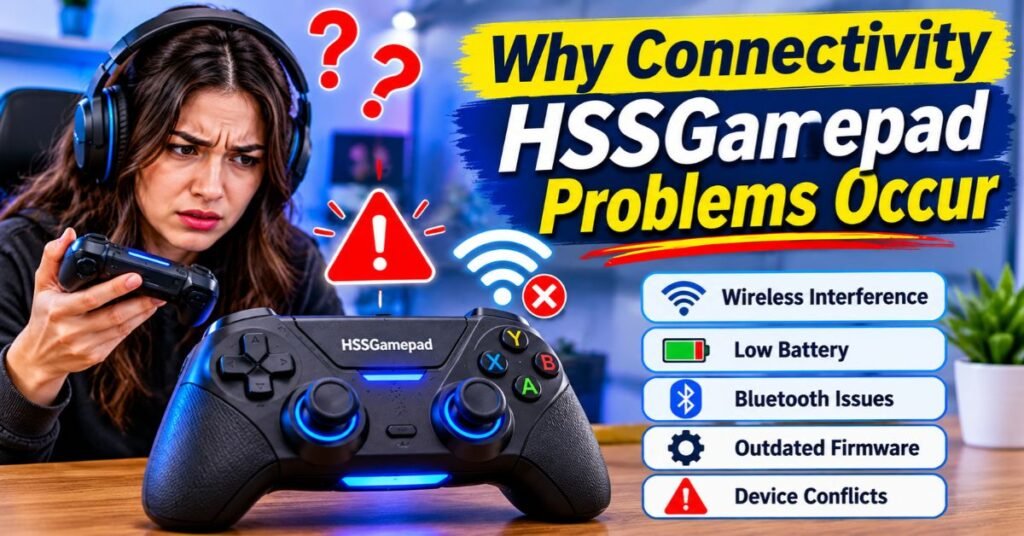
Every symptom has a root cause. Once you know the cause, the fix feels obvious. Most Connectivity HSSGamepad issues come from five areas: interference, power, distance, software and crowded connections. They often work together. A weak battery plus a busy router plus a long distance can break a good setup.
Many gamers misread the signs. They think the controller is broken. They blame game servers. Some even think their skill dropped. In truth, a bad signal strength or a stale driver is often the real cause. Let’s look at each one.
Wireless Signal Interference from Nearby Devices
Your controller shares the air with many devices. Wi-Fi routers, phones, wireless headphones and smart TVs all compete for space. This is a major cause of controller signal interference. Bluetooth uses frequency hopping, which helps it dodge noise. Still, heavy traffic can cause lost packet transmission and delays. Think of it like talking in a loud café. You can still be heard, but you may need to repeat yourself. That repeat is the lag you feel. Reducing nearby wireless interference gives your signal a clearer path.
Low Battery and Power Management Issues
Gamepad battery performance problems are easy to miss. A weak battery lowers signal power. The range shrinks. Responses slow down. Random drops follow. Many players see trouble when the charge falls near 10 to 20 percent. Poor power management on your phone or PC adds to the issue. Some systems turn off USB ports or Bluetooth radios to save energy. Charge the controller before long sessions. Also check the cable and port, since a poor charging link can hide a weak battery.
Bluetooth Compatibility and Connection Distance
Not all Bluetooth versions perform alike. Bluetooth 5.0 and newer offer better range and stability. Bluetooth 4.x works well for most games. Bluetooth 3.0 and older can feel slow and unreliable. In open space, Bluetooth often works up to about 8 to 10 meters. Walls, furniture and people cut that range sharply. For the most reliable play, stay within a few meters. This is also where HSSGamepad compatibility matters. A modern pad paired with an old adapter will only perform as well as the adapter allows. You can read more about the standard at the Bluetooth SIG website.
Outdated Firmware, Drivers, or Software
Old software causes odd bugs. A missing controller firmware update can lead to pairing failures and lag spikes. Old device drivers can cause controller driver issues on Windows. Your operating system may also change how it handles gaming peripherals after an update. Because of this, HSSGamepad firmware compatibility with your system matters. Keep your pad, your PC and your game launcher current. Always download updates from official sources only. Random download sites can bring in more problems than they solve.
Multiple Devices and Background Connection Conflicts
Too many connected devices can overload your setup. A headset, a phone, a keyboard, a mouse and a controller may all talk at once. Each one uses part of the shared wireless frequency. The result is slower controller synchronization and more drops. Background apps on your PC or phone add more strain. Downloads, overlays and chat tools all use system resources. Close what you don’t need. A calm system gives your controller more room to breathe.
How to Fix Connectivity HSSGamepad Connection Problems
Start with the easy fixes. They solve most problems in minutes. Work from the simplest step to the hardest. This way you never waste time on a complex fix when a charge would do.
Here’s a quick order to follow. First, check power. Second, restart and re-pair. Third, clear old records. Fourth, update software. Fifth, cut interference. Finally, test with a cable. This is the core of how to fix HSSGamepad connection issues, and it works on almost every platform.
Check the Controller Battery and Power Status
Always begin with power. A weak battery causes many mysterious problems. Charge the controller fully and check the light. Try a different cable and a different port. Some cables only carry power and no data, so they won’t help with a USB controller connection. Once the pad is full, test again. If the problem is gone, you’ve found a simple cause. For lasting stability, avoid playing below 20 percent.
Restart and Re-Pair Your HSSGamepad
A clean restart clears many glitches. Then a fresh pairing gives the system a new start. Here’s the HSSGamepad Bluetooth pairing process in simple steps. Your model may use different buttons, so check your manual too.
- Turn off the controller and your device’s Bluetooth.
- Turn both back on after about ten seconds.
- Put the controller in pairing mode.
- Select it from your device’s Bluetooth list.
- Wait for the connected light or message.
This is also the basic answer to how to connect HSSGamepad on most devices. Stay close to the device during pairing.
Remove Old Bluetooth Pairing Records
Old records confuse your system. Ghost entries and duplicates can block new pairings. Here’s how to reset Bluetooth pairing the right way. Open your Bluetooth settings. Find every old HSSGamepad entry. Remove them all. Restart your device. Then pair again from scratch. This simple reset fixes many cases of a Bluetooth controller not responding. It also helps when a pad pairs once and then refuses to reconnect.
Update Compatible Drivers and Firmware
Updates fix hidden bugs. First, look for a controller firmware update on the official site for your pad. Next, update your system’s device drivers. On Windows, you can use Device Manager or Windows Update. This is how to update game controller drivers for most players. Check for updates about once a month. Real releases are rare, but a quick check costs nothing. You can find official guides on the Microsoft support site. Only use firmware made for your exact model.
Reduce Wireless Interference
Give your signal some space. Move the router away from your gaming area. Switch off Bluetooth devices you aren’t using. Keep the controller close to the receiver. Also keep a clear line of sight when you can. If your router has a 5GHz band, use it for your PC or console. This frees the 2.4GHz wireless frequency for your controller. These small changes support better wireless controller connection stability. Many players see results in minutes.
Test the Controller Using a USB Connection
A cable test tells you a lot. It also shows how to connect a gamepad using USB in the simplest way. Plug the pad into your device with a data-ready cable. If it works well, your pad is fine. The trouble then lies in the wireless link. If it still fails, suspect the controller, the cable or the port. This single test splits wireless problems from hardware problems. Use it early in any gamepad connection troubleshooting session.
How to Fix HSSGamepad Input Lag and Improve Response Time
Lag can come from many places. Your pad, your screen, your PC or your game may be the source. Before you change anything, find out which one is slow. A quick cable test helps. If lag vanishes with USB, the wireless link is the cause.
After that, follow the steps below. They show how to reduce controller input lag in a clear order. Together they work as a controller latency troubleshooting plan. Small gains add up to a big change in controller response time.
Check Bluetooth Signal Strength and Distance
Good signal strength is the base of low lag. Sit within a few meters of your device. Keep walls, bodies and furniture out of the path. Place the Bluetooth receiver on the front of your PC, not the back. A small USB Bluetooth adapter on a short extension cable can help a lot. Better connection reliability often comes from simple moves like these. Test again after each change so you know what helped.
Switch to Wired Mode for Lower Latency
Wired mode is the strongest fix for HSSGamepad input lag. A cable removes wireless delay and interference. For fast shooters and fighting games, that matters. A good 2.4GHz dongle comes close if you want freedom. Many competitive players use wired or dongle setups for this reason. If you want to learn how to fix controller response delays quickly, this is the first test. Casual players may be happy with Bluetooth. Choose what fits your games.
Close Unnecessary Background Applications
A busy system slows everything down. Downloads, video calls, overlays and browser tabs all use power. This can delay real-time input response. Close apps you don’t need before you play. Check your task manager for heavy processes. On a phone, close apps in the background too. A lighter system can process packet transmission faster. The change may feel small at first. In fast games, it often shows.
Adjust Device Power and Performance Settings
Power saving can hurt your controller. On Windows, switch to a high-performance power plan. Also turn off USB selective suspend in the advanced power settings. That option exists on Windows only. On phones, turn off battery saver while you play. These changes help performance optimization and keep your connection awake. Review your system configuration after big updates. Settings sometimes reset on their own.
Optimize Your Gaming Setup for Better Response
Your screen matters too. Many TVs add delay unless you turn on game mode. A high refresh rate monitor makes input feel quicker. Keep your desk tidy and your devices close together. Place routers away from your play area. These tweaks help how to improve wireless controller performance in a real way. Even with a perfect controller link, a slow screen can feel like lag. Treat the whole chain as one system.
HSSGamepad Compatibility Across Windows, Phones, Tablets, and Consoles
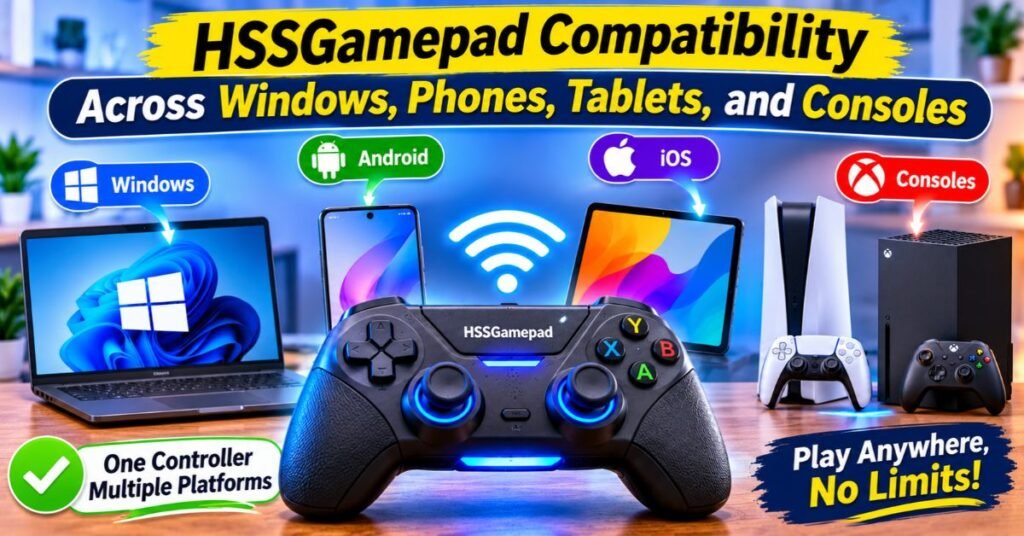
The same controller can act differently on each device. Each platform has its own rules. Operating system support, software compatibility and available modes all change the result. A pad that works well on PC may need a different mode on a phone.
For this reason, always check your manual first. It lists the supported devices and modes. Then follow the platform tips below. They cover the most common HSSGamepad compatibility questions worldwide.
Connecting HSSGamepad to a Windows PC
HSSGamepad Windows compatibility is usually good, but setup matters. You can connect by Bluetooth, USB or a dongle. Open Bluetooth settings, add a device and choose the controller. If you see the gamepad not connecting to PC problem, test a USB cable first. Then check Device Manager for errors. You can also open the Game Controllers panel to test buttons and do controller calibration. Steam users can use Steam Input for extra mapping options.
Using HSSGamepad With Android and iOS Devices
Phones and tablets use Bluetooth for most pads. Put the controller in pairing mode. Then open Bluetooth settings and pick it from the list. Controller connection problems on Android often come from battery saver and old pairings. Remove the old entry and try again. On iOS, check that your game supports controllers, because not every game does. Some pads have a special mobile mode, so check your mode switch. For official help, visit Apple Support.
Checking Console and Game Compatibility
Consoles can be strict. Many limit third-party pads or need a cable. Some only support certain modes. Always check the console’s support list before you buy or pair. Games matter too, since a few titles offer no controller support at all. If the controller connected but not working problem shows up, look in the game’s settings. Also check the launcher’s controller options. This small step saves a lot of stress.
Understanding Bluetooth Version and Device Limitations
Bluetooth is backward compatible, but speed is not. A new pad on an old adapter will run at the old adapter’s level. Cheap adapters often cause drops and lag. The version of your phone or PC also changes range and connection protocols. If your system is very old, a modern USB adapter can help. Look for a trusted brand with good reviews. Good device compatibility begins with matching quality on both ends.
See Also: JoinCRS com Explained How to Join, Features, Safety & Complete Guide 2026
Advanced Troubleshooting Tips for Better Connectivity HSSGamepad Performance
Sometimes the basic fixes don’t work. Don’t panic. You can go one layer deeper. These steps take a bit more time. However, they solve stubborn cases and teach you how your setup works.
Work in order again. Reset the pad first. Then check firmware and hardware. After that, look at your adapter and drivers. Finally, isolate faulty parts. This calm method keeps hardware troubleshooting clear and simple.
Reset the Controller Connection Settings
A reset clears deep glitches. Most pads have a tiny reset button or a button combo. Check your manual for the exact steps. A reset wipes saved pairings and custom settings. Afterward, re-pair the pad from scratch. Pair it with only one device at first. This helps controller synchronization and avoids old conflicts. Many stubborn HSSGamepad pairing issues vanish after a reset.
Check for Firmware and Hardware Problems
Failed updates can leave a pad unstable. Check if the update finished well. Look for worn buttons, loose sticks and damaged charging ports. A bent port can break both charging and data. Try the pad on another device to confirm. Also confirm HSSGamepad firmware compatibility with your system. A mismatch can cause odd behavior. If everything looks fine, move on to the adapter and drivers.
Identify Bluetooth Adapter and Driver Conflicts
Your PC may be the weak link. Open Device Manager and look for warning icons under Bluetooth. Remove the adapter driver and restart the PC. Windows will reinstall it. If trouble remains, try a separate USB Bluetooth adapter. Disable the built-in one to prevent clashes. Many controller driver issues end after this test. Keep notes on what you change, so you can undo steps if needed.
When to Suspect a Faulty Controller or USB Port
Test one part at a time. Try another USB port. Try another cable. Try another device. If possible, try another controller on the same setup. If the problem follows the pad, the pad is likely faulty. If it follows the port, change the port. If it follows the device, the device needs attention. This method keeps your gamepad troubleshooting guide logical. It also tells you when repair or replacement makes sense.
Connectivity HSSGamepad Problems, Causes, and Solutions
Here’s a quick table you can bookmark. It sums up the most common Connectivity HSSGamepad issues. Use it as a fast check before you dive into long fixes. Match your symptom, then try the first fix.
| Problem | Likely Cause | Best Fix |
| Input lag | Wireless delay or heavy load | Use wired mode or a 2.4GHz dongle |
| Random disconnects | Low battery or power saving | Charge the pad and adjust power settings |
| Pairing failure | Old pairing records | Remove old entries and re-pair |
| Stuttering inputs | Signal interference | Move the router and cut nearby devices |
| Connected but not working | Wrong input mode or game settings | Switch mode and check game controls |
| No response | Outdated firmware or drivers | Update firmware and drivers |
If your issue stays after the first fix, move to the matching section above. Each step builds on the last. With patience, almost every problem has a clear answer.
How Stable Controller Connectivity Improves Gaming Performance
A steady connection changes how a game feels. Your moves land when you expect them. Your aim feels honest. Your combos flow. Skill matters, but skill needs a reliable link to show itself.”A controller is only as quick as the signal that carries it.”
Strong gamepad connection stability also reduces stress. You stop worrying about drops and start focusing on the match. The next three points show how that plays out in real games.
Faster Input Response and Reduced Latency
Lower delay means faster response time. When input latency drops, every action feels crisp. Menus feel snappy. Aiming feels sharp. Driving feels smooth. Even a few milliseconds can help in fast games. A clean link also stops tiny spikes that ruin timing. Good gaming controller latency gives your brain a clear and steady rhythm. Over time, your muscle memory improves because the pad always responds the same way.
More Reliable Gameplay and Better Control
Reliability builds trust. When your pad never fails, you stop thinking about it. Strong connection reliability means no surprise freezes in the middle of a boss fight. It also means fewer replays and less frustration. Players often notice smoother movement and more precise camera control. Better control helps you learn new games faster too. A stable setup lets you enjoy the game instead of fighting your gear.
Improved Performance in Competitive Gaming
Competitive play punishes weak links. One late input can lose a round. For this reason, many pros use wired or 2.4GHz gaming peripherals. They want the lowest and steadiest delay. Still, a good Bluetooth setup can work well in casual ranked play. The key is consistency, not only speed. Strong wireless gaming performance helps you play the same way in game one and game ten. That steady rhythm often wins close matches.
See Also: Apps and Software AlienSync Explained Features, Uses, Benefits & Complete Guide 2026
Real-World Example: Troubleshooting a Laggy HSSGamepad Connection
Let’s walk through a sample case. This is an illustrative scenario built from common patterns, not a documented report. It shows how small changes can solve big problems. You may see your own setup in it.
The player in this story loves competitive shooters. His matches kept ending badly, and he blamed his skill. In truth, a few small habits were choking his HSSGamepad Bluetooth connectivity. Here’s how he found out.
The Initial Connection Problem
The player felt a strong delay in every fight. His shots landed late. His movement felt heavy. He estimated lag between 150 and 200 milliseconds. Worse, the controller dropped out during several matches. He also heard a disconnect beep at the worst times. These HSSGamepad connection drops made ranked play almost impossible. He nearly bought a new pad before he tried a proper check.
Identifying the Main Cause
He checked the basics first. The controller battery sat at 12 percent. His Wi-Fi router stood right next to the console. A Bluetooth headset ran at the same time. Three small problems stacked into one big one. Low power weakened the signal. The router added wireless interference. The headset used more airspace. None of these was dramatic alone, but together they broke wireless controller connection stability.
Troubleshooting Steps and Fixes Applied
He tried a simple plan. First, he charged the pad fully. Second, he switched to a wired USB connection for ranked matches. Third, he moved the router about two meters away. Fourth, he turned off unused Bluetooth devices. Last, he removed old pairing entries and paired once more. Each step was quick and free. Together they formed a clean HSSGamepad connectivity troubleshooting routine.
Results After Improving Connectivity
The results came fast. Lag dropped under 10 milliseconds with the cable. The disconnects stopped. Matches felt smooth and fair again. His aim felt natural. He also felt more confident, since he no longer feared random drops. Later, he tested the pad wirelessly with the router moved, and it worked far better than before. The lesson is clear. Environment often matters more than hardware.
Expert Tips to Maintain Stable HSSGamepad Connectivity
Good habits beat emergency fixes. A few small routines keep your pad healthy for years. They cost almost nothing. They also protect you from the worst surprises.
Think of these tips as a short maintenance plan. Follow them and you’ll rarely need a long troubleshooting session. Even better, you’ll game with peace of mind.
Keep Firmware and Device Drivers Updated
Check for updates once a month. Look at the maker’s website for any controller firmware update. Update your system and your device drivers too. This keeps software compatibility strong across new games and new system patches. Always use official sources. Read the update notes first, since they often explain fixes. A short monthly check keeps hidden bugs away.
Avoid Wireless Interference
Plan your space with signals in mind. Keep routers away from your play area. Keep the receiver in clear view of the controller. Turn off Bluetooth devices you don’t use. Use the 5GHz Wi-Fi band when you can. Store your pad away from other electronics. These habits cut controller signal interference at the source. Good airflow for your signals is as useful as good airflow for your PC.
Maintain Proper Battery and Charging Habits
Healthy batteries support healthy signals. Charge before long sessions. Avoid playing below 20 percent. Unplug the pad once it’s full when you can, since this helps long-term battery health. Modern batteries have built-in protection, so overnight charging is rarely dangerous. Still, careful habits help the battery last. Use a quality cable and a reliable charger. This avoids many gamepad battery performance problems.
See Also: App and Socials AlienSync Explained Features, Setup, Safety & Complete Guide 2026
Check Connection Stability Before Gaming
Take thirty seconds before each session. Check the battery. Confirm the controller connects fast. Open a button test screen and press a few keys. Move your sticks and check controller calibration. If anything feels off, fix it now. A short pre-match check beats a ruined match. It also builds a good routine that keeps your gaming experience smooth.
Frequently Asked Questions
Why Does My HSSGamepad Lag Even When It Is New?
A new pad still depends on your setup. Signal quality, firmware and nearby devices all matter. Interference, a weak adapter or power saving can add lag. Try a cable first. If lag disappears, the wireless link is the cause. Then update firmware, move your router and clear old pairings.
How Do I Fix Connectivity Issues With HSSGamepad?
Start with the basics. Charge the pad and restart it. Remove old Bluetooth entries and pair again. Update firmware and drivers. Reduce nearby wireless devices. Finally, test with a USB cable. This order solves most HSSGamepad connection problems without special tools or skills.
Why Won’t My HSSGamepad Connect to Bluetooth?
Old pairing records are a common cause. Remove the pad from your Bluetooth list and try again. Make sure the controller is in pairing mode and close to the device. Check that Bluetooth is on and your adapter works. Also check that your device supports the pad.
Why Does My HSSGamepad Keep Disconnecting?
Low battery, interference and power saving are the top causes. Charge the pad fully first. Move closer to the device. Turn off battery saver and USB power saving. Remove nearby Bluetooth devices. If drops continue, update firmware or try a wired connection to test the pad.
Can Wi-Fi Interference Affect HSSGamepad Connectivity?
Yes. Wi-Fi on the 2.4GHz band shares airspace with Bluetooth and many dongles. A router close to your setup can cause stutters and drops. Move the router away or use the 5GHz band for your devices. Keep the controller close to its receiver.
Is a Wired HSSGamepad Connection Better Than Wireless?
For the lowest and steadiest delay, wired usually wins. It also avoids battery and interference problems. However, a good 2.4GHz dongle comes close, and modern Bluetooth feels fine for casual play. Choose wired for competitive games. Choose wireless when comfort and freedom matter more.
Can I Connect HSSGamepad to My Phone?
Often yes, if your pad and phone both support it. Put the controller in pairing mode and choose it from your phone’s Bluetooth list. Check your manual for a mobile mode. Also confirm that your game supports controllers. If it won’t connect, remove old pairings and try again.
Should I Update My HSSGamepad Firmware?
Yes, when an official update exists. Updates can fix pairing bugs, lag spikes and compatibility problems. Download only from the maker’s site and follow the steps closely. Keep the pad charged during the update. Check for new versions about once a month.
Final Thoughts
Connection trouble feels huge in the moment. Yet most cases have small and simple causes. A weak battery, a busy router or an old driver is often the true villain. Once you know where to look, you fix things fast. That’s the real power of a good gamepad troubleshooting guide.
Remember the three big levers. Keep your power healthy. Keep your airwaves clean. Keep your software fresh. Do those three things and your HSSGamepad wireless connection will stay steady. Then you can focus on the fun part. Got a fix that worked for you? Share it in the comments and help the next gamer.


